A study published in Case Studies in Construction Materials reports the development of a high-performance cementitious material composed entirely of industrial solid waste, utilizing sodium-based desulfurization ash as a dual activator to create a highly alkaline environment. The work addresses the high carbon footprint of traditional cement production and the need for alternative binders that do not rely on external chemical activators or natural raw materials.
Conventional cement production is a primary source of global greenhouse gases, driving the need for low-carbon alternatives. While materials such as ground-granulated blast-furnace slag (GGBS) and fly ash (FA) can replace a portion of cement clinker, they often still require chemical activators that contribute to energy consumption and emissions. All-solid-waste cementitious materials offer a promising solution by using only industrial by-products as raw materials. However, these systems typically suffer from insufficient alkalinity, which limits the dissolution of precursor materials and results in poor strength development, particularly in later stages of curing.
The study focuses on sodium-based desulfurization ash (SDA), a by-product of flue gas desulphurization in steelworks, which contains high concentrations of sodium oxide (47.91%) and sulfur trioxide (46.62%). SDA serves as a synergistic activator, providing both sodium ions to maintain alkalinity and sulfate ions to promote the formation of ettringite and other hydration products. The research team combined SDA with calcium carbide slag (CS), GGBS, and FA to create a composite system. By varying the SDA content from 1% to 30% and adjusting the ratio of FA to GGBS, the investigators systematically evaluated the effects on hydration environment, mechanical properties, and microstructure.
Experimental results indicated that an SDA content of 10% was optimal for the system. At this concentration, the initial pH of the hydration environment was 12.71, creating a highly alkaline condition that facilitated the dissolution of active silico-aluminium components from GGBS and FA. The continuous consumption of calcium ions by sulfate ions in the SDA drove the sustained release of hydroxide ions from the CS, dynamically maintaining the alkaline environment necessary for strength development. In contrast, SDA contents exceeding 10% led to the excessive formation of U-phase, a crystalline compound with expansive properties that caused cracking and a subsequent decline in compressive strength.
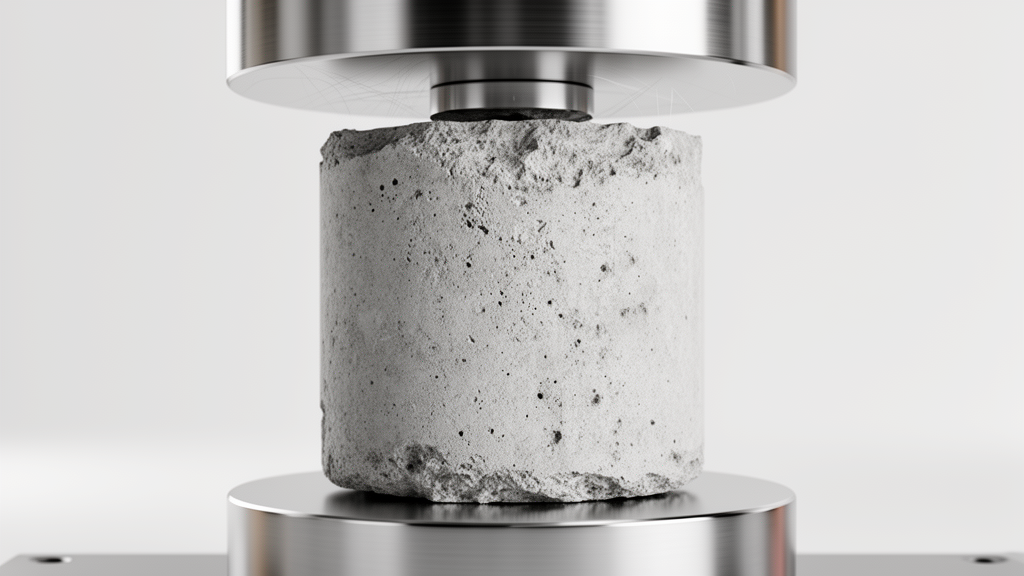
The mechanical performance of the optimized mix, designated S10C10G6F4, was evaluated through compressive strength tests at 3, 7, and 28 days. The gradual replacement of GGBS with FA up to 40% by mass resulted in a 28-day compressive strength of 40.36 MPa, with 3-day strength peaking at 29.68 MPa. Beyond this ratio, the lack of sufficient calcium sources to form a robust framework led to a decline in performance, with the 28-day strength dropping to 17.69 MPa when FA replaced 90% of the GGBS.
X-ray diffraction (XRD) and Fourier transform infrared spectroscopy (FTIR) analyses revealed the evolution of hydration products and chemical bonding. At the optimal SDA content, the system formed abundant C-(N)-A-S-H gels with a high degree of polymerization, along with crystals of ettringite (AFt), U-phase, hydrogarnet, and Friedel’s salt. The interweaving of these gels and crystals created a dense microstructure that supported high compressive strength. FTIR results showed that the degree of polymerization reached a maximum of 1.17 at 28 days for the optimal mix, indicating a dense and high-strength gel network. The presence of sulfate ions promoted the formation of AFt, which further increased the alkalinity of the system by releasing additional hydroxide ions.
Scanning electron microscopy (SEM) and energy-dispersive spectroscopy (EDS) provided insights into the microscopic morphology and elemental distribution. In the optimal mix, the Ca/Si and Na/Si ratios were significantly higher than in other samples, indicating the formation of a large amount of C-(N)-A-S-H gel. The acicular AFt crystals intertwined with the flocculent gels to form a dense microstructure. In samples with excessive SDA, the formation of U-phase disrupted the integrity of the gel structure, leading to the observed cracking and strength loss. The SEM-EDS analysis confirmed that the optimal balance of raw materials allowed for the stable coexistence of U-phase, AFt, and gels, which was crucial for ensuring sustained strength gain.
Thermogravimetric analysis-differential scanning calorimetry (TGA-DSC) assessed the mass loss and thermal stability of the hydration products. The analysis showed that the S10C10G6F4 mixture experienced significant mass loss in the early stages, corresponding to the formation of AFt, U-phase, and C-(N)-A-S-H gels. In the later stages, the continued release of hydroxide and sulfate ions fostered sustained formation of these products, securing steady strength development. The CaCO3 content, determined by TGA, increased with rising SDA content in the early stages, indicating accelerated hydration and carbonation of calcium hydroxide. This process contributed to the construction of an early strength skeleton.
The carbon emission performance of the ACMs was evaluated using two metrics: Carbon Emission (CE) and Carbon Emission Intensity (CEI). The S10C10G4F6 group exhibited the lowest CEI value of 0.93 kg/t/MPa, representing a 95.24% reduction compared to conventional cement. The S10C10G6F4 group, which achieved the highest compressive strength, had a CEI of 1.00 kg/t/MPa, a 94.88% reduction relative to cement. These results demonstrate that the use of SDA as an activator not only enhances mechanical performance but also significantly lowers the carbon footprint of the material. The low carbon emission factor of SDA, combined with the high reactivity of GGBS and FA, contributes to the overall low-carbon performance of the system.
The study highlights the importance of controlling the dosage of SDA to regulate the formation of U-phase. While U-phase can mitigate self-shrinkage through its expansive properties, excessive formation leads to volume instability and cracking. The research identifies 10% as the optimal SDA content for achieving the best activation effect in ACM systems. This finding offers a key parameter for the development of green and low-carbon cementitious materials. The study also notes that the high alkalinity of the system may pose a risk of alkali-aggregate reaction, a critical issue that requires further investigation in future work.
Limitations of the study include the need for further investigation into the quantitative relationship between U-phase formation and swelling stress, as well as the long-term durability of the ACMs under challenging environmental scenarios such as carbonation, sulfate attack, and freeze-thaw cycles. The microscopic mechanisms underlying the cracking of samples with high SDA content require more sophisticated testing methods, such as nanoindentation, to fully understand the material behavior. Future research should extend the observation period and employ accelerated testing methods to assess the actual risk of alkali-aggregate reaction and the sustained performance of the material in real-world applications.
This research contributes to the development of sustainable construction materials by demonstrating the potential of industrial solid waste as a source of high-performance cementitious binders. The synergistic activation of GGBS and FA by SDA and CS offers a viable alternative to traditional cement, with significant benefits in terms of strength and carbon reduction. The findings provide a systematic foundation for the repurposing of industrial by-products in the construction industry, supporting the transition to a circular economy and low-carbon development. The study underscores the importance of optimizing raw material proportions to achieve a balance between mechanical performance and environmental sustainability.
Subject of Research: Sodium-based desulfurization ash as synergistic activator for all-solid-waste cementitious materials: Role in creating high-alkali environments and enhancing strength
Article Title: Sodium-based desulfurization ash as synergistic activator for all-solid-waste cementitious materials: Role in creating high-alkali environments and enhancing strength
Article References: Wang, B., Jiang, W., Yin, S., Li, T., He, Y., Wang, H., Zhang, Y., & Zhang, L. (2026). Sodium-based desulfurization ash as synergistic activator for all-solid-waste cementitious materials: Role in creating high-alkali environments and enhancing strength. Case Studies in Construction Materials, 25, Article e06681. https://doi.org/10.1016/j.cscm.2026.e06681
Image Credits: AI Generated
DOI: 10.1016/j.cscm.2026.e06681
Keywords: Sodium-based, desulfurization, synergistic, activator, all-solid-waste, cementitious, materials, Role, creating, high-alkali, environments, enhancing
News Source: Denise Maddox. (November 8, 2026). Industrial Ash Activates Waste-Based Cement With High Strength. Scienmag.