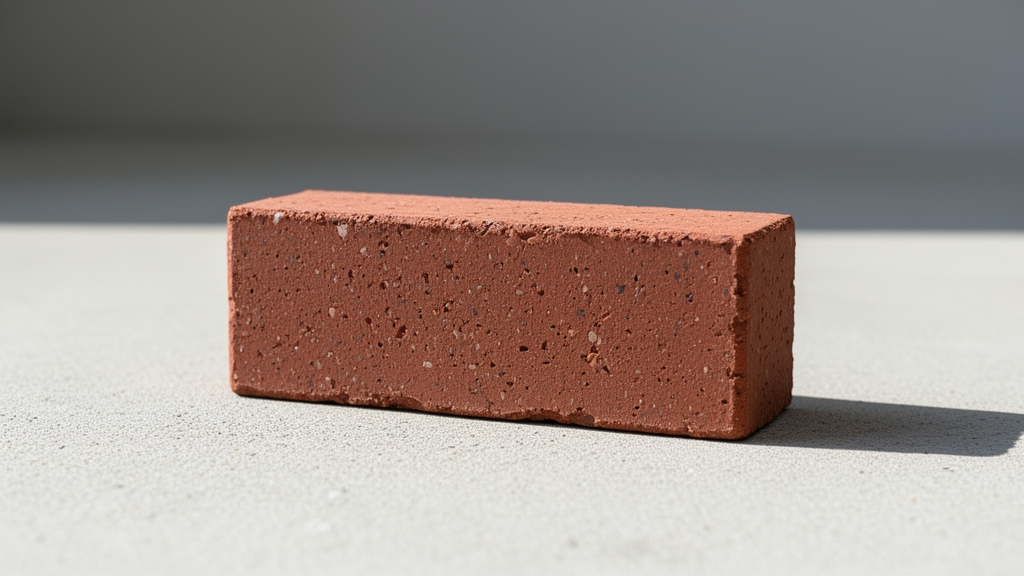
Researchers from India have developed a method for manufacturing Class-I load-bearing bricks using 100% overburden waste sand from coal mines, eliminating the need for conventional Portland cement or fired clay. Published in the journal Discover Concrete and Cement in August 2026, the study demonstrates that this alkali-activated material achieves structural performance comparable to or superior to traditional masonry units while significantly reducing the environmental footprint of construction. The innovation addresses two critical challenges in the construction sector: the high carbon emissions associated with cement production and the environmental degradation caused by the disposal of mining waste.
The research team, led by Sanchita Nawale and Rahul V. Ralegaonkar, focused on utilizing overburden waste sand, a heterogeneous mixture of sandstone, shale, and clay that is typically discarded during open-cast coal mining. In India, where the mining sector generates millions of cubic meters of this waste annually, finding a value-added application is essential for sustainable resource management. The study aimed to transform this low-value spoil into a high-performance construction material by using it as a fine aggregate in an alkali-activated binder system.
The experimental design involved creating twenty-five different mixtures to optimize the balance between binder components and aggregate. The binders consisted of ground granulated blast furnace slag and fly ash, which serve as aluminosilicate precursors, activated by anhydrous sodium metasilicate. This solid activator was chosen over liquid sodium hydroxide or sodium silicate solutions because it simplifies the production process, eliminates the need for handling corrosive liquids, and reduces manufacturing costs. The resulting one-part alkali-activated binder technology allows for a “just add water” approach, making it more practical for industrial brick production.
Among the twenty-five trial mixtures, the composition designated as AABY emerged as the most suitable for structural applications. This mix utilized a binder-to-aggregate ratio of 1:6, containing 90% ground granulated blast furnace slag, 10% sodium metasilicate, and 100% overburden waste sand. The selection was based on a balance of mechanical strength, durability, and economic efficiency. The higher proportion of waste sand improved particle packing and matrix cohesion, while the specific ratio of slag to activator ensured sufficient reaction kinetics without incurring excessive material costs.
The manufactured bricks were subjected to a comprehensive suite of physical, mechanical, and durability tests in accordance with relevant Indian Standards. The results confirmed that the bricks met the criteria for Class-I load-bearing masonry as defined by IS 1077:1992. The bricks achieved an average compressive strength of 14.84 MPa, which exceeds the minimum requirement of 10 MPa for Class-I bricks. This strength is notably higher than that of conventional fired clay bricks, which typically range between 7 and 12 MPa, and is comparable to other geopolymer bricks reported in the literature.
Beyond compressive strength, the bricks exhibited favorable physical properties that contribute to long-term durability. The bulk density was measured at 2094.86 kg/m³, falling within the typical range for high-quality concrete masonry units. This high density is attributed to the efficient packing of the angular waste sand particles with the finer slag particles, which fill inter-particle voids and reduce internal porosity. The water absorption rate was only 5.25%, significantly lower than the permissible limit of 15% and well below the 10-18% range commonly observed in fired clay bricks. This low absorption indicates a dense microstructure that resists moisture ingress and subsequent weathering.
Durability tests further validated the robustness of the material. The chloride content was measured at 474.85 mg/L and the sulphate content at 98.93 mg/L, both well within the safety limits specified by IS 456:2000. These low levels of deleterious ions suggest that the bricks are resistant to chemical deterioration in aggressive environmental conditions. Additionally, the bricks showed no signs of carbonation or efflorescence, and the drying shrinkage was minimal at 0.10%, ensuring dimensional stability over time. The thermal conductivity was recorded at 0.44 W/m·K, which is substantially lower than that of conventional cement mortar, indicating improved thermal insulation properties for building envelopes.
Microstructural analysis using X-ray diffraction, Fourier Transform Infrared spectroscopy, and scanning electron microscopy provided insights into the mechanisms behind the material’s performance. The analyses confirmed the formation of calcium-alumino-silicate-hydrate and sodium-alumino-silicate-hydrate gel phases, which are the primary binding agents in alkali-activated systems. These gels effectively encapsulated the overburden waste particles, creating a compact and continuous matrix. The presence of these reaction products explains the high strength and low porosity observed in the macro-scale tests, demonstrating that the chemical activation process was successful in binding the inert waste material.
A life cycle assessment conducted according to ISO 14040 guidelines quantified the environmental benefits of the new brick. The global warming potential of the alkali-activated brick was calculated to be 125.93 kg CO₂-eq per cubic meter. In comparison, conventional red burnt clay bricks typically exhibit a global warming potential between 240 and 310 kg CO₂-eq per cubic meter. This represents a reduction in carbon emissions of approximately 50 to 60%, highlighting the material’s potential to significantly lower the carbon footprint of construction projects. The avoidance of high-temperature firing processes is a major contributor to this reduction.
Economic analysis also favored the new material. The production cost of the alkali-activated brick was estimated at ₹4837.49 per cubic meter. This is 37 to 70% lower than the cost of first-class burnt clay bricks and 18 to 30% lower than high-quality fly ash bricks.
The research underscores the potential of circular economy principles in the construction industry. By converting abundant mining waste into a high-performance building material, the study offers a practical solution to the problem of waste disposal while simultaneously reducing the demand for natural resources like river sand and clay. The successful use of 100% overburden waste sand as a fine aggregate demonstrates that mining spoil can be a valuable resource rather than an environmental liability.
Overall, the development of Class-I alkali-activated bricks from coal mine overburden waste represents a significant step toward sustainable construction. The combination of high mechanical strength, excellent durability, low carbon emissions, and cost-effectiveness positions this material as a compelling alternative to conventional masonry units. As the global construction industry seeks to reduce its environmental impact, innovations that utilize industrial and mining waste for value-added products are likely to gain increasing traction. This research contributes to that shift by providing a scientifically validated and practically feasible approach to integrating waste management with building material production.
Subject of Research: Development of sustainable alkali-activated bricks from coal mine overburden waste
Article Title: Development of class-I alkali-activated bricks using overburden waste sand
Article References: Nawale, S., & Ralegaonkar, R. V. (2026). Development of class-I alkali-activated bricks using overburden waste sand. Discover Concrete and Cement, 2(1), Article 66. https://doi.org/10.1007/s44416-026-00109-w
Image Credits: AI Generated
DOI: 10.1007/s44416-026-00109-w
Keywords: alkali-activated materials, overburden waste sand, sustainable construction, geopolymer bricks, carbon footprint, mining waste, load-bearing masonry, life cycle assessment, Development, class-I, alkali-activated, bricks
News Source: Denise Maddox. (November 8, 2026). Coal Mine Waste Transformed into Class-I Load-Bearing Bricks. Scienmag.