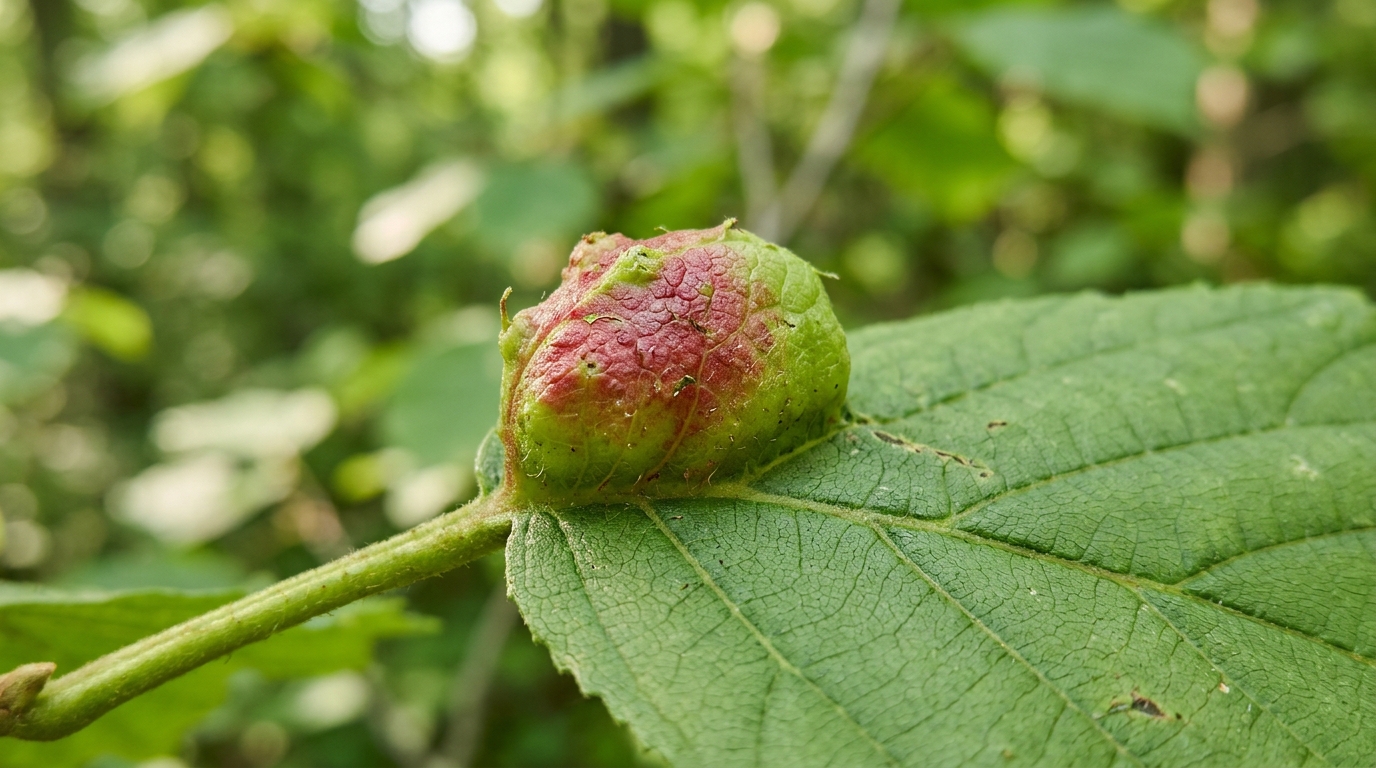
By sequencing the transcriptomes of these galls against a common genomic reference, the researchers could directly compare host gene expression across gall types; the authors note that studies comparing gene expression among galls induced by closely related insect species are very limited.
Gall-forming insects induce various types of galls on their host plants by altering gene expression in host plant organs. Previous work had shown that galls arise when insects alter gene expression in host plant organs, and researchers had begun cataloguing gene activity inside individual galls. What remained scarce, the authors note, were comparisons across galls induced by closely related insect species, precisely the kind of comparison needed to understand how gall diversity evolves.
The four aphid species are close relatives, and the authors state that comparisons among galls induced by closely related insect species are important for revealing the diversification process of galls.
The comparison revealed that genes associated with cell division, vascular development and phenylpropanoid biosynthesis are expressed in different patterns among the four gall types.
The researchers suggest that differences in the expression patterns of genes related to cell division and phloem formation contribute to the morphological differences between galls induced by Hormaphis and Hamamelistes species.
A second pattern emerged within the Hamamelistes genus itself. Galls induced by Ha. betulinus and Ha. kagamii show more complex internal structures than galls induced by Ha. miyabei. The study found that differences in the expression patterns of genes related to phenylpropanoid biosynthesis may be associated with this structural complexity. The researchers describe this as a suggested association, and the study is a comparative transcriptome analysis rather than an experimental demonstration of causation.
Beyond the differences among the four aphid species, the team also looked for genes that had been reported in previous studies as associated with gall formation in other insect species. They found high expression of some genes belonging to these gene families in the Hamamelis galls. Furthermore, the expression levels of these genes tended to differ among the galls induced by the four aphid species. This suggests that certain gene families may be commonly involved in gall formation across various insect species, even when the insects are distantly related. The authors suggest that differences in the expression levels of genes belonging to these families may partly contribute to the diversity of gall morphologies.
The study’s conclusions tie these threads together. Gene expression patterns related to tissue formation and secondary metabolism differ among galls induced by the four aphid species and, according to the authors, contribute to the diversification of gall morphology and ecology.
Several limitations are worth noting. The study is a comparative transcriptome analysis, meaning it measures gene expression and identifies correlations between expression patterns and gall traits. It does not demonstrate causation experimentally; the authors describe their findings as suggestions about which genes and pathways may contribute to gall differences. The draft genome is not a finished reference, and the study focuses on a single host plant species with four aphid species, so the extent to which these patterns generalize to other gall systems remains an open question. Nonetheless, the work provides a shared genomic reference for comparing galls made by closely related insects, and it identifies gene families and pathways as candidates for future functional studies of gall formation.
Subject of Research: Comparative transcriptomics of aphid-induced galls on Hamamelis japonica using a newly assembled draft host genome
Article Title: Comparative transcriptome analysis of galls induced by four closely related aphid species using the draft genome of the host plant (Hamamelis japonica) reveals gene expression patterns related to gall diversification
Article References: MIZUKI, M., SASABE, M., & IKEDA, H. (2026). Comparative transcriptome analysis of galls induced by four closely related aphid species using the draft genome of the host plant (Hamamelis japonica) reveals gene expression patterns related to gall diversification. BMC Genomics. https://doi.org/10.1186/s12864-026-13521-0
Image Credits: AI Generated
DOI: 10.1186/s12864-026-13521-0
Keywords: Hamamelis japonica, aphid galls, transcriptomics, draft genome, gall diversification, phenylpropanoid biosynthesis, phloem formation, cell division, gene expression, BMC Genomics, host plant manipulation, Hormaphis
News Source: Juliet Wilcox. (November 8, 2026). Aphid gall genomes reveal gene expression patterns behind gall diversification. Scienmag.