• HOME
  • NEWS
  • EXPLORE
    • CAREER
      • Companies
      • Jobs
    • EVENTS
    • iGEM
      • News
      • Team
    • PHOTOS
    • VIDEO
    • WIKI
  • BLOG
  • COMMUNITY
    • FACEBOOK
    • INSTAGRAM
    • TWITTER
Monday, November 9, 2026
BIOENGINEER.ORG
No Result
View All Result
  • Login
  • HOME
  • NEWS
  • EXPLORE
    • CAREER
      • Companies
      • Jobs
        • Lecturer
        • PhD Studentship
        • Postdoc
        • Research Assistant
    • EVENTS
    • iGEM
      • News
      • Team
    • PHOTOS
    • VIDEO
    • WIKI
  • BLOG
  • COMMUNITY
    • FACEBOOK
    • INSTAGRAM
    • TWITTER
No Result
View All Result
Bioengineer.org
No Result
View All Result
Home NEWS Science News Biology

Study Benchmarks Eight Antibody Language Models for Design Tasks

by
November 8, 2026
in Biology
Reading Time: 2 mins read
0
Study Benchmarks Eight Antibody Language Models for Design Tasks

Study Benchmarks Eight Antibody Language Models for Design Tasks

Share on FacebookShare on TwitterShare on LinkedinShare on RedditShare on Telegram

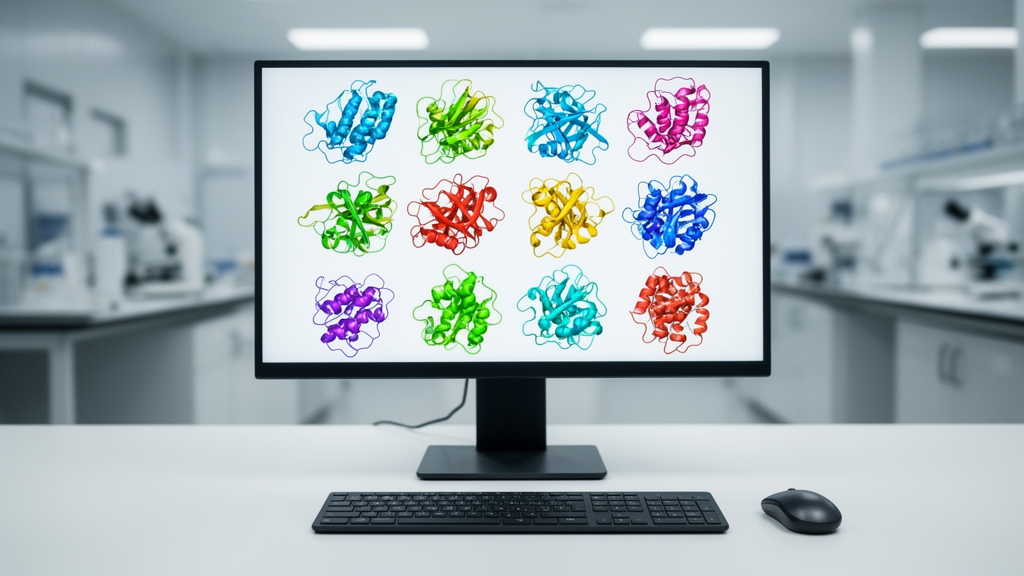
Researchers have established a comprehensive benchmark to evaluate the performance of eight antibody language models across five distinct downstream tasks relevant to antibody design. Published in Genome Biology, the study provides a detailed assessment of computational tools that have emerged as powerful aids in the field. By creating a standardized framework, the study offers valuable insights into the strengths and limitations of current antibody language models, or ALMs, which are increasingly used for computational antibody design.

The benchmark evaluates eight specific models: AntiBERTy, AntiBERTa, AntiBERTa2, AbLang, AbLang2, ReprogBert, BERT2DAb, and BALM. The evaluation covers five distinct tasks, categorized into sequence-level and token-level operations. Sequence-level tasks include HER2-binding prediction, SARS-CoV-2-binding prediction, and binding-affinity regression. Token-level tasks involve paratope prediction and complementarity-determining region, or CDR, prediction.

The study investigates several factors that influence ALM performance, including pretraining dataset size, fine-tuning strategies, and training data volume. The results indicate that AbLang, AntiBERTa2, and AbLang2 are the best models overall, though they possess distinct task-specific strengths. In contrast, BALM demonstrates superior performance specifically in binding-affinity regression.

A significant finding from the research is the impact of pretraining data volume on model efficacy. The authors found that reducing the pretraining dataset to 576,000 antibody sequences has a negligible effect on overall model performance. In some instances, models even showed improvements when trained on this smaller dataset.

The researchers also explored the necessity and effectiveness of various fine-tuning methods. They investigated how different fine-tuning strategies impact the final performance of the models and examined the influence of the fine-tuning dataset size. The study offers guidance for improving pretraining methods, fine-tuning strategies, and model architectures. This guidance is intended to enhance the application of ALMs in practical antibody design scenarios.

The study concludes that while current antibody language models show promise, there are distinct areas for improvement. The findings provide a roadmap for developers and researchers looking to leverage computational tools for antibody design.

Subject of Research: Benchmarking of antibody language models for computational antibody design

Article Title: Comprehensive evaluation of antibody language models across multiple antibody design tasks

Article References: Hong, N., Jia, L., Jin, R., Li, Y., Song, M., & Hou, T. (2026). Comprehensive evaluation of antibody language models across multiple antibody design tasks. Genome Biology. https://doi.org/10.1186/s13059-026-04323-4

Image Credits: AI Generated

DOI: 10.1186/s13059-026-04323-4

Keywords: antibody language models, computational biology, antibody design, machine learning, Genome Biology, benchmarking, protein engineering, deep learning, Comprehensive, evaluation, antibody, language

News Source: Blake Davidson. (November 8, 2026). Study Benchmarks Eight Antibody Language Models for Design Tasks. Scienmag.


Tags: antibodyantibody designantibody language modelsbenchmarkingcomprehensivecomputational biologydeep learningevaluationGenome BiologylanguageMachine LearningProtein Engineering
Share12Tweet7Share2ShareShareShare1

Related Posts

Nanomaterial Scaffolds Transform Enzymatic Testing for Biodegradable Liquid Polymers

Nanomaterial Scaffolds Transform Enzymatic Testing for Biodegradable Liquid Polymers

November 9, 2026
Frontiers retracts 2021 study on HHV7 and schwann cell death

Frontiers retracts 2021 study on HHV7 and schwann cell death

November 9, 2026

Bacteria in Aurora Supercomputer Cooling Water Detoxify Chlorite and Degrade Benzene

November 9, 2026

Subtropical Maize Study Identifies Superior Inbreds for Amylose and Vitamin E

November 9, 2026

POPULAR NEWS

  • Growth Medium Composition Alters Lion's Mane Erinacine Chemistry Without Shifting Gene Expression

    Growth Medium Composition Alters Lion’s Mane Erinacine Chemistry Without Shifting Gene Expression

    29 shares
    Share 12 Tweet 7
  • Third-Order Finite Element Scheme Simulates Aerodynamics of Iced Bundled Transmission Lines

    29 shares
    Share 12 Tweet 7
  • Ribosomal RNA Fragments Reveal Emerging Regulatory and Diagnostic Roles in Cancer Biology

    29 shares
    Share 12 Tweet 7
  • Saudi Pro League Football Monitoring Practices Surveyed in 2023

    29 shares
    Share 12 Tweet 7

About

We bring you the latest biotechnology news from best research centers and universities around the world. Check our website.

Follow us

Recent News

Nanomaterial Scaffolds Transform Enzymatic Testing for Biodegradable Liquid Polymers

Systematic Review Details Architecture Shifts and Limits of Vision Transformers

Nitric Oxide Governs Immune Suppression and Therapeutic Responses in Cervical Cancer

Subscribe to Blog via Email

Enter your email address to subscribe to this blog and receive notifications of new posts by email.

Join 87 other subscribers
  • Contact Us

Bioengineer.org © Copyright 2023 All Rights Reserved.

Welcome Back!

Login to your account below

Forgotten Password?

Retrieve your password

Please enter your username or email address to reset your password.

Log In
No Result
View All Result
  • Homepages
    • Home Page 1
    • Home Page 2
  • News
  • National
  • Business
  • Health
  • Lifestyle
  • Science

Bioengineer.org © Copyright 2023 All Rights Reserved.