• HOME
  • NEWS
  • EXPLORE
    • CAREER
      • Companies
      • Jobs
    • EVENTS
    • iGEM
      • News
      • Team
    • PHOTOS
    • VIDEO
    • WIKI
  • BLOG
  • COMMUNITY
    • FACEBOOK
    • INSTAGRAM
    • TWITTER
Tuesday, November 17, 2026
BIOENGINEER.ORG
No Result
View All Result
  • Login
  • HOME
  • NEWS
  • EXPLORE
    • CAREER
      • Companies
      • Jobs
        • Lecturer
        • PhD Studentship
        • Postdoc
        • Research Assistant
    • EVENTS
    • iGEM
      • News
      • Team
    • PHOTOS
    • VIDEO
    • WIKI
  • BLOG
  • COMMUNITY
    • FACEBOOK
    • INSTAGRAM
    • TWITTER
No Result
View All Result
Bioengineer.org
No Result
View All Result
Home NEWS Science News Biology

Sugarcane Molasses Fuels PHB Production by Pseudomonas Strain

by
November 8, 2026
in Biology
Reading Time: 2 mins read
0
Sugarcane Molasses Fuels PHB Production by Pseudomonas Strain

Sugarcane Molasses Fuels PHB Production by Pseudomonas Strain

Share on FacebookShare on TwitterShare on LinkedinShare on RedditShare on Telegram

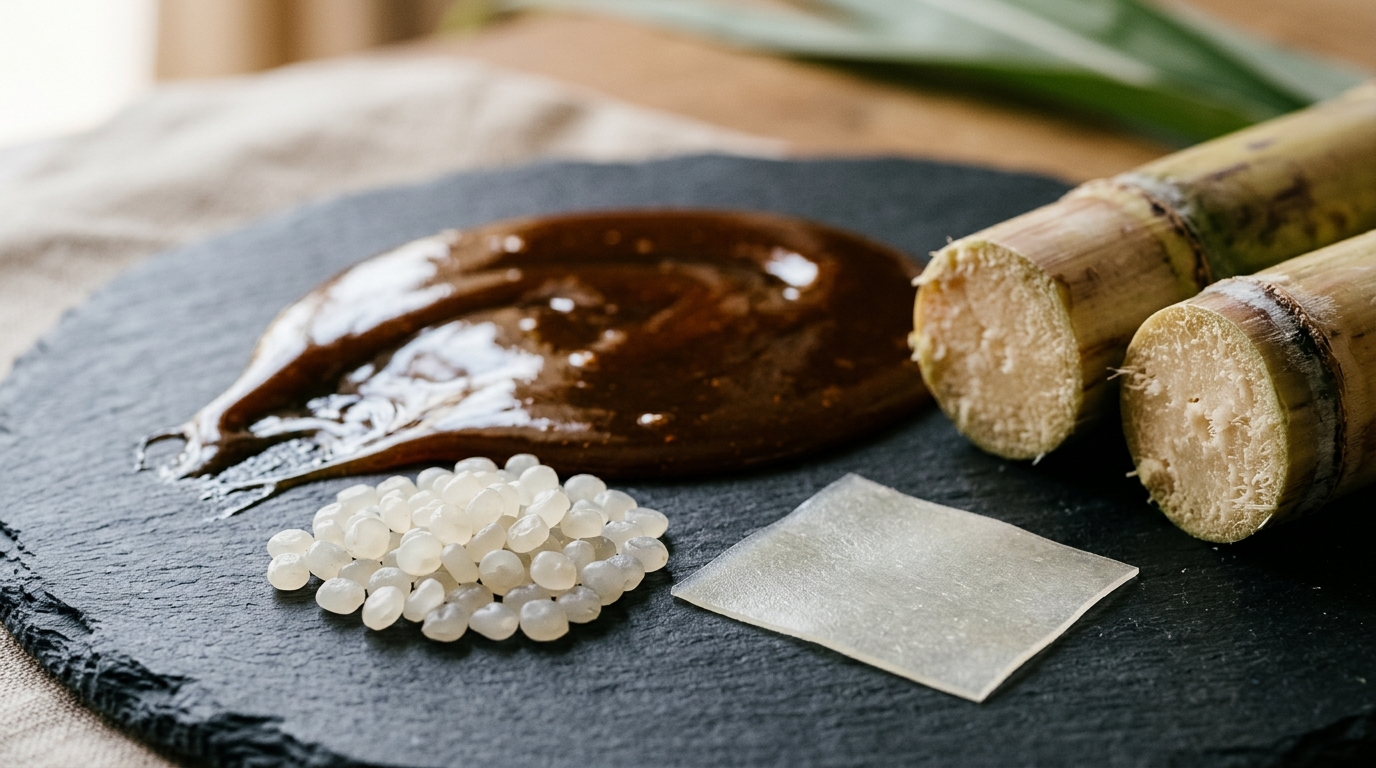
Researchers have demonstrated that sugarcane molasses, a common agro-industrial waste product, can serve as an effective low-cost carbon source for the production of polyhydroxybutyrate (PHB). The study, published in BMC Biotechnology, focuses on the strain Pseudomonas plecoglossicida MK-6, which was isolated from dumping soil and identified through partial 16S rRNA gene sequencing. The primary objective of the research was to address the high production costs associated with PHB, a biodegradable alternative to petrochemical plastics, by replacing conventional carbon sources such as glucose with waste-derived substrates.

The production of PHB has long been hindered by the expense of the carbon sources typically used in fermentation processes.

The bacterial isolate, designated GSBB-5a2-2, was initially screened for its ability to produce PHB using Sudan Black B and Nile Blue A staining techniques. Following positive screening, the strain was formally identified as Pseudomonas plecoglossicida MK-6 based on genetic sequencing, with the sequence deposited in GenBank under accession number OQ236410.

To determine the most effective conditions for PHB synthesis, the researchers employed a one-variable-at-a-time optimization approach. The results indicated that a concentration of 5% sugarcane molasses served as the optimal carbon substrate. For nitrogen, ammonium sulfate was used, with a carbon-to-nitrogen ratio of 8:1 proving most favorable for production.

Physiological conditions were also optimized to enhance the fermentation process. The study found that a pH of 7, a temperature of 37 degrees Celsius, an agitation rate of 200 rpm, and an incubation time of 48 hours constituted the optimal environment for the bacteria. Under these specific conditions, the maximum PHB production reached 7.3 grams per liter.

Following the initial optimization, the researchers utilized Response Surface Methodology (RSM) based on a Box–Behnken Design to validate and refine the experimental process.

The extracted polymer was characterized using Fourier-transform infrared spectroscopy (FT-IR), which confirmed the chemical structure of the produced material as PHB. The confirmation of PHB production by Pseudomonas plecoglossicida MK-6 using sugarcane molasses validates the feasibility of the proposed bioprocess.

While PHB production by Pseudomonas plecoglossicida has been reported in previous studies, this research distinguishes itself by focusing on the optimization of synthesis using a low-cost, waste-derived carbon source. The study highlights the potential for sustainable and cost-effective bioprocess development, where waste streams are converted into valuable materials.

Subject of Research: Optimization of polyhydroxybutyrate production from sugarcane molasses using Pseudomonas plecoglossicida MK-6

Article Title: Sustainable valorization of sugarcane molasses into polyhydroxybutyrate by Pseudomonas plecoglossicida MK-6 and optimization using response surface methodology

Article References: Begum, H., Bibi, A., Bibi, N., Mahmood, T., Ghani, A., Mosa, W. F. A., Almutairi, K. F., Omar, A. A., & Afzal, S. (2026). Sustainable valorization of sugarcane molasses into polyhydroxybutyrate by Pseudomonas plecoglossicida MK-6 and optimization using response surface methodology. BMC Biotechnology. https://doi.org/10.1186/s12896-026-01213-2

Image Credits: AI Generated

DOI: 10.1186/s12896-026-01213-2

Keywords: polyhydroxybutyrate, sugarcane molasses, Pseudomonas plecoglossicida, biodegradable plastics, response surface methodology, fermentation optimization, agro-industrial waste, bioprocess engineering, Sustainable, valorization, sugarcane, molasses

News Source: Gregory Coleman. (November 8, 2026). Sugarcane Molasses Fuels PHB Production by Pseudomonas Strain. Scienmag.

Tags: agro-industrial wastebiodegradable plasticsbioprocess engineeringFermentation optimizationmolassespolyhydroxybutyratePseudomonas plecoglossicidaresponse surface methodologysugarcanesugarcane molassessustainablevalorization
Share12Tweet7Share2ShareShareShare1

Related Posts

Experiential Workshop Expands Mexican Students' Understanding of Bat Diets and Ecological Roles

Experiential Workshop Expands Mexican Students’ Understanding of Bat Diets and Ecological Roles

November 17, 2026
Engineered Escherichia Coli Produces C14-Enriched Lipid Adjuvant Homologs in Bioreactor Batches

Engineered Escherichia Coli Produces C14-Enriched Lipid Adjuvant Homologs in Bioreactor Batches

November 17, 2026

Swine Fever Virus Disrupts Blood-Testis Barrier Integrity in Laboratory Models

November 17, 2026

Natural History Museum Digitizes Hundreds of Jason Londt Robber Fly Types

November 17, 2026

POPULAR NEWS

  • Review Highlights Multi-Level Factors Influencing Clinical AI Adoption by Healthcare Providers

    Review Highlights Multi-Level Factors Influencing Clinical AI Adoption by Healthcare Providers

    29 shares
    Share 12 Tweet 7
  • Gut Microbiota and Metabolites Influence Immunotherapy Response in Liver Cancer

    29 shares
    Share 12 Tweet 7
  • Nonlinear Sex-Specific Remodeling of the TCRβ Repertoire During Adult Aging

    29 shares
    Share 12 Tweet 7
  • Capped Nanovials Enable Extended Cell Growth and Screening in UCLA Study

    29 shares
    Share 12 Tweet 7

About

We bring you the latest biotechnology news from best research centers and universities around the world. Check our website.

Follow us

Recent News

Fusobacterium nucleatum Extracellular Vesicles Trigger Neuroinflammation and Anxiety-Like Behaviors via IL-1β

Experiential Workshop Expands Mexican Students’ Understanding of Bat Diets and Ecological Roles

Immune Cell Exhaustion May Drive Neurodegeneration in Alzheimer’s and Parkinson’s

Subscribe to Blog via Email

Enter your email address to subscribe to this blog and receive notifications of new posts by email.

Join 88 other subscribers
  • Contact Us

Bioengineer.org © Copyright 2023 All Rights Reserved.

Welcome Back!

Login to your account below

Forgotten Password?

Retrieve your password

Please enter your username or email address to reset your password.

Log In
No Result
View All Result
  • Homepages
    • Home Page 1
    • Home Page 2
  • News
  • National
  • Business
  • Health
  • Lifestyle
  • Science

Bioengineer.org © Copyright 2023 All Rights Reserved.