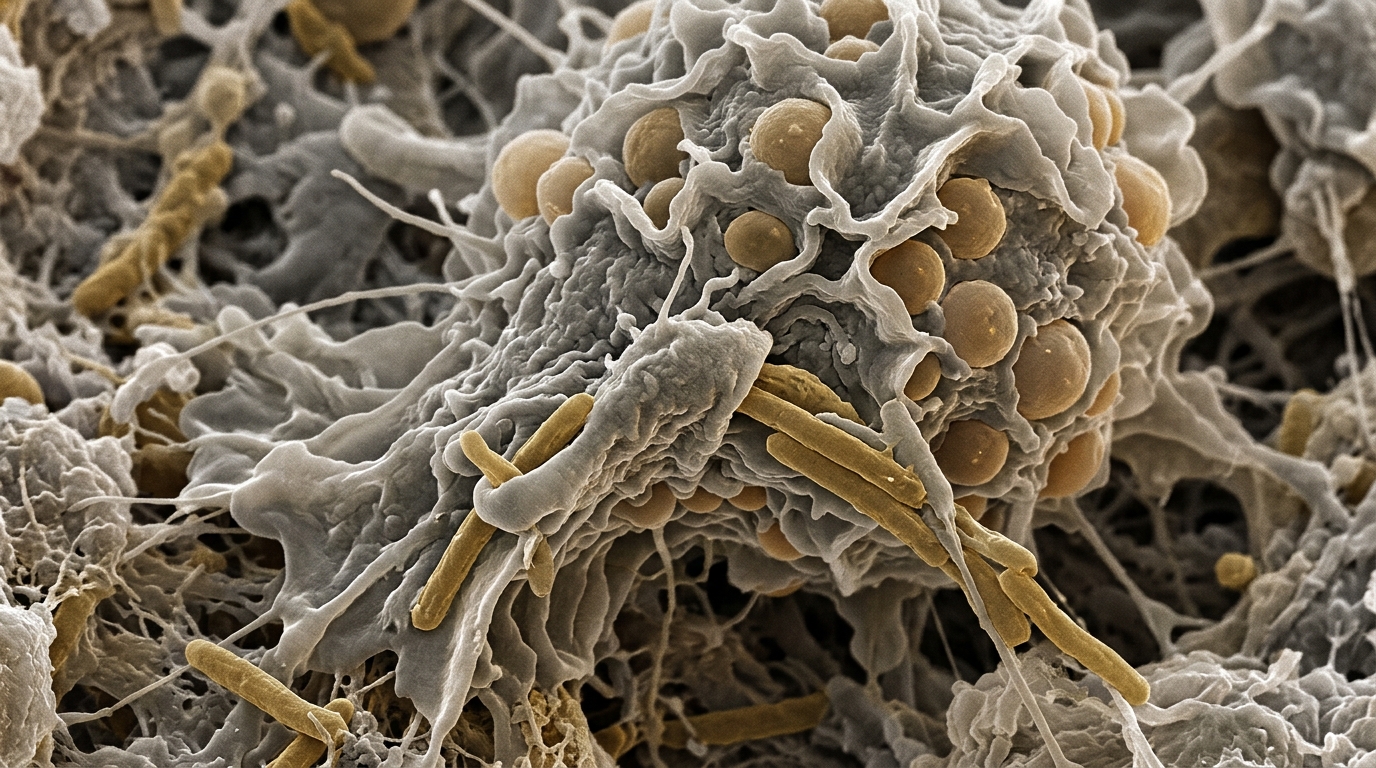
Researchers have identified a specific lipid mediator, Resolvin D5, that reprograms the metabolic activity of human macrophages, thereby compromising their ability to control Mycobacterium tuberculosis. This finding, published in Cellular and Molecular Life Sciences, offers a new perspective on how the bacterium evades innate immunity. The study focuses on the immunometabolic window provided by tuberculous pleural effusion, a common extrapulmonary manifestation of tuberculosis that frequently coexists with pulmonary disease. By analyzing patient-derived samples, the team demonstrated that the microenvironment of the pleural effusion induces a distinct metabolic state in macrophages that directly undermines their antimicrobial functions.
The investigation began with the observation that Mycobacterium tuberculosis has evolved sophisticated strategies to establish persistent infection by evading the host’s innate immune defenses. Despite this knowledge, the precise mechanisms by which the bacterium reprograms human macrophage metabolism remained incompletely defined. The researchers utilized tuberculous pleural effusion samples because this condition offers a clinically relevant and unique environment for studying the interaction between the pathogen and the host immune system. The study design involved a detailed lipidomic analysis of these samples to identify specific molecular changes associated with immune dysfunction.
Lipidomic analysis of the patient-derived samples revealed a significant enrichment of Resolvin D5, a specialized pro-resolving mediator. The abundance of this lipid was strongly associated with reduced glycolytic activity in the macrophages. The reduction in this activity suggests that the presence of Resolvin D5 shifts the metabolic profile of macrophages away from a state of high antimicrobial capacity. This metabolic shift appears to be a key factor in the compromised immune response observed in the pleural microenvironment.
To determine whether Resolvin D5 was actively produced in response to the infection, the researchers examined the acellular fraction of the tuberculous pleural effusion. They found that this fraction promoted the production of Resolvin D5 by monocytes. This observation was consistent with increased expression of the biosynthetic enzymes required for Resolvin D5 synthesis in pleural monocytes isolated from tuberculosis patients.
Further experiments confirmed the functional impact of Resolvin D5 on macrophage behavior. Exogenous treatment of macrophages with Resolvin D5 was sufficient to reduce glycolysis and impair the intracellular control of Mycobacterium tuberculosis. This demonstrates that the lipid mediator is not merely correlated with immune dysfunction but is capable of directly causing it. The results highlight a causal link between the accumulation of Resolvin D5 and the failure of macrophages to eliminate the bacterium.
The study also investigated the signaling pathways involved in this metabolic reprogramming. Pharmacological blockade of the GPR32 receptor counteracted the effects of Resolvin D5, supporting the involvement of GPR32 signaling in the macrophage response. Pharmacological stabilization of HIF-1α restored several macrophage functions that had been impaired by Resolvin D5, further linking the lipid mediator to specific intracellular signaling pathways.
These findings identify Resolvin D5 as a biologically relevant lipid mediator that reproduces key features of the macrophage dysfunction induced by the tuberculous pleural effusion microenvironment. The study supports a role for GPR32- and HIF-1α-associated pathways in this process, providing a mechanistic framework for understanding how the pathogen manipulates host metabolism. The research underscores the complexity of the immune response to tuberculosis and highlights the importance of metabolic reprogramming in the establishment of persistent infection.
Subject of Research: Lipid-mediated reprogramming of macrophage metabolism in tuberculosis
Article Title: Lipid-mediated GPR32 signaling reprograms macrophage metabolism to impair anti-tuberculous immunity
Article References: Barros, J., Ferrini, L., Maio, M., Ledesma, M. M., Boix, M. E., Faivre, N., Monard, S. C., Marín Franco, J. L., Métais, A., Sabbione, F., Fuentes, F., Grosso, T. M., Rengel, D., Errea, A. J., Aragone, X., Sanchez Cunto, M., Palmero, D., Matteo, M., Ostrowski, M., … Balboa, L. (2026). Lipid-mediated GPR32 signaling reprograms macrophage metabolism to impair anti-tuberculous immunity. Cellular and Molecular Life Sciences. https://doi.org/10.1007/s00018-026-06480-y
Image Credits: AI Generated
DOI: 10.1007/s00018-026-06480-y
Keywords: tuberculosis, macrophages, Resolvin D5, GPR32, metabolism, innate immunity, pleural effusion, Mycobacterium tuberculosis, glycolysis, HIF-1α, Lipid-mediated, signaling
News Source: Kristina Jarvis. (November 8, 2026). Lipid mediator impairs macrophage immunity against tuberculosis. Scienmag.