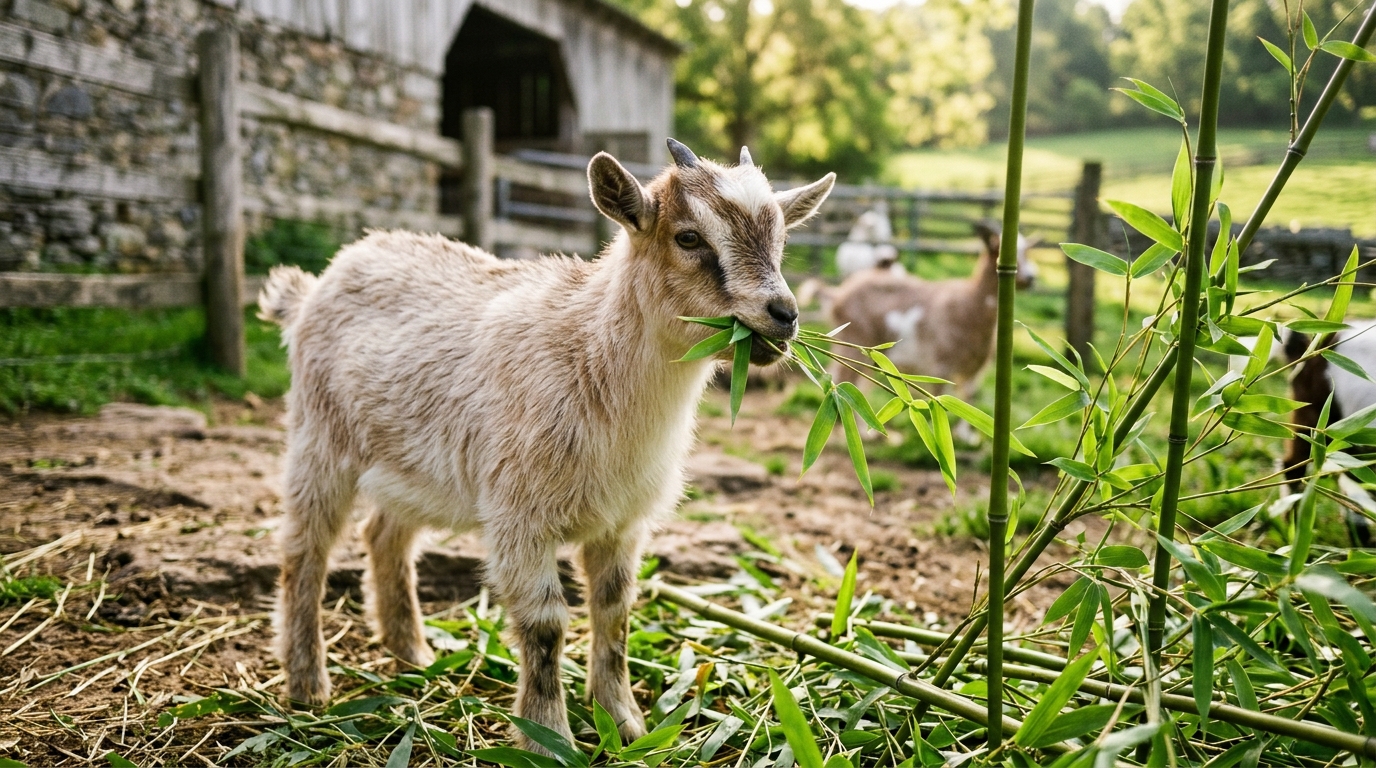
Researchers have identified a specific dietary intervention that enhances immune function and intestinal health in young goats. A new study published in the journal Animal Microbiome demonstrates that bamboo leaf flavonoids, abbreviated as BLF, modulate the interface between the host and the colonic microbiome. The study, conducted by a team of scientists including Yapeng Hu and Jianbo Cheng, assessed the impacts of these compounds on blood immunity, colonic metabolites, microbial composition, and barrier functions in goat kids.
The experimental design involved a total of 64 goat kids, each 10 days old at the start of the trial, with an initial body weight of 3.77 ± 0.60 kg. The animals were randomly assigned to four dietary treatments. The control group, labeled CON, received milk only. The other three groups received milk supplemented with bamboo leaf flavonoids at increasing concentrations: 30 mg/kg body weight (LBLF), 60 mg/kg body weight (MBLF), and 120 mg/kg body weight (HBLF).
One of the primary observations was a significant reduction in the frequency of diarrhea among the BLF-treated groups compared to the control group. Goat kids in the MBLF group, which received the moderate dose of 60 mg/kg, exhibited significantly higher serum levels of the cytokines IL-2 and IL-4 compared to the control group. In contrast, no significant differences were detected in IL-6, IL-1β, or TNF-α levels (P > 0.05).
The MBLF group showed elevated serum IgG levels (P < 0.05). However, levels of IgM and IgA remained unchanged relative to the CON group (P > 0.05). Additionally, the MBLF group had a greater colon length than the control, LBLF, and HBLF groups. Qualitative histological examination suggested a comparatively well-organized colonic morphology in the MBLF group.
Metabolomic analysis revealed that BLF supplementation significantly reshaped colonic metabolite profiles. The treatment increased the relative abundance of metabolites annotated to the KEGG flavone and flavonol biosynthesis pathway. These metabolic changes were associated with improved immune function and anti-inflammatory capacity in the goat kids. Specifically, BLF supplementation altered the colonic microbial community structure and increased the relative abundance of dominant bacteria linked to a healthy intestinal tract.
The expression of genes including ZO-1, claudin-2, claudin-1, and occludin was significantly upregulated in the colon tissue of the treated animals.
The conclusions drawn from this research demonstrate that bamboo leaf flavonoids enhance intestinal health and immune function in goat kids. The protective effect appears to be mediated through alterations in gut metabolites, which subsequently promote the enrichment of beneficial microbes and modulate host immune responses.
Subject of Research: Effects of bamboo leaf flavonoids on immune function and gut health in goat kids
Article Title: Bamboo leaf flavonoids modulate the colonic host-microbiome interface in goat kids to enhance immune function
Article References: Hu, Y., Zhuo, Z., Wang, Q., Jiang, M., Wang, D., Bao, X., Fan, C., Liu, S., & Cheng, J. (2026). Bamboo leaf flavonoids modulate the colonic host-microbiome interface in goat kids to enhance immune function. Animal Microbiome. https://doi.org/10.1186/s42523-026-00623-z
Image Credits: AI Generated
DOI: 10.1186/s42523-026-00623-z
Keywords: bamboo leaf flavonoids, goat kids, immune function, colonic microbiome, gut health, cytokines, intestinal barrier, metabolomics, animal nutrition, Animal Microbiome, Bamboo, leaf
News Source: Drew Townsend. (November 8, 2026). Bamboo flavonoids boost immune function in young goats. Scienmag.