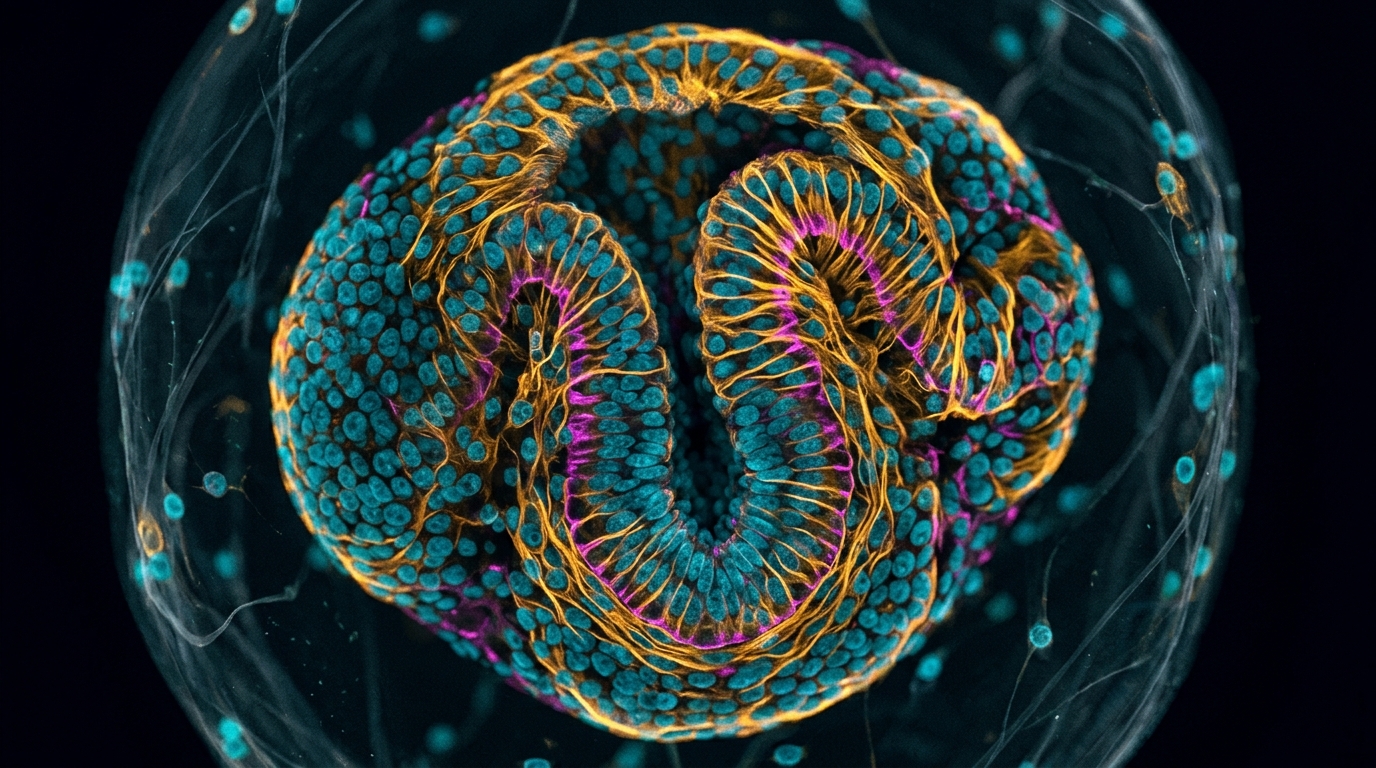
A perspective published in Development Genes and Evolution argues that foundational concepts from experimental embryology remain essential for advancing modern organoid research. The article, authored by Gerhard Schlosser and published in October 2023, examines the historical quest to identify the specific units of development. It posits that to generate more life-like organoids in vitro for studying developmental processes and diseases, researchers must increasingly consider the spatiotemporal units of development, specifically when and how tissues and organs are determined and patterned.
The central historical question in experimental embryology, known as Entwicklungsmechanik, was proposed by Wilhelm Roux in 1885. Roux sought to elucidate whether organisms or their parts develop autonomously, a process termed “self-differentiation,” or whether they require interactions with other parts or the environment. Early experimental embryologists soon realized that concepts like “self-differentiation” only make sense when applied to particular parts or units of the developing embryo. These units must be defined both in time and space to be meaningful in the context of developmental biology.
The formation of tissues or organs may initially depend on interactions with surrounding tissues. However, these structures later become independent of such interactions, a state referred to as being “determined.” The article distinguishes between the determination of a particular tissue or organ primordium and the spatially coordinated determination of its parts.
Not all primordia rely on the same mechanisms for proper patterning. Some depend on extrinsic influences, such as signals from adjacent tissues, to organize their structure. Others, however, rely on intrinsic mechanisms. Such intrinsically patterned units may behave as “morphogenetic fields.” These fields have the capacity to compensate for lost parts and regulate their size and proper patterning.
The insights regarding morphogenetic fields and intrinsic patterning were won by experimental embryologists more than 100 years ago. Despite their age, these concepts retain their relevance today. The perspective highlights that the historical understanding of how tissues and organs are determined and patterned provides a conceptual framework for modern research. By focusing on the determination and patterning of the inner ear, the article illustrates how these historical concepts apply to specific biological systems.
The article specifically emphasizes studies published in Development Genes and Evolution to demonstrate the continued relevance of these concepts. The inner ear serves as a model system for examining the spatiotemporal units of development.
The goal of applying these historical concepts to organoid research is to enable the generation of more life-like organoids in vitro. By considering the spatiotemporal units of development, researchers can better design organoids that accurately represent the developmental processes of the organs they model.
The perspective underscores the importance of integrating historical knowledge with modern technology. The quest for the units of development, from “self-differentiation” to organoids, is an ongoing effort in developmental biology. By revisiting the foundational questions of experimental embryology, researchers can refine their approaches to organoid generation.
Subject of Research: The application of historical experimental embryology concepts to modern organoid research
Article Title: From “self-differentiation” to organoids—the quest for the units of development
Article References: Schlosser, G. (2024). From “self-differentiation” to organoids—the quest for the units of development. Development Genes and Evolution, 234(2), 57-64. https://doi.org/10.1007/s00427-023-00711-z
Image Credits: AI Generated
DOI: 10.1007/s00427-023-00711-z
Keywords: developmental biology, organoids, experimental embryology, self-differentiation, patterning, morphogenetic fields, inner ear, Wilhelm Roux, determination, in vitro models, quest, units
News Source: Gregory Coleman. (November 8, 2026). Historical Embryology Concepts Guide Modern Organoid Research. Scienmag.