The software addresses a significant computational bottleneck in multivariate dependence modeling, where the number of possible regular vine structures grows exponentially with the number of variables. By integrating high-performance computing (HPC) orchestration with statistical fitting libraries, Trasgu allows researchers to evaluate millions of candidate structures systematically rather than relying on sequential or greedy algorithms that may miss optimal configurations.
The primary motivation for developing Trasgu stems from the limitations of current software implementations for vine copulas. Most available tools in R and Python utilize sequential or greedy algorithms to make the fitting process computationally feasible. While these methods are necessary for practical modeling, they represent a simplifying decision that restricts the search space of regular vines. The consequences of this restriction can only be systematically studied when sufficiently large sets of regular vines are available and can be fitted to data, a task that requires substantial computational resources and specialized infrastructure.
Chimera, a precomputed collection of regular vine matrices, serves as the foundational dataset for these exhaustive searches. It contains all regular vine matrices for up to eight variables, ranging from 24 structures on four nodes to 660,602,880 structures on eight nodes. Recent work has demonstrated that complete brute-force fitting is possible using HPC, enabling systematic experiments to test commonly used algorithms such as Dißmann’s algorithm. However, prior to Trasgu, carrying out such studies required ad-hoc matrix partitioning and manual batch submission on dedicated clusters, making the process difficult to reuse for researchers without specialist computing support.
Trasgu overcomes these limitations by automating matrix partitioning, parallel execution, and result aggregation. The software divides the Chimera matrix collection into deterministic chunks, retrieves the corresponding matrix ranges from chunked Zarr arrays, and distributes independent fits among worker processes. Statistical fitting is performed by pyvinecopulib, while the workflow management is handled by Snakemake. This integration allows fitting campaigns to proceed without manually submitting successive batches of jobs, ensuring that valid results are preserved even if the workflow is interrupted.
The architecture of Trasgu separates scientific configuration from computational infrastructure. Users define the input data, fitting controls, and chunk definitions in a YAML configuration file, while infrastructure-specific settings such as the execution backend, queue, and concurrency limits are managed through Snakemake profiles. This design improves portability and facilitates reproducibility, allowing the same workflow to be adapted to personal computers, cloud virtual machines, or HPC systems without altering the scientific specification of the analysis. Matrices are accessed on demand via HTTP from a server at the University of Cantabria, eliminating the need for prior data downloads.
In this controlled setting, Trasgu fitted all 2,580,480 seven-dimensional Chimera matrices across 100 independent simulations. The generating matrix was selected in 60 of the 100 simulations, and the exhaustive search yielded a lower AIC than Dißmann’s heuristic algorithm in every case. The median absolute AIC difference from the constrained Clayton reference was 52.2 for the exhaustive search, compared to 1573.9 for Dißmann’s algorithm, highlighting the sub-optimal nature of heuristic tree selection under asymmetric tail dependence.
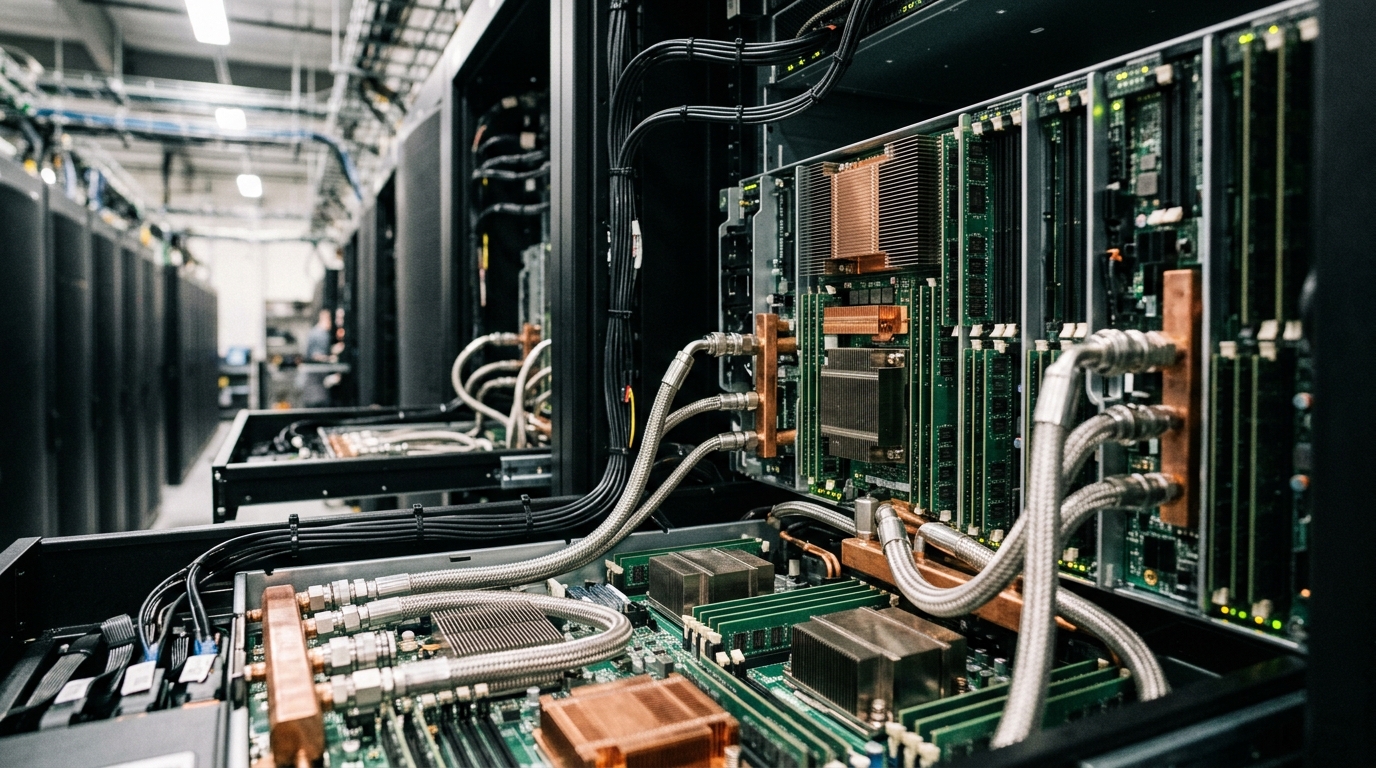
The computational scale of the synthetic experiment was substantial, generating 1,000 fitting jobs on the Altamira HPC infrastructure of the University of Cantabria. The mean effective duration of these jobs was 17 minutes and 50 seconds, with at most 60 jobs running simultaneously. The total interval from the start of the first chunk to the completion of the last was 5 hours and 9 minutes, excluding scheduler queueing time. Based on the mean job duration, running the same 100 jobs sequentially on a single core would have required approximately 198 days, underscoring the necessity of parallel orchestration for high-dimensional fitting.
Trasgu was also applied to an eight-dimensional ship-wave dataset from the Savannah River, demonstrating its capability to handle massive combinatorial spaces and recover from runtime interruptions. The dataset consisted of 179 complete observations describing ship geometry, motion, and wake response, transformed into pseudo-observations. The 660,602,880 eight-dimensional Chimera structures were partitioned into 166 independent fitting jobs. During execution, the workflow was interrupted after 129 chunks had completed due to an exhausted disk quota. Upon resumption, the workflow detected the existing chunk outputs and did not recompute them, completing the remaining 37 chunks in a shorter timeframe by adjusting the execution profile.
The exhaustive search on the ship-wave data identified a model with an AIC of −577.0667, which was 16.33 units lower than the AIC of −560.7392 obtained by Dißmann’s sequential algorithm. The empirical cumulative probability at the Dißmann result was approximately 0.0061, indicating that about 4.04 million of the exhaustively fitted structures had an equal or lower AIC. This result illustrates the potential for exhaustive searches to reveal superior models that sequential methods may overlook, providing a valuable reference for evaluating heuristic structure-selection algorithms.
The development of Trasgu reduces the dependence on specialist programming support for preparing and repeating exhaustive fitting campaigns. Its documented configuration and packaged workflow allow researchers with suitable resources to reuse the same implementation while adapting the data and execution profile to their specific analysis. The software supports the investigation of the multiplicity of similarly scoring structures, their stability across datasets, and the effects of restricting the candidate space, contributing to a better understanding of vine copula models and their selection procedures.
Looking forward, the authors note that Chimera collections are currently available for up to eight variables, with a complete nine-dimensional collection estimated to contain approximately 380.5 billion matrices. The infrastructure provided by Trasgu makes generating and exploring this larger collection a concrete next research step, although its construction and distribution remain future work. The software is released under the MIT License and is available on PyPI, with comprehensive documentation and benchmark scripts provided in the GitHub repository to support reproducibility and further development.
The software operates by converting the original compressed Python pickle files into chunked Zarr arrays, enabling indexed access to the massive matrix collections. This approach is critical because loading all 660,602,880 eight-dimensional matrices as unsigned 8-bit integers requires 42.28 GB of memory for the array alone, a volume that exceeds the capacity of many personal computers and individual high-performance computing job allocations. By retrieving only the specific matrix ranges needed for a given task, Trasgu ensures that practical use remains feasible without requiring prior data downloads.
Verification of the software’s correctness was conducted by comparing Trasgu’s outputs against sequential Python fits using the original TU Delft Chimera files. In this validation process, two five-dimensional models shared Chimera structure 61, with one utilizing ten Clayton pair-copulas and the other using six Clayton and four Gaussian pair-copulas. The AIC values produced by Trasgu matched the manual benchmark within numerical precision, with a maximum absolute difference below 5×10⁻⁷.
Before committing significant computational resources, users can employ several command-line tools to preview and plan their campaigns. The trasgu_count_chunks command reports the number of tasks required for a given configuration, while trasgu_time_fit allows users to measure the execution time of a single chunk. Additionally, trasgu_run with the dry-run option provides a preview of the planned jobs, helping researchers select a suitable chunk size and worker count. Once a campaign is underway, trasgu_monitor reports the status of completed and pending chunks along with their completion percentages. If a campaign is interrupted, relaunching it schedules only the missing or outdated results, preserving valid chunk outputs and preventing redundant computation.
The choice of one-parameter copula families and AIC selection serves as the baseline configuration for the benchmarks and comparisons presented in the study. This standardized approach allows for direct comparison between the exhaustive search and heuristic algorithms like Dißmann’s, ensuring that both methods operate under identical settings regarding candidate families and estimation procedures.
By making large-scale comparative investigations computationally tractable and reproducible, Trasgu supports a more systematic evaluation of the consequences of restricting the candidate space in multivariate dependence modeling.
Subject of Research: Automated exhaustive fitting of vine copulas using high-performance computing
Article Title: Trasgu: A wrapper for simplified vine copula fitting with Chimera across local and high-performance computing platforms
Article References: Fernández-Quiruelas, V., Mares-Nasarre, P., ’t Hart, C. M. P., & Morales-Nápoles, O. (2026). Trasgu: A wrapper for simplified vine copula fitting with Chimera across local and high-performance computing platforms. SoftwareX, 36, Article 103194. https://doi.org/10.1016/j.softx.2026.103194
Image Credits: AI Generated
DOI: 10.1016/j.softx.2026.103194
Keywords: vine copulas, high-performance computing, Trasgu, Chimera, multivariate dependence, Python, Snakemake, statistical modeling, parallel computing, open-source software, wrapper, simplified
News Source: Denise Maddox. (November 8, 2026). Trasgu Automates Exhaustive Vine Copula Fitting Across HPC Platforms. Scienmag.