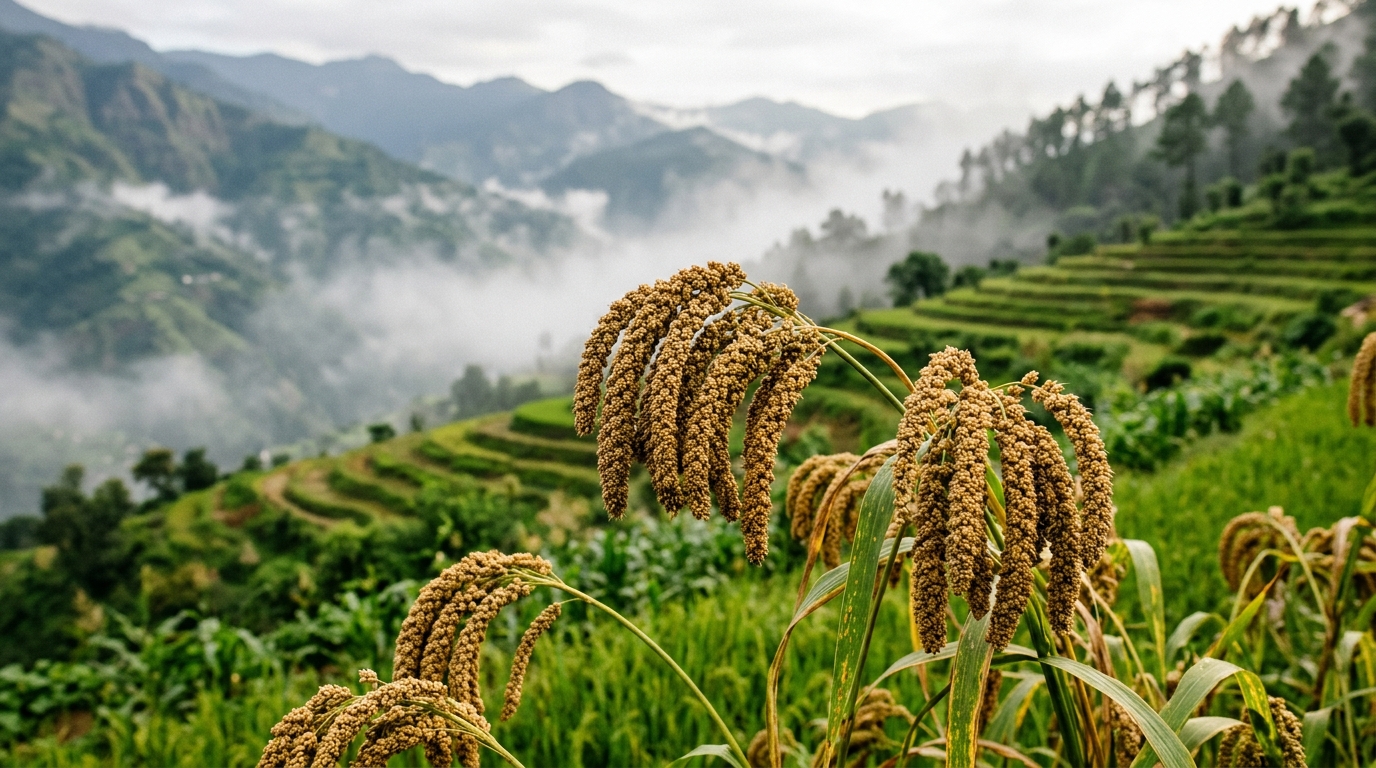
Millets, the nutritious cereal crops long cultivated by tribal farming communities in the Northeastern Himalayan region of India, could play a far greater role in regional food security than they currently do, according to a new study examining why acceptance of these grains varies so widely among the people who grow them. The research, published in Discover Food, analyzed the factors shaping millet adoption among indigenous respondents in the Eastern Himalayan region and identified concrete entry points for strengthening both cultivation and consumption.
The research team employed a multinomial logistic regression model to analyze the factors influencing millet acceptance among respondents in the region. The study used this model to analyze the factors influencing millet acceptance among respondents in the region. Their analysis identified several key socio-demographic factors, including age, health consciousness, education level and occupation, which significantly influenced respondent attitudes and behaviors towards millets.
One of the most striking findings concerned the relationship between knowledge and adoption. The study found a significant correlation between awareness of millet benefits and their adoption.
Training and demonstration efforts already reach a substantial share of the population. Although 68.88% of respondents indicated they had received training and demonstrations regarding millet cultivation and its nutritional value, the authors note that there remain opportunities for expanded knowledge dissemination.
Consumer preferences also emerged as an important dimension of the findings. A significant majority of respondents, 55.6%, indicated a preference for millet-based value-added products, while an even larger proportion, 82.2%, acknowledged the health benefits of these grains. A majority of respondents, 55.6%, indicated a preference for millet-based value-added products, while 82.2% acknowledged the health benefits of these grains.
The study’s findings highlight the necessity of customizing interventions for distinct demographic groups to enhance their effectiveness. Because age, health consciousness, education level and occupation significantly influenced respondent attitudes and behaviors towards millets, the findings highlight the necessity of customizing interventions for distinct demographic groups.
The implications extend beyond the immediate study communities. The authors describe the findings of the research as essential for improving millet production and consumption, which in turn enhances food security and promotes sustainable livelihoods in the region. Millet production, despite its historical importance and the adaptability of these crops to local conditions, remains constrained, limiting its potential role in enhancing regional food security.
The researchers also suggest that their work may serve as a model for other areas encountering similar challenges.
Subject of Research: Factors influencing millet acceptance among indigenous communities in the Eastern Himalayan region of India
Article Title: Study on understanding of millets for the indigenous communities of Eastern Himalayan Region, India
Article References: Singh, T. M., Singh, S. P., Singh, C. R., Singh, S. G., Singh, S. K., Naresh, H., Rangnamei, K. L., Chanu, T. M., Ratankumar, A., Yumnam, A., Devi, H. N., Maibam, A., Sharma, A., Soranganba, N., Singh, N. A., & Asangla, H. K. (2026). Study on understanding of millets for the indigenous communities of Eastern Himalayan Region, India. Discover Food. https://doi.org/10.1007/s44187-026-01299-9
Image Credits: AI Generated
DOI: 10.1007/s44187-026-01299-9
Keywords: millets, indigenous communities, Eastern Himalaya, food security, multinomial logistic regression, millet adoption, value-added products, nutrition, sustainable livelihoods, Northeast India, understanding, indigenous
News Source: Alan Morgan. (November 8, 2026). Millets Hold Key to Food Security for Eastern Himalayan Indigenous Communities. Scienmag.