Published in Current Genetics in March 2025, the study by Chih-Yen King investigates how the triple mutation of ssz1∆, upf1∆, and Hsp104T160M creates a cellular environment capable of supporting the replication of both wild-type and mutant prion variants. The findings challenge previous assumptions about the specific requirements for prion maintenance and highlight the complex interplay between chaperone proteins and amyloid fiber fragmentation in yeast biology.
The study focuses on the yeast prion [PSI+], which is formed by the amyloid conformer of the Sup35 protein. In wild-type yeast cells, the propagation of [PSI+] requires the activity of the Hsp104 disaggregase, which cuts long amyloid fibers into smaller pieces to ensure that daughter cells receive sufficient seeds to continue the replication cycle. However, the Hsp104T160M mutant exhibits weaker disaggregase activity, leading to the loss of many [PSI+] variants that are stable in wild-type backgrounds. Conversely, some variants propagate well with Hsp104T160M but are eliminated by the wild-type protein, creating a dichotomy in prion compatibility.
Previous reports by Son and Wickner suggested that certain [PSI+] variants required the deletion of SSZ1, UPF1, or both to propagate, particularly in the BY4742 genetic background. The current study attempted to isolate these specific variants in the 74-D694 strain, a genetic background known for efficient prion induction. Unexpectedly, the researchers did not find variants that were cured by Ssb1/2, Ssz1, or Upf1 when induced and propagated in 74-D694. Instead, they observed that the double deletion of SSZ1 and UPF1 in Hsp104T160M cells allowed for the propagation of otherwise unsupported [PSI+] variants from wild-type cells without sacrificing the existing support for weaker variants.
The experimental design involved inducing [PSI+] variants through transient overexpression of Sup35 and selecting for colonies that could maintain the prion state. The researchers used a combination of colony color assays and GFP labeling to distinguish between different prion variants. By crossing [PSI+] colonies with wild-type and T160M tester cells, they determined the variant-specific compatibility with different Hsp104 alleles. The results showed that the ssz1∆ upf1∆ double mutation in T160M cells generated an accommodating environment for all [PSI+] variants, including those that normally require wild-type Hsp104 for propagation.
Further analysis revealed that the pro-prion effect of the double deletion was not due to the removal of active curing by Ssz1 or Upf1, as no such curing activity was observed for the variants studied. Instead, the double deletion triggered a cellular response that enabled more efficient fragmentation of prion fibers, thereby remedying the weak activity of Hsp104T160M. This “Goldilocks” conditioning, where the cellular environment is just right for prion propagation, appears to be a general phenomenon applicable to other yeast prions as well.
The study also examined the propagation of [PIN+] variants, the prion form of the Rnq1 protein. Two [PIN+] variants that propagate well with wild-type Hsp104 but poorly with Hsp104∆N, a mutant lacking residues 2-147, were found to thrive with the latter if Ssz1 and Upf1 were also deleted. In this case, the double deletion resulted in higher Hsp104∆N expression, leading to improved generation of prion seeds for robust propagation. Western blot analysis confirmed that the expression level of Hsp104∆N correlated with the extent of improvement observed for prion propagation, with the double deletion resulting in the highest protein level.
Quantitative reverse transcription PCR (RT-qPCR) further confirmed that upf1∆ cells contained approximately 1.5 times more Hsp104∆N transcripts than the Upf1+ counterpart. This increase in expression is attributed to the removal of nonsense-mediated degradation of Hsp104∆N transcripts, which contain an artefactual out-of-frame ATG triplet right in front of the initiation codon. The resulting higher expression of Hsp104∆N compensates for the weak disaggregase activity, helping the [PSI+] variants to propagate. This finding provides a mechanistic explanation for the pro-prion effect of the upf1∆ mutation in the context of Hsp104∆N.
The researchers also investigated the propagation properties of the D3 variant, which can barely propagate in wild-type cells, T160M cells, or cells overexpressing the wild-type Hsp104. However, D3 can be maintained in wild-type cells as long as the SUP35 gene is relocated from the chromosome to a low-copy-number plasmid. When cytoduced to Hsp104T160M ssz1∆ upf1∆ cells, D3 survived and propagated, suggesting that the triple mutant creates an intermediate activity level that is just right for this variant. This result supports the hypothesis that the stabilization of [PSI+] in the triple mutant is mainly due to enhanced seed fragmentation rather than other mechanisms.
The study highlights the importance of the genetic background in determining prion variant compatibility. The discrepancy between the current findings and previous reports by Son and Wickner may be attributed to the difference in genetic backgrounds, as most of the experiments in the referenced works were performed with the BY4742 background, while the current study used the 74-D694 strain. De novo [PSI+] induction in BY4742 is several orders of magnitude less efficient than in 74-D694 until specific mutations bring the efficiency up to a comparable level. Further work is required to clarify and reconcile the different results obtained in these distinct genetic contexts.
In summary, the T160M mutation weakens the disaggregase activity of Hsp104, leading to the loss of Class I variants due to insufficient fragmentation. Additional ssz1∆ and upf1∆ mutations allow Class I variants to regain the ability to propagate, making the cell susceptible to all [PSI+] variant types. The pro-prion effect of ssz1∆ and upf1∆ is not limited to [PSI+] but also applies to [PIN+] variants, indicating a general mechanism for prion propagation. These findings have broader implications for understanding amyloid diseases in humans, where the gradual erosion of cell quality control systems due to aging or somatic mutations could result in the growth of amyloid species, exacerbating organ disfunctions.
The study was conducted using the 74-D694 yeast strain, a genetic background characterized by specific mutations including ade1-14, ura3-52, leu2-3,112, trp1-289, and his3-∆200. This strain is noted for its high efficiency in de novo [PSI+] induction compared to other backgrounds. To construct the necessary mutant strains, the researchers employed a two-step homologous recombination process to introduce the Hsp104T160M and Hsp104∆N mutations. The Hsp104∆N mutant specifically lacks amino-acid residues 2 through 147, a modification that was achieved by integrating a PCR product containing the Hsp104(148–908) sequence. During this construction, a BamHI restriction site was inadvertently introduced between the promoter and the start codon, which created an upstream, out-of-frame ATG triplet in the transcript. This cloning artifact proved significant for the study’s mechanistic insights, as it made the Hsp104∆N transcript a target for nonsense-mediated degradation (NMD), thereby reducing its baseline expression levels in wild-type cells.
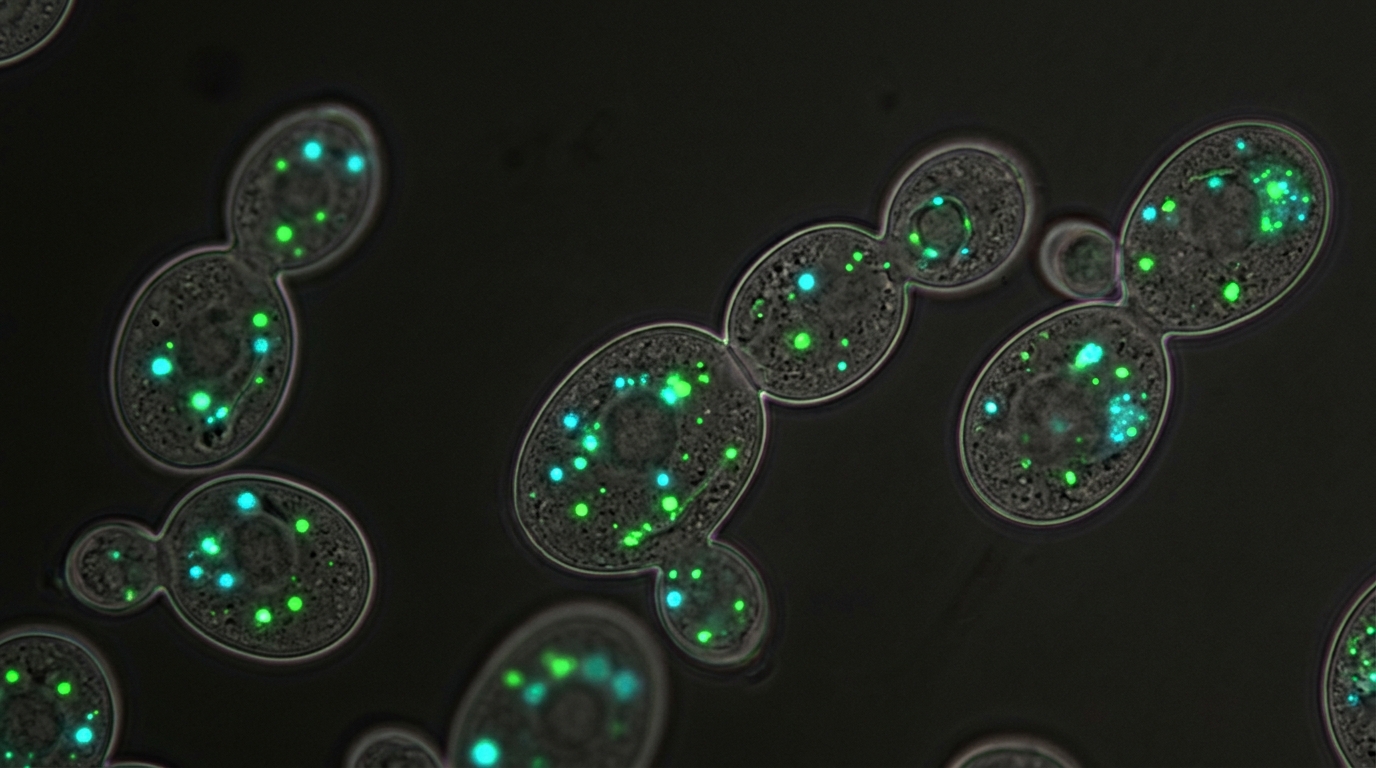
Variant typing was performed using ten distinct probes to differentiate the various [PSI+] conformers. Five of these probes were based on a plasmid expressing full-length Sup35 with specific point mutations, including Q15R, S17R, G44R, and G58D. The co-expression of these mutant Sup35 proteins with endogenous Sup35 in [PSI+] cells influenced colony color in a variant-specific manner, allowing researchers to visually distinguish between different prion types. The remaining five probes utilized green fluorescent protein (GFP) fusion constructs, such as Sup(1–61)-GFP and Sup(1–40)-GFP, to label prion particles in vivo. These fusion proteins variant-specifically labeled [PSI+] particles, enabling observation through fluorescence microscopy. For strains lacking Ssz1, which grow poorly with hygromycin, the selection marker was replaced with NatMX4 to facilitate diploid selection on plates containing clonNAT. This methodological adjustment ensured that the genetic deletions did not interfere with the ability to type the prion variants accurately.
The induction of [PSI+] variants was achieved through transient overexpression of Sup35 using a copper-inducible Cup1 promoter. Cultures were grown in synthetic media lacking uracil and leucine, with CuSO4 added to a final concentration of 50 µM to maximize Sup35 expression. After reaching saturation, aliquots were streaked on agar plates to select for [PSI+] colonies, which were identified by their pink or white coloration on rich media, contrasting with the red color of [psi−] colonies. The ade1-14 nonsense allele is suppressible by [PSI+], which relieves the accumulation of a red pigment from blocked adenine synthesis. In addition to induced variants, the researchers also isolated spontaneously formed [PSI+] colonies by growing yeast in glucose media, which suppressed the expression of Sup35(1-253). Small uracil prototrophic colonies were picked under a dissection microscope to maximize the isolation of weak variants, although this approach carried the risk of false positives due to elevated background nonsense suppression in the deletion strains.
Cytoduction was employed to transfer prion variants between different genetic backgrounds without nuclear fusion. This technique allows for the exchange of cytoplasm while selectively maintaining one nucleus, ensuring that the recipient strain retains its specific genetic mutations. Recipient strains were prepared with the kar1∆15 mutation to impede nuclear fusion and the cyh2 mutation to confer cycloheximide resistance. After mating with donor cells, the mixture was streaked on plates containing cycloheximide to select for colonies with the recipient nucleus. These colonies were then replica-plated to media containing glycerol to select for cells that had received healthy mitochondria from the donor. This process ensured that the transferred prion variants were not accompanied by the donor’s nuclear genome, allowing for a clear assessment of how specific genetic deletions affected prion propagation in the recipient background.
Subject of Research: Total propagation of yeast prion conformers in ssz1∆ upf1∆ Hsp104T160M triple mutants
Article Title: Total propagation of yeast prion conformers in ssz1∆ upf1∆ Hsp104T160M triple mutants
Article References: King, C.-Y. (2025). Total propagation of yeast prion conformers in ssz1∆ upf1∆ Hsp104T160M triple mutants. Current Genetics, 71(1), Article 8. https://doi.org/10.1007/s00294-025-01313-0
Image Credits: AI Generated
DOI: 10.1007/s00294-025-01313-0
Keywords: Total, propagation, yeast, prion, conformers, ssz1, upf1, Hsp104T160M, triple, mutants, scientific research
News Source: Drew Townsend. (November 8, 2026). Yeast Prion Propagation Rescued by Triple Mutant Background. Scienmag.