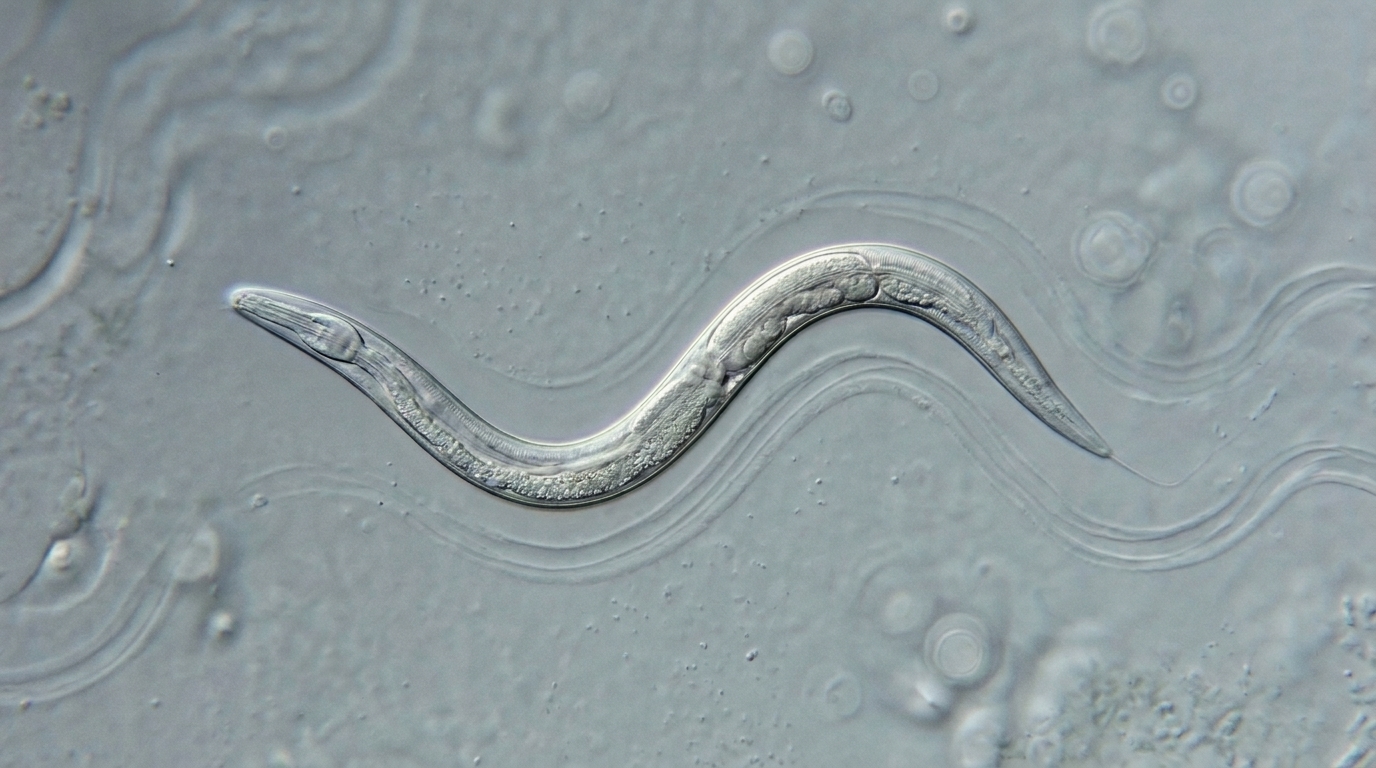
Researchers from Chulalongkorn University and other Thai institutions have identified a specific plant extract that enhances oxidative stress resistance and promotes healthy aging in the nematode Caenorhabditis elegans. Published in the Journal of Agriculture and Food Research, the study focuses on the ethanol extract of Artocarpus thailandicus heartwood, a tree species native to Southeast Asia. The findings suggest that this natural product can modulate conserved cellular signaling pathways associated with longevity and stress adaptation, offering new insights into the biological mechanisms of aging.
The study was motivated by the growing global health burden of age-related chronic diseases, which are closely linked to oxidative stress at the cellular level. Oxidative stress is characterized by an excessive accumulation of reactive oxygen species that disrupt cellular homeostasis and damage essential biomolecules. While organisms possess antioxidant defense systems to neutralize these species, the efficiency of these protective mechanisms declines with age. Consequently, the researchers investigated whether extracts from Artocarpus thailandicus could enhance antioxidant defenses and restore redox balance to delay functional decline.
The team collected air-dried heartwood from Kalasin Province, Thailand, and sequentially extracted it using hexane, dichloromethane, and ethanol. The ethanol extract, designated ATE, was found to contain markedly higher levels of phenolic and flavonoid compounds than the other fractions. Quantitative analysis revealed that ATE possessed a total phenolic content of 176.97 mg GAE/g extract and a total flavonoid content of 18.74 mg QE/g extract. Given the strong association between phenolic compounds and antioxidant activity, ATE was selected for subsequent in vivo experiments due to its superior radical scavenging capacity.
To evaluate the protective effects of ATE, the researchers employed a juglone-induced oxidative stress model in wild-type C. elegans. Juglone is a redox-active compound that generates intracellular oxidative stress and is widely used to induce such conditions in nematodes. Age-synchronized worms were pretreated with various concentrations of ATE before exposure to a lethal dose of juglone. The results showed that ATE significantly improved worm survival in a dose-dependent manner, increasing survival rates to 66.31% and 71.51% at concentrations of 2.5 and 5 μg/mL, respectively. These protective effects were comparable to those observed with oxyresveratrol, a known antioxidant compound.
Further experiments demonstrated that ATE reduces intracellular oxidative status and suppresses the expression of stress-responsive proteins. Using the fluorescent probe H2DCF-DA, the researchers observed that pretreatment with ATE significantly reduced oxidative stress relative to the vehicle control. Additionally, the expression of HSP-16.2, a well-established stress-responsive chaperone, was significantly suppressed by ATE treatment. This suppression restored fluorescence levels to those comparable with the control group, indicating that ATE enhances oxidative stress resistance by mitigating stress-responsive protein expression.
The study also assessed the impact of ATE on the physiological healthspan of the nematodes. While ATE supplementation did not extend the maximum lifespan as determined by the Log-rank test, it significantly enhanced early-to-mid adult viability. This suggests that ATE preferentially promotes early-phase healthspan rather than extending overall lifespan. Importantly, the researchers confirmed that these effects were not due to indirect factors such as food avoidance or developmental defects. ATE treatment did not alter egg-laying behavior, total brood size, or the growth of the bacterial food source, ruling out dietary restriction or impaired reproduction as confounding variables.
At the molecular level, the investigation revealed that ATE activates the DAF-16 and SKN-1 signaling pathways, which are central to stress resistance in C. elegans. Treatment with ATE significantly increased the expression of daf-16 mRNA and promoted the nuclear translocation of DAF-16, a key transcriptional regulator of stress resistance. This activation led to the upregulation of downstream antioxidant genes, including sod-3. Genetic analysis using daf-16 mutant worms demonstrated that DAF-16 is required for the ATE-mediated defense against oxidative stress, as the protective effect was abolished in these mutants.
Similarly, ATE was found to activate the SKN-1 pathway, the functional ortholog of mammalian Nrf2, which regulates oxidative stress resistance and detoxification. ATE increased skn-1 expression and enhanced the nuclear localization of SKN-1, leading to the upregulation of the downstream target gene gst-4. The antioxidant efficacy of ATE was strictly dependent on SKN-1, as supplementation failed to confer any survival advantage to skn-1 mutant worms under oxidative stress. However, lifespan extension remained detectable in these mutants, indicating that SKN-1 is not strictly required for the healthy aging effects of ATE.
The coordinated activation of these pathways appears to be linked to the suppression of the DAF-2 receptor, a component of the insulin/insulin-like growth factor-1 signaling pathway. ATE treatment significantly reduced daf-2 mRNA expression and decreased DAF-2GFP fluorescence intensity. This suppression enables the coordinated activation of both DAF-16 and SKN-1 signaling cascades, supporting the existence of functional redundancy and crosstalk between stress-responsive transcriptional networks. This mechanism highlights the complex interplay of conserved pathways that contribute to the enhanced oxidative stress resistance observed in the study.
Chemical isolation and structural elucidation identified three major phenolic compounds in the ATE extract: resorcinol, oxyresveratrol, and a newly identified compound designated as compound 3. While resorcinol failed to confer any survival benefit under oxidative stress, both oxyresveratrol and compound 3 robustly mitigated lethal oxidative insults in a dose-dependent manner. Compound 3 exhibited the most pronounced antioxidant efficacy, elevating worm viability up to 80% at the highest concentration.
The study provides the first in vivo elucidation of the effects of Artocarpus thailandicus heartwood extract on longevity and stress-response pathways. By combining lifespan analysis, physiological healthspan assays, and stress-response markers, the researchers demonstrated that ATE promotes healthy aging by enhancing oxidative stress resistance and preserving physiological functions. The preservation of pharyngeal pumping activity during aging further supports the role of ATE in maintaining neuromuscular function and delaying organismal morbidity.
Despite these promising results, the study has certain limitations. The findings are based on a nematode model, and the safety, bioavailability, and efficacy of ATE and its bioactive constituents in mammalian models remain to be evaluated. The authors emphasize that future studies should investigate these aspects in higher organisms to determine the potential of this plant-derived natural product as a modulator of conserved healthy aging mechanisms. The current data do not establish that either the DAF-16 or SKN-1 pathway is exclusively required for ATE-mediated lifespan extension, suggesting the involvement of additional anti-aging pathways.
This research underscores the potential of natural products as valuable sources of bioactive molecules capable of modulating oxidative stress-associated pathways. By identifying specific compounds and their mechanisms of action, the study contributes to the growing body of evidence supporting the role of plant-derived antioxidants in promoting healthspan.
Subject of Research: Artocarpus thailandicus heartwood extract promotes healthy aging in Caenorhabditis elegans via enhanced oxidative stress resistance
Article Title: Artocarpus thailandicus heartwood extract promotes healthy aging in Caenorhabditis elegans via enhanced oxidative stress resistance
Article References: Wongwan, C., Rangsinth, P., Sillapachaiyaporn, C., Vongthip, W., Nilkhet, S., Promtang, S., Sunan, R., Sornkaew, N., Prasansuklab, A., Chuchawankul, S., & Tencomnao, T. (2026). Artocarpus thailandicus heartwood extract promotes healthy aging in Caenorhabditis elegans via enhanced oxidative stress resistance. Journal of Agriculture and Food Research, 32, Article 103405. https://doi.org/10.1016/j.jafr.2026.103405
Image Credits: AI Generated
DOI: 10.1016/j.jafr.2026.103405
Keywords: Artocarpus, thailandicus, heartwood, extract, promotes, healthy, aging, Caenorhabditis, elegans, enhanced, oxidative, stress
News Source: Alan Morgan. (November 7, 2026). Plant Extract Boosts Stress Resistance in C. elegans. Scienmag.