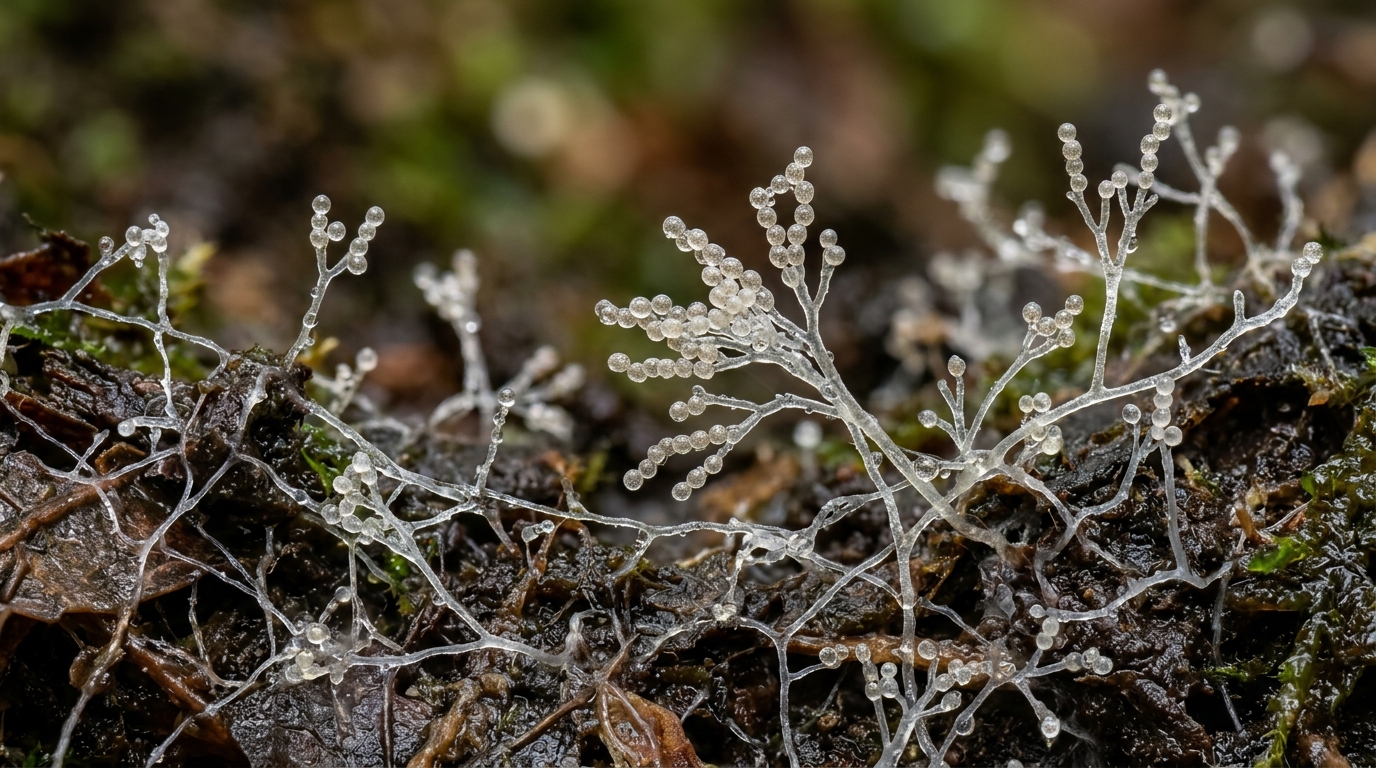
Researchers have identified a specific regulatory module that connects nitrogen availability to the production of spores in the nematode-trapping fungus Arthrobotrys oligospora. Published in BMC Microbiology, the study elucidates the molecular mechanisms underlying nitrogen-responsive conidiation, a process that has remained poorly understood in this group of fungi. The work focuses on how environmental cues, specifically nitrogen status, influence fungal growth and developmental differentiation, providing new insights into the complex interplay between nutrient sensing and reproductive development.
The investigation centered on the AoMYB-like–AoAreB–AoAspB regulatory module.
The results demonstrated that increasing nitrogen availability promoted conidial production, a finding accompanied by increased expression of the gene AoareB. The study further revealed that the deletion of AoareB caused severe defects in both hyphal development and conidiation. These defects were characterized by increased hyphal septation, reduced nuclear numbers, and a significant decrease in the production of conidiophores and conidia, indicating that AoareB is essential for normal morphological development.
Functional analyses showed that the ΔAoareB mutant exhibited markedly reduced mycelial growth and conidiation under conditions supplemented with ammonium sulfate, glutamine, or glutamate. Mechanistically, the study found that AoAreB directly binds the promoter of the conidiation-related gene AoaspB, thereby activating its transcription.
Additional layers of regulation were identified through the discovery that AoMcm1 physically interacts with AoAreB. This interaction potentiates AoAreB-mediated transcriptional activation of AoaspB, revealing a mechanism of transcriptional co-regulation. At the upstream regulatory tier, an MYB-like transcription factor was found to activate AoareB expression. This establishes the AoMYB-like–AoAreB–AoAspB regulatory module, where the MYB-like factor initiates the cascade by upregulating AoareB, which in turn activates AoaspB to drive conidiation.
Further functional analyses demonstrated that both AoMYB-like and AoAspB contribute to conidiation under nitrogen-supplemented conditions. The effect was particularly pronounced in the presence of ammonium sulfate, glutamine, or glutamate, reinforcing the link between specific nitrogen sources and the activity of this regulatory module.
The study concludes that the identified regulatory module links nitrogen availability to conidiation in A. oligospora, elucidating its molecular role in regulating nitrogen-dependent conidiation. These findings offer new insights into nitrogen-responsive developmental regulation in nematode-trapping fungi.
The work was published as an open access article in BMC Microbiology, ensuring that the findings are freely available to the scientific community. The study is citable and carries a permanent DOI, with the version shared early to provide faster access to peer-reviewed, accepted research. This approach allows for immediate dissemination of the results while the final version of record undergoes further edits.
Subject of Research: Molecular regulation of nitrogen-responsive conidiation in Arthrobotrys oligospora
Article Title: The AoMYB-like–AoAreB–AoAspB module links nitrogen availability to conidiation in Arthrobotrys oligospora
Article References: Yuan, H., Chen, Y., Luo, G., Shen, Y., Li, X., & Yang, J. (2026). The AoMYB-like–AoAreB–AoAspB module links nitrogen availability to conidiation in Arthrobotrys oligospora. BMC Microbiology. https://doi.org/10.1186/s12866-026-05889-6
Image Credits: AI Generated
DOI: 10.1186/s12866-026-05889-6
Keywords: Arthrobotrys oligospora, nitrogen availability, conidiation, transcriptional regulation, AoAreB, AoAspB, fungal development, nematode-trapping fungi, BMC Microbiology, AoMYB-like, module, links
News Source: Drew Townsend. (November 7, 2026). New Module Links Nitrogen to Fungal Spore Formation. Scienmag.