Researchers conducted the first metagenomic analysis of the Kathajodi River in Cuttack, Odisha, revealing how untreated city wastewater fundamentally alters microbial community structures across an urban river confluence. The study, published in Genomics & Informatics, utilized high-throughput sequencing to map spatial dynamics in bacterial diversity, demonstrating that anthropogenic pressure creates distinct ecological zones with specific functional profiles. By comparing upstream, catchment, and downstream sites, the team identified significant shifts in taxonomic composition and metabolic capabilities, highlighting the profound impact of urbanization on freshwater ecosystems.
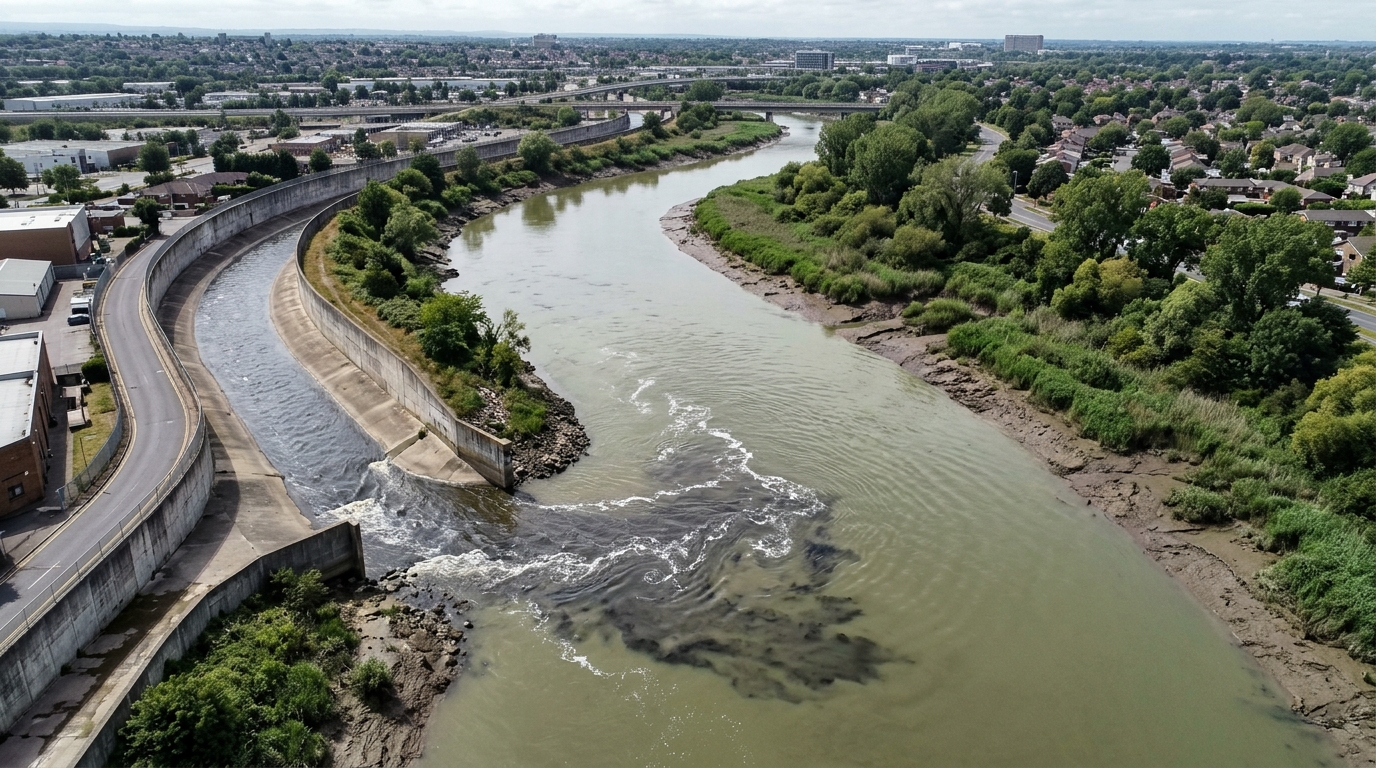
The Kathajodi River, a tributary of the Mahanadi River, serves as a critical case study for understanding pollution-driven microbial changes in developing urban centers. Cuttack, a city with a population exceeding 600,000, generates approximately 65.44 million liters of wastewater daily, much of which is discharged untreated into the river. This heavy load has designated the river as a level C pollution zone by the Odisha State Pollution Control Board, making it unsuitable for human consumption. Previous research had focused primarily on physicochemical parameters and metal loads, leaving a significant gap in understanding how these inputs reshape the microbiome itself.
To address this knowledge gap, the research team collected water samples in March 2020 from three distinct locations: an upstream point 12.3 km from the city, a catchment area comprising wastewater discharge points within the city, and a downstream point 3.47 km from the city. Samples were pooled from multiple intervals to ensure homogeneity and transported at 4°C to maintain integrity. The study employed Illumina HiSeq sequencing to generate approximately 24.53 gigabases of paired-end metagenomic data, which was processed to yield over 15.5 billion base pairs after quality filtering and duplicate removal.
Bioinformatic analysis using the MG-RAST platform revealed that bacteria dominated the microbial communities across all sites, accounting for 81.9% to 97.9% of the total sequences. However, the diversity indices showed stark contrasts between the locations. The catchment area exhibited the highest observed richness with 1,475 operational taxonomic units (OTUs) and a Chao1 estimate of 2,106, indicating a highly diverse community. In contrast, the downstream site was strikingly depauperate, with only 160 OTUs observed and a Chao1 estimate of 244, suggesting that strong pollution-driven selective pressures had reduced overall diversity.
At the phylum level, Proteobacteria emerged as the most dominant group across all regions, though their relative abundance varied significantly. In the downstream area, Proteobacteria reached 70.413%, reflecting a stable community adapted to long-term pollutant presence. In the upstream region, their abundance was 49.318%, while in the catchment area, it dropped to 25.063%. This decrease in the catchment was attributed to competitive pressures and the influence of untreated sewage, which favored other phyla such as Bacteroidetes. The latter phylum showed its highest abundance in the catchment area at 29.450%, serving as a clear indicator of fecal contamination from untreated sewage and agricultural runoff.
Genus-level analysis further illuminated the specific impacts of pollution on microbial identity. The pristine upstream region was characterized by high abundances of Shewanella (25.806%), Pseudomonas (17.190%), and Synechococcus (5.569%), genera typically associated with cleaner, oxygen-rich environments. Conversely, the catchment area was dominated by pollution-tolerant genera such as Flavobacterium (4.875%), Arcobacter (3.796%), and Bacteroides (3.637%). These taxa are known bioindicators of fecal contamination and heavy metal exposure, thriving in the nutrient-rich, polluted conditions created by municipal drainage and industrial effluents.
Downstream of the city, the community composition shifted again, with Aeromonas becoming the most abundant genus at 4.360%. This increase is likely due to the dilution of pollutants and the presence of residual organic matter and metals that favor metal-tolerant species. Acidovorax and Acidimicrobium also showed higher abundances downstream, reflecting adaptation to metal-rich conditions. The presence of these genera indicates that while some pollutants are diluted, the downstream environment remains chemically stressed, supporting a community distinct from both the pristine upstream and the heavily contaminated catchment.
Functional profiling through KEGG and COG annotations revealed that the metabolic capabilities of these communities shifted in response to local environmental conditions. The catchment area was enriched in carbohydrate metabolism (12.11%) and glycan biosynthesis, consistent with the high organic load from sewage. In contrast, the downstream community exhibited higher levels of amino acid metabolism (21.12%) and general function prediction categories, indicative of stress adaptation and metabolic flexibility under polluted conditions. The upstream community, meanwhile, showed higher abundances of membrane transport and signal transduction functions, supporting oxidative metabolism and biogeochemical cycling in a cleaner environment.
Canonical correspondence analysis (CCA) provided a visual confirmation of these site-specific divergences, showing clear separation of the upstream, catchment, and downstream samples in relation to physicochemical parameters. The catchment samples clustered near indicators of sewage and organic-rich effluents, such as biochemical oxygen demand and specific trace metals like cadmium and zinc. The downstream samples, however, did not align directly with single chemical drivers, suggesting that their community structure is influenced by cumulative stressors and unmeasured factors. This ordination highlights that dissolved oxygen and heavy metal pollution are dominant forces shaping community assembly along the river.
The study acknowledges several limitations, including the use of single-time sampling and the exclusion of sediment analysis, which may overlook finer spatial variations in microbial diversity. The researchers note that future work should include multi-seasonal sampling and sediment analyses to provide a more comprehensive understanding of the river’s microbiome. Additionally, the identification of microbial genes involved in pollutant degradation and the distribution of antimicrobial resistance genes remain unexplored areas that could offer deeper insights into microbial responses to pollution.
These findings underscore the ecological consequences of anthropogenic impact on urban rivers, emphasizing the need for effective environmental management to safeguard water quality. The marked shift in bacterial diversity between the upstream, catchment, and downstream regions demonstrates that untreated wastewater discharge does not merely alter water chemistry but fundamentally restructures the microbial ecosystem. Monitoring microbial indicators alongside physicochemical parameters is essential for assessing river health and managing the adverse effects of urbanization on aquatic ecosystems.
The research provides a spatially resolved account of microbiome dynamics in the Kathajodi River, offering a framework for understanding how human activities shape microbial communities in other urban waterways. By connecting microbial diversity and functional attributes with distinct pollution signatures, the study highlights the broader implications for public health and water quality management. As urbanization continues to increase pressure on freshwater resources, understanding these microbial shifts is crucial for developing strategies to mitigate pollution and preserve ecosystem resilience.
Physicochemical testing underscored the distinct environmental gradients separating the sampling zones. In the upstream waters, water quality metrics remained within World Health Organization guidelines, with biochemical oxygen demand measured at 4,330 micrograms per liter, total dissolved solids at 120,000 micrograms per liter, and electrical conductivity at 185 microsiemens per centimeter. Concentrations of iron (105 micrograms per liter), manganese (8.08 micrograms per liter), and cadmium (0.002 micrograms per liter) confirmed minimal baseline contamination. In stark contrast, the urban catchment exhibited severe contamination, where biochemical oxygen demand surged to 11,700 micrograms per liter, electrical conductivity reached 419.03 microsiemens per centimeter, and total dissolved solids peaked at 272,000 micrograms per liter. Catchment metal levels exceeded recommended limits, driven by municipal discharges alongside industrial effluents from plating, milling, and textile operations, yielding iron concentrations of 1,190 micrograms per liter, aluminum at 779 micrograms per liter, manganese at 401 micrograms per liter, and cadmium at 5.03 micrograms per liter. Downstream attenuation reduced biochemical oxygen demand to 5,660 micrograms per liter and dissolved solids to 152,000 micrograms per liter, yet persistent elevated concentrations of iron at 920 micrograms per liter and aluminum at 715 micrograms per liter demonstrated continued chemical stress.
To capture these microbial communities, the investigators filtered 1.5-liter composite water samples through 0.22-micrometer nylon membrane filters before performing genomic extraction using specialized water isolation kits. After quantifying nucleic acid yields on a spectrophotometer and checking integrity on agarose gels, paired-end sequencing libraries were evaluated using automated bioanalyzers. The bioinformatic pipeline applied rigorous filtering standards to eliminate non-biological variation, utilizing Cutadapt to trim sequencing adapters and primers, alongside Trimmomatic to remove reads shorter than 75 base pairs or possessing low quality scores. Duplicate sequence artifacts were addressed through Duplicate Read Inferred Sequencing Error Estimation algorithms, while ribosomal sequences were identified against curated databases clustered at a 97 percent identity threshold. Taxonomic assignment employed sequence alignment tools with an expectation-value threshold of 1e-06 and minimum alignment lengths of 50 base pairs, establishing a dependable baseline for comparing taxa across divergent pollution exposures.
Beyond site-specific diversity shifts, taxonomic mapping identified both unique signatures and a resilient core microbiome across the river gradient. A comparative Venn analysis revealed 73 bacterial genera shared across all three sampling sites, demonstrating that a baseline suite of indigenous freshwater microflora persists regardless of localized effluent inputs. However, environmental stress heavily dictated site exclusivity: the catchment zone harbored 278 unique genera, reflecting substantial inputs from municipal drainage and agricultural runoff, compared to 93 unique genera upstream and only six downstream. Unclassified lineages also represented substantial fractions of each community, accounting for 37.081 percent phylum-level classifications upstream, 34.585 percent in the catchment, and 24.879 percent downstream, where unclassified Betaproteobacteria alone constituted 54.78 percent of the assemblage.
Subject of Research: Metagenomic analysis of microbial community shifts in an urban river affected by wastewater
Article Title: Metagenomic analysis of microbiome spatial dynamics in urban river confluence affected by city wastewater
Article References: Parwin, N., Dixit, S., Das, S., Sahoo, R. K., & Subudhi, E. (2025). Metagenomic analysis of microbiome spatial dynamics in urban river confluence affected by city wastewater. Genomics & Informatics, 23(1), Article 27. https://doi.org/10.1186/s44342-025-00054-3
Image Credits: AI Generated
DOI: 10.1186/s44342-025-00054-3
Keywords: metagenomics, river microbiome, urban wastewater, bacterial diversity, Kathajodi River, pollution indicators, functional profiling, water quality, anthropogenic impact, microbial ecology, Metagenomic, analysis
News Source: Morgan Morrow. (November 7, 2026). Wastewater Reshapes River Microbiome in Urban Confluence Study. Scienmag.