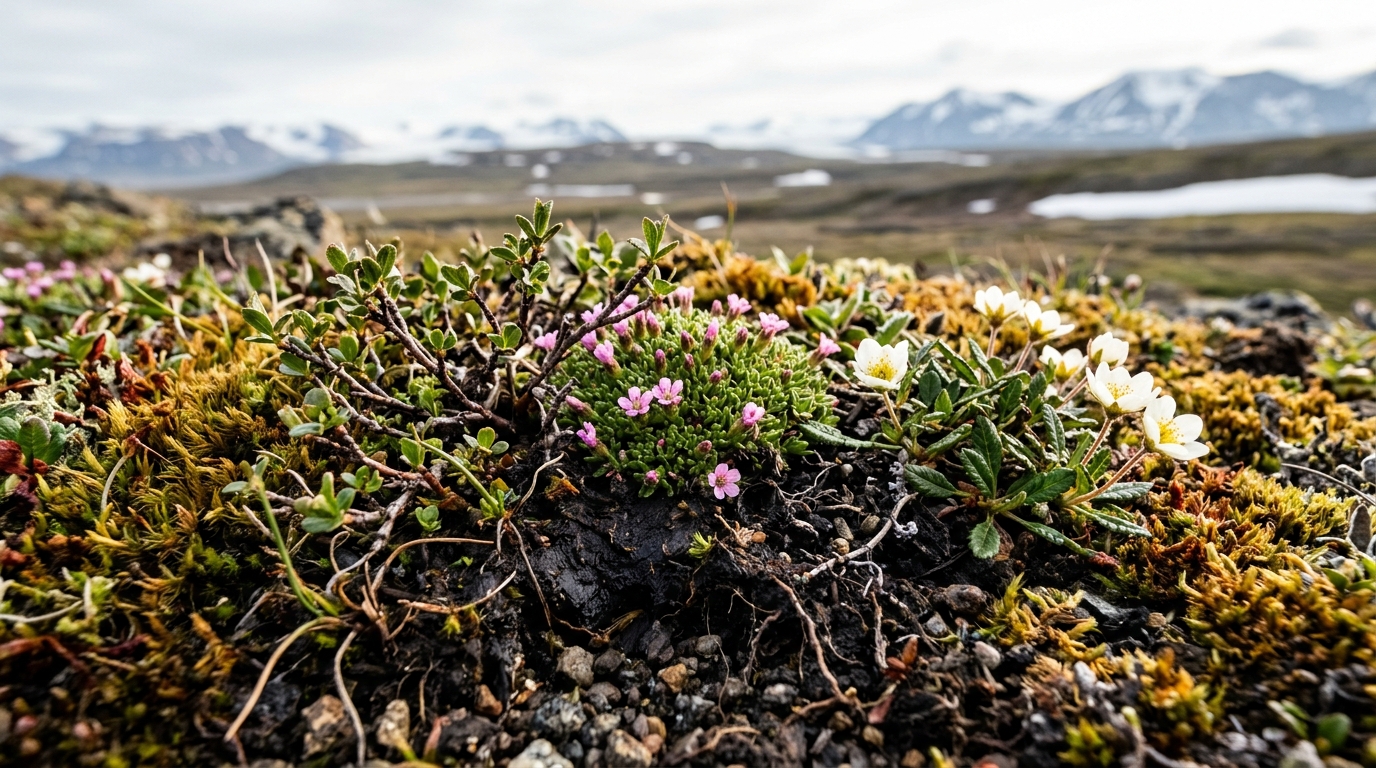
Researchers have demonstrated that even sparse vegetation on remote High-Arctic islands significantly restructures soil microbial communities and alters their predicted carbon-cycling potential. Published in Environmental Microbiome, the study investigated how vegetation cover shapes bacterial and fungal communities across three distinct soil depths on Russian islands. The findings indicate that vegetation exerts a stronger influence on these microbial communities than soil depth itself, suggesting that ongoing Arctic greening may substantially change belowground processes throughout the entire soil profile.
The study was motivated by the unprecedented warming of Arctic ecosystems, which is driving vegetation expansion into previously barren areas. While it is expected that this greening will alter biogeochemical cycles, the specific mechanisms by which vegetation cover shapes soil microbial communities and their functional potential remained poorly understood. To address this gap, the research team utilized soil DNA metabarcoding and functional prediction to analyze the relationship between plant cover and microbial structure in these high-latitude environments.
The investigation focused on remote Russian High-Arctic islands, sampling soils at three specific depths: 0–2 cm, 5–10 cm, and 30–50 cm.
Results showed that vegetated islands possessed significantly higher soil organic matter content compared to their barren counterparts. This increase in organic matter was accompanied by distinct shifts in bacterial and fungal community compositions. Specifically, vegetated islands exhibited an enrichment of plant-associated and symbiotic taxa.
Vegetation was also associated with shifts in the predicted microbial functional potential, particularly in pathways related to carbohydrate metabolism and carbon cycling. The strongest differences in these functional potentials were observed in surface soils.
Although the most pronounced differences in microbial function were found in the surface layers, the study noted that vegetation-associated carbon accumulation extends into deeper soil layers.
The authors conclude that even sparse vegetation can have a profound impact on soil microbial communities and their predicted functional potential. As Arctic warming continues to drive greening, these belowground changes may lead to substantial alterations in carbon cycling throughout the soil profile.
Subject of Research: Impact of vegetation on soil microbial communities and carbon cycling in High-Arctic islands
Article Title: Vegetation-driven shifts in soil microbial communities and predicted carbon-cycling potential across soil depths in High-Arctic islands
Article References: Cuartero, J., Rüthi, J., Dawes, M., Alekseev, I., Zemlianskii, V., Povazhnyi, V., Stierli, B., Ermokhina, K., Schaepman-Strub, G., & Frey, B. (2026). Vegetation-driven shifts in soil microbial communities and predicted carbon-cycling potential across soil depths in High-Arctic islands. Environmental Microbiome. https://doi.org/10.1186/s40793-026-00959-8
Image Credits: AI Generated
DOI: 10.1186/s40793-026-00959-8
Keywords: High-Arctic, soil microbiome, carbon cycling, vegetation, DNA metabarcoding, bacterial communities, fungal communities, Arctic greening, soil organic matter, functional prediction, Vegetation-driven, shifts
News Source: Drew Townsend. (November 7, 2026). High-Arctic vegetation reshapes soil microbes and carbon potential. Scienmag.