• HOME
  • NEWS
  • EXPLORE
    • CAREER
      • Companies
      • Jobs
    • EVENTS
    • iGEM
      • News
      • Team
    • PHOTOS
    • VIDEO
    • WIKI
  • BLOG
  • COMMUNITY
    • FACEBOOK
    • INSTAGRAM
    • TWITTER
Saturday, February 7, 2026
BIOENGINEER.ORG
No Result
View All Result
  • Login
  • HOME
  • NEWS
  • EXPLORE
    • CAREER
      • Companies
      • Jobs
        • Lecturer
        • PhD Studentship
        • Postdoc
        • Research Assistant
    • EVENTS
    • iGEM
      • News
      • Team
    • PHOTOS
    • VIDEO
    • WIKI
  • BLOG
  • COMMUNITY
    • FACEBOOK
    • INSTAGRAM
    • TWITTER
  • HOME
  • NEWS
  • EXPLORE
    • CAREER
      • Companies
      • Jobs
        • Lecturer
        • PhD Studentship
        • Postdoc
        • Research Assistant
    • EVENTS
    • iGEM
      • News
      • Team
    • PHOTOS
    • VIDEO
    • WIKI
  • BLOG
  • COMMUNITY
    • FACEBOOK
    • INSTAGRAM
    • TWITTER
No Result
View All Result
Bioengineer.org
No Result
View All Result
Home Headlines

Inflammatory disease trigger revealed

Bioengineer.org by Bioengineer.org
January 18, 2018
in Headlines, Health, Science News
Reading Time: 2 mins read
0
Share on FacebookShare on TwitterShare on LinkedinShare on RedditShare on Telegram
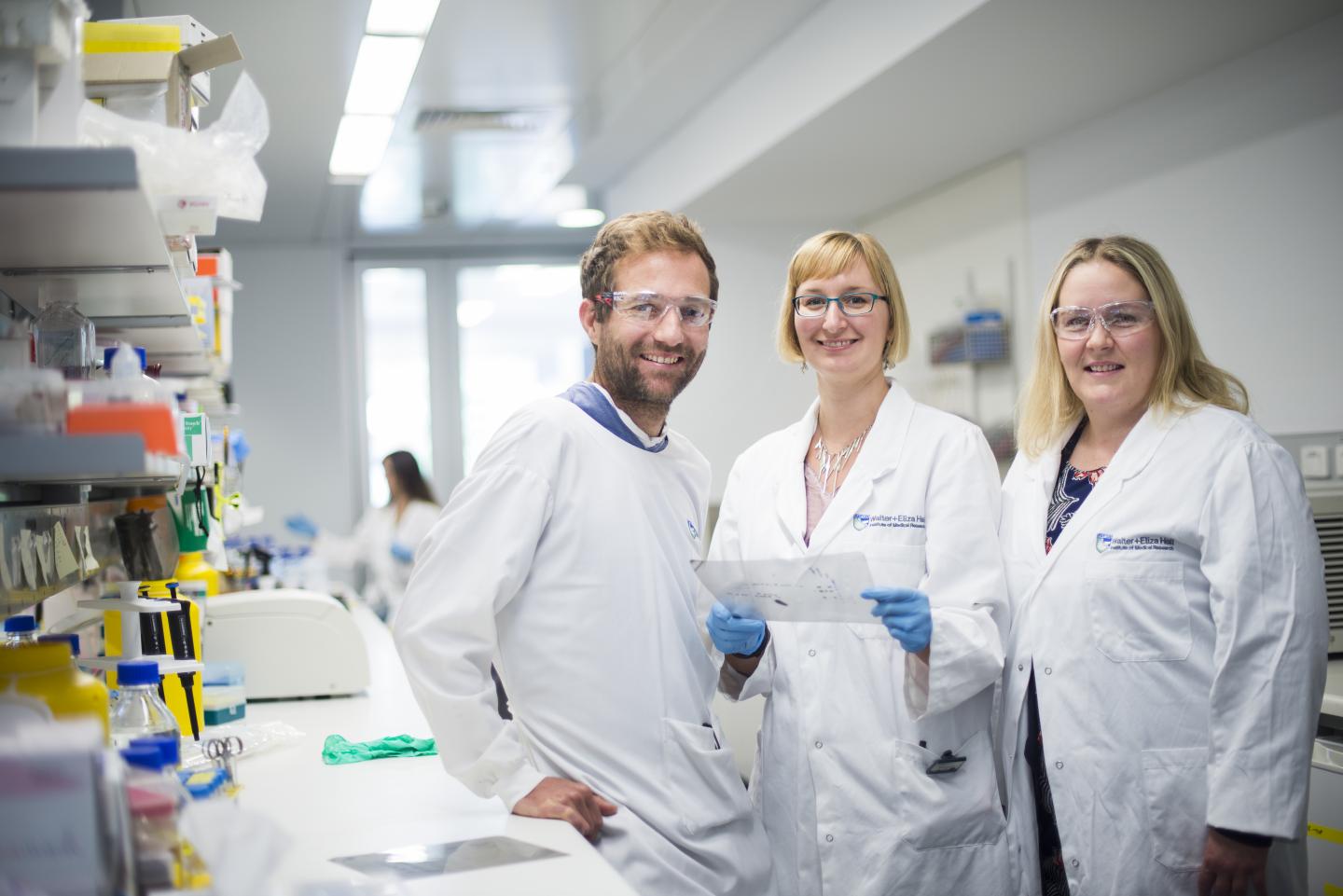
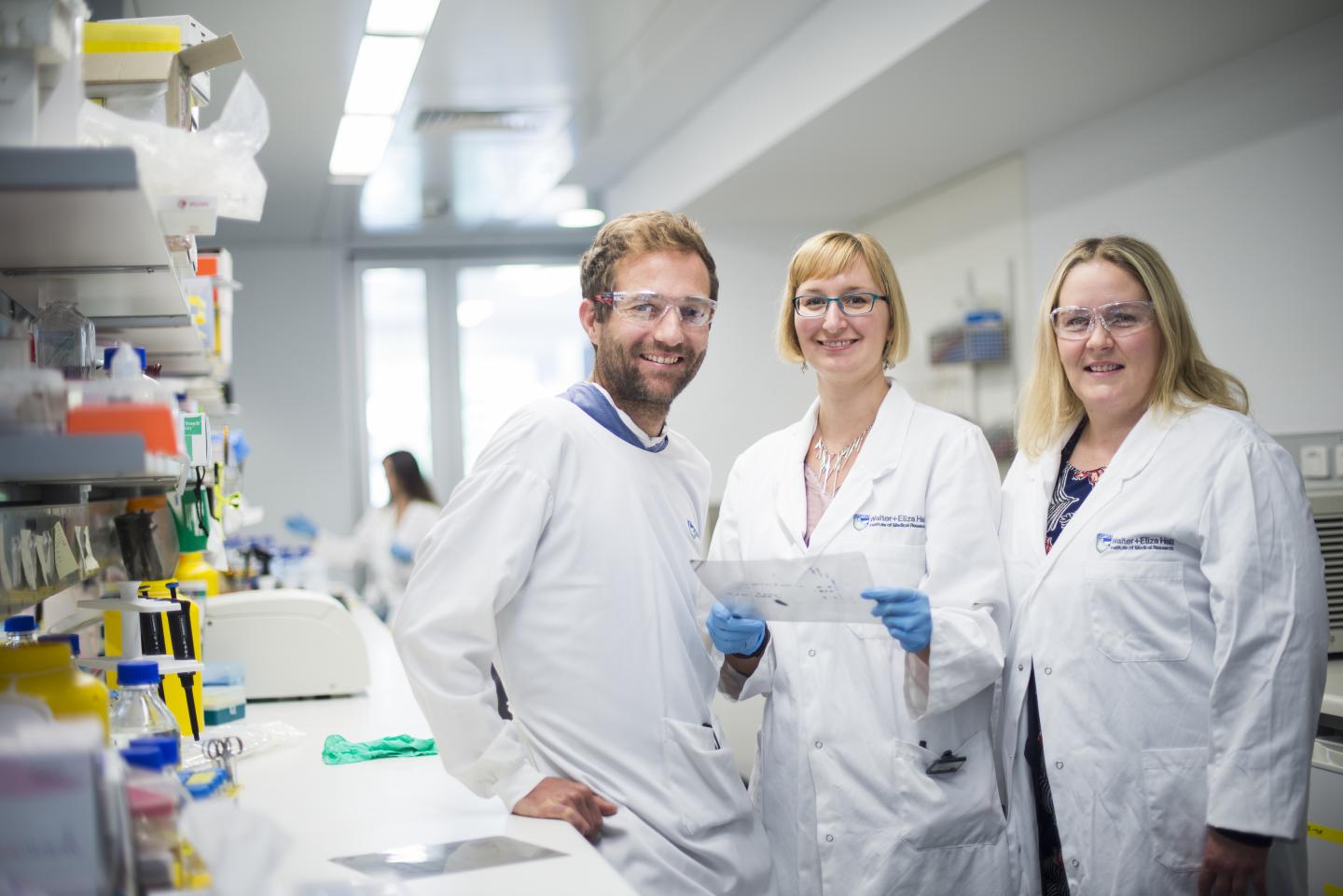
IMAGE

Credit: Walter and Eliza Hall Institute of Medical Research

Institute scientists have revealed a potent inflammatory molecule released by dying cells triggers inflammation during necroptosis, a recently described form of cell death linked to inflammatory disease.

The discovery could lead to new and existing medicines that target the molecule being investigated as a way of treating inflammatory diseases, such as psoriasis and inflammatory bowel disease.

Dr Lisa Lindqvist, Dr Kate Lawlor, Dr James Vince and PhD student Ms Stephanie Conos led research that showed interleukin-1 beta (IL-1) triggers inflammation during necroptotic cell death.

Necroptosis is important for protecting us against infections, by sacrificing infected or diseased cells 'for the greater good'.

However, necroptosis can become inappropriately or excessively activated, triggering damaging inflammation that leads to inflammatory disease.

Dr Lindqvist said the discovery challenged a long-standing dogma that inflammation triggered by necroptosis was a byproduct of dead cell debris. "Our research has pinpointed that, during necroptosis, dying cells release IL-1, a potent inflammatory signal," Dr Lindqvist said.

"Now that we have discovered IL-1 is the 'root' of the inflammation associated with necroptosis, we speculate that targeting this molecule could be an effective way of treating inflammatory diseases."

Future treatments

The findings suggest that targeting IL-1 could suppress inflammation associated with multiple inflammatory diseases, including multiple sclerosis, ischemia-reperfusion injury, atherosclerosis, liver disease, pancreatitis, psoriasis, inflammatory bowel disease, and infectious diseases.

"Our research suggests that existing drugs that block IL-1 might be useful in treating these diseases," Dr Lindqvist said.

"We are also exploring how IL-1 is signalled to be secreted during necroptosis, so that we can create new drugs to stop its release and reduce inflammation to treat inflammatory diseases."

###

The research was an international effort with collaborators Dr Kate Schroder and Dr Kaiwen Chen at the University of Queensland, and Professor Gabriel Núñez from the University of Michigan Medical School, US. The research was supported by the Australian National Health and Medical Research, the Australian Research Council, the US National Institutes of Health, the Australian Government and the Victorian State Government Operational Infrastructure Scheme. Ms Conos' PhD studies were conducted at the Walter and Eliza Hall Institute, as the University of Melbourne's Department of Medical Biology.

The research findings were published in the journal Proceedings of the National Academy of Sciences.

Media Contact

+61 475 751 811
[email protected]
61-475-751-811

http://www.wrair.army.mil

Share12Tweet8Share2ShareShareShare2

Related Posts

Inflammasome Protein ASC Drives Pancreatic Cancer Metabolism

February 7, 2026

Phage-Antibiotic Combo Beats Resistant Peritoneal Infection

February 7, 2026

Boosting Remote Healthcare: Stepped-Wedge Trial Insights

February 7, 2026

Barriers and Boosters of Seniors’ Physical Activity in Karachi

February 7, 2026
Please login to join discussion

POPULAR NEWS

  • Robotic Ureteral Reconstruction: A Novel Approach

    Robotic Ureteral Reconstruction: A Novel Approach

    82 shares
    Share 33 Tweet 21
  • Digital Privacy: Health Data Control in Incarceration

    63 shares
    Share 25 Tweet 16
  • Study Reveals Lipid Accumulation in ME/CFS Cells

    57 shares
    Share 23 Tweet 14
  • Breakthrough in RNA Research Accelerates Medical Innovations Timeline

    53 shares
    Share 21 Tweet 13

About

We bring you the latest biotechnology news from best research centers and universities around the world. Check our website.

Follow us

Recent News

Inflammasome Protein ASC Drives Pancreatic Cancer Metabolism

Phage-Antibiotic Combo Beats Resistant Peritoneal Infection

Boosting Remote Healthcare: Stepped-Wedge Trial Insights

Subscribe to Blog via Email

Enter your email address to subscribe to this blog and receive notifications of new posts by email.

Join 73 other subscribers
  • Contact Us

Bioengineer.org © Copyright 2023 All Rights Reserved.

Welcome Back!

Login to your account below

Forgotten Password?

Retrieve your password

Please enter your username or email address to reset your password.

Log In
No Result
View All Result
  • Homepages
    • Home Page 1
    • Home Page 2
  • News
  • National
  • Business
  • Health
  • Lifestyle
  • Science

Bioengineer.org © Copyright 2023 All Rights Reserved.