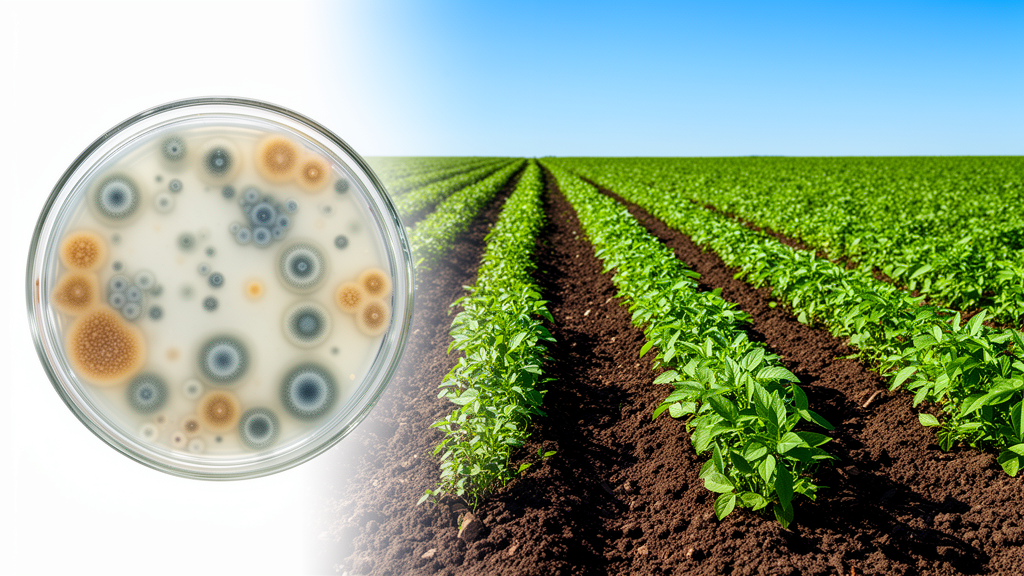
Modern plant microbiome research has expanded understanding of the rhizosphere by characterizing microbial communities, functional genes, and soil biochemical pathways, yet beneficial microbial inoculants that show high efficacy in simplified laboratory settings regularly fail to produce consistent agronomic gains in real-world farming environments. Writing in an opinion article published in Frontiers in Agronomy, researchers argue that the primary limitation confronting microbial-based agriculture is no longer an absence of foundational biological knowledge regarding microbial mechanisms, but an incomplete comprehension of how diverse environmental contexts dictate microbial behavior and performance across actual agroecosystems. The authors emphasize that sophisticated experimental models operate under highly controlled parameters that isolate specific biological interactions while intentionally eliminating environmental variability to optimize reproducibility. Consequently, an ecosystemic validation gap emerges between the artificial settings utilized for initial molecular discovery and the complex, dynamic field systems where these biological technologies must ultimately function, compete with resident soil microbiomes, and deliver tangible agronomic improvements.
The prevailing technological pipeline currently relies on a linear validation model structured into three separate, sequential tiers designed to transition candidate microorganisms from basic science to commercial deployment. In this standard pathway, the primary stage consists of laboratory in vitro screening of isolated microbial strains or formulated biological products using axenic and monoxenic growth systems. The intermediate tier moves these candidates into controlled greenhouse or growth chamber trials where model host plants are inoculated and evaluated under tightly monitored environmental regimens. The final stage introduces candidate strains into agricultural field conditions to evaluate overall crop performance using selected agronomic indicators. While environmental variables can be rigorously manipulated and standardized across the first two stages, only the third tier exposes microbial strains to the multifactorial stresses that test their genuine stability, competitive adaptability, and biological efficacy. The authors observe that treating field trials as a passive final gatekeeper severely restricts technical development.
Rather than functioning merely as an end-of-pipeline verification step prior to commercial release, field experimentation must be repositioned as an indispensable foundation for generating hypotheses, selecting ecologically adapted strains, and refining formulations. The authors point out that bridging this ecosystemic validation gap requires novel experimental architectures that merge high-resolution molecular analysis with ecological realism, rather than treating basic discovery and practical application as isolated, non-communicating operational phases. Agroecosystems inherently exhibit substantial spatial and temporal heterogeneity, meaning that microbial colonization, survival, and metabolic contribution cannot be analyzed or predicted independently of the specific environmental conditions in which they take place. The real-world efficacy of beneficial microbial applications depends simultaneously on manageable agricultural practices and uncontrollable natural conditions. While growers can select crop genotypes, choose specific management regimes, and adjust pest management interventions, they cannot dictate regional soil types, broader climatic patterns, or unpredictable interannual variations in ambient temperature and precipitation.
To unravel the context-dependency governing microbial functionality in working agricultural soils, researchers must coordinate diverse experimental methods across multiple biological and geographic scales. For example, selecting legume varieties with high symbiotic capacity to support beneficial microbial partners can effectively begin with controlled pot screening trials that pair verified inoculants with diverse plant genotypes. This preliminary greenhouse phase permits scientists to establish clear associations between symbiont establishment and measurable biological indicators, such as specific root architecture traits or early plant growth dynamics. However, confirming these preliminary screening outcomes requires conducting multi-year, multi-location field trials across varied agronomic conditions to account for confounding environmental influences. Uncontrollable annual weather shifts substantially alter overall crop vigor while simultaneously dictating the success or failure of symbiotic interactions. Furthermore, standard rotational cropping practices influence soil comparability across trial locations within a single growing season and introduce spatial heterogeneity that complicates the statistical interpretation of soil chemical and biological properties.
Translating controlled laboratory discoveries into functional farm practices demands sustained institutional funding, permanent experimental infrastructure, long-term multi-season field trials, and an acceptance of variable or inconclusive experimental results. The authors stress that these rigorous validation efforts necessitate close cross-sectoral collaboration connecting research scientists, practicing agronomists, plant breeders, commercial agri-food enterprises, and local farmers. In current research environments, however, the long-term field investigations required to understand biological consistency are confronted by short-term research grants, academic publication pressures, and substantial logistical hurdles. Because extensive multi-year field research is systematically underrepresented in public and private research agendas, some microbial technologies advance directly to commercial markets without adequate multi-season or multi-regional field validation. Agricultural environments exhibit pronounced temporal and spatial variability that impedes the collection of consistent data regarding both plant and microbial indicators, while standardized methodologies for evaluating microbial performance in variable field soils remain underdeveloped.
Controlled laboratory experiments and open-field trials diverge across fundamental physiological and agronomic parameters, including plant growth kinetics, stand architecture, biomass accumulation patterns, crop maturity schedules, and responses to abiotic stress. Within field plots, natural soil heterogeneity, local microclimatic gradients, uneven moisture distribution, historic field management legacies, and edge effects collectively generate substantial experimental variance both within and between designated units. This pervasive environmental variability places heavy demands on experimental field designs by requiring excessive replication numbers and expansive plot dimensions, which often masks meaningful differences between treatments and increases variance across identical replicates. Consequently, researchers frequently struggle to perform rigorous statistical evaluations of biological performance in randomized field experiments, where substantial variance regularly occurs among replicate plots even when experimental protocols and management procedures are strictly standardized according to established scientific conventions.
To navigate these logistical hurdles, agricultural researchers frequently rely on block-randomized small-plot trials, which accommodate natural spatial heterogeneity while requiring modest land area and technical resources. Nonetheless, small plot dimensions introduce extraneous sources of experimental error, including pronounced border effects, elevated pest pressures, and specialized management constraints that do not accurately mirror production-scale agriculture. Although randomized replicates are essential to account for fine-scale microbial responses to soil fluctuations, small-plot environments frequently distort the collection of commercially relevant agronomic parameters. Conversely, large-plot experimental designs featuring multiple sampling points across broad field areas provide a far more realistic reflection of working farm conditions, but they simultaneously restrict the number of feasible replicates and reduce opportunities for complete randomization. While maintaining rigorous randomization is necessary for unbiased statistical inference, statistical validity alone cannot guarantee ecological realism or agronomic predictability, leaving researchers with the task of capturing environmental complexity within constrained experimental footprints.
Overcoming the validation gap requires a fundamental redesign of the entire innovation pipeline for microbial agricultural products, replacing linear progression with a continuous iterative framework. In this proposed structure, laboratory investigations and field trials continuously inform and refine each other throughout every stage of product development, ensuring that field performance actively drives scientific discovery rather than merely evaluating its final outputs. Such an interactive model enables the development of tailored, location-specific agricultural technologies that explicitly accommodate the fact that living microbial interactions cannot be universally standardized across diverse regional environments. These customized technological solutions can operate as specialized components within broader agroecological management strategies tailored to local soil properties, cropping systems, and regional management practices. Incorporating advanced molecular tools directly into long-term, multi-site field trials will allow researchers to pinpoint the exact environmental drivers that govern the establishment, activity, and stability of introduced microbial biostimulants under variable production conditions.
Simultaneously, regular field observations must be leveraged to guide initial microbial strain selection, enhance carrier formulation chemistry, and direct mechanistic laboratory inquiries toward agronomically relevant questions. Rather than viewing seasonal and regional variability purely as confounding experimental noise, researchers should treat environmental differences as valuable opportunities to define the precise functional boundaries within which specific microbial strains successfully operate. Establishing long-term research infrastructure, living laboratories, and participatory research networks provides effective platforms for sustaining continuous feedback loops between laboratory researchers, microbial ecologists, agronomists, and farming communities. The authors highlight that actively engaging commercial agri-food enterprises and practicing farmers is critical for technological success. Because farmers possess direct practical experience and operate working fields that serve as real-world laboratories, their direct involvement in formulating scientific hypotheses and shaping experimental designs ensures that research questions remain focused on practical, operational farming challenges.
A critical consideration is whether modern regulatory frameworks are adequately configured to support this iterative, context-driven model of technological development, particularly given that multifunctional biological products rarely conform to rigid historical regulatory categories. Although existing agricultural regulations require multi-environment testing for the official registration of new plant varieties, expanding similar field-based evidentiary requirements across a wider range of biological products could encourage deeper commercial investment in multi-location testing. Nevertheless, regulatory mandates cannot substitute for iterative research frameworks and sustained field investments. Proposed policy updates, such as the European Union Food and Feed Simplification Omnibus package, seek to expedite market access for biocontrol agents, yet accelerating administrative approvals does not ensure the multi-season validation required to establish context-dependent performance. To reconcile rapid commercialization with scientific rigor, regulatory authorities could implement provisional or temporary registrations that permit early market uptake while requiring manufacturers to accumulate long-term multi-environment field evidence to secure permanent authorization.
Subject of Research: The ecosystemic validation gap between laboratory microbial research and agricultural field application
Article Title: The ever-widening gap between molecular discovery and agricultural practice: from laboratory precision to field reality
Article References: Hanáková Bečvářová, P., Seidenglanz, M., Lopez-Raez, J. A., Larrainzar, E., Janoušková, M., & Smýkalová, I. (2026). The ever-widening gap between molecular discovery and agricultural practice: from laboratory precision to field reality. Frontiers in Agronomy, 8, Article 1988774. https://doi.org/10.3389/fagro.2026.1988774
Image Credits: AI Generated
DOI: 10.3389/fagro.2026.1988774
Keywords: agricultural practice, beneficial microorganisms, environmental variability, field trials, microbial inoculants, rhizosphere ecology, sustainable agriculture, crop management, ever-widening, between, molecular, discovery
News Source: Alan Morgan. (November 7, 2026). Bridging the Validation Gap Between Laboratory Microbes and Real Agricultural Fields. Scienmag.