Experimentally subjecting plant-associated microbiomes to drift-driven simplification produces reduced and reconstructable microbial consortia that retain function and ecological cohesiveness, according to a study evaluating tomato rhizosphere communities. Researchers evaluated drift-driven simplification as an alternative strategy to address a major challenge in microbiome engineering, where designing simplified communities that preserve function and cohesiveness has been difficult because the specific taxa and interactions required for community establishment are rarely known a priori. By testing this alternative approach, the study investigated whether ecological assembly through drift could generate reduced consortia capable of subsequent reconstruction.
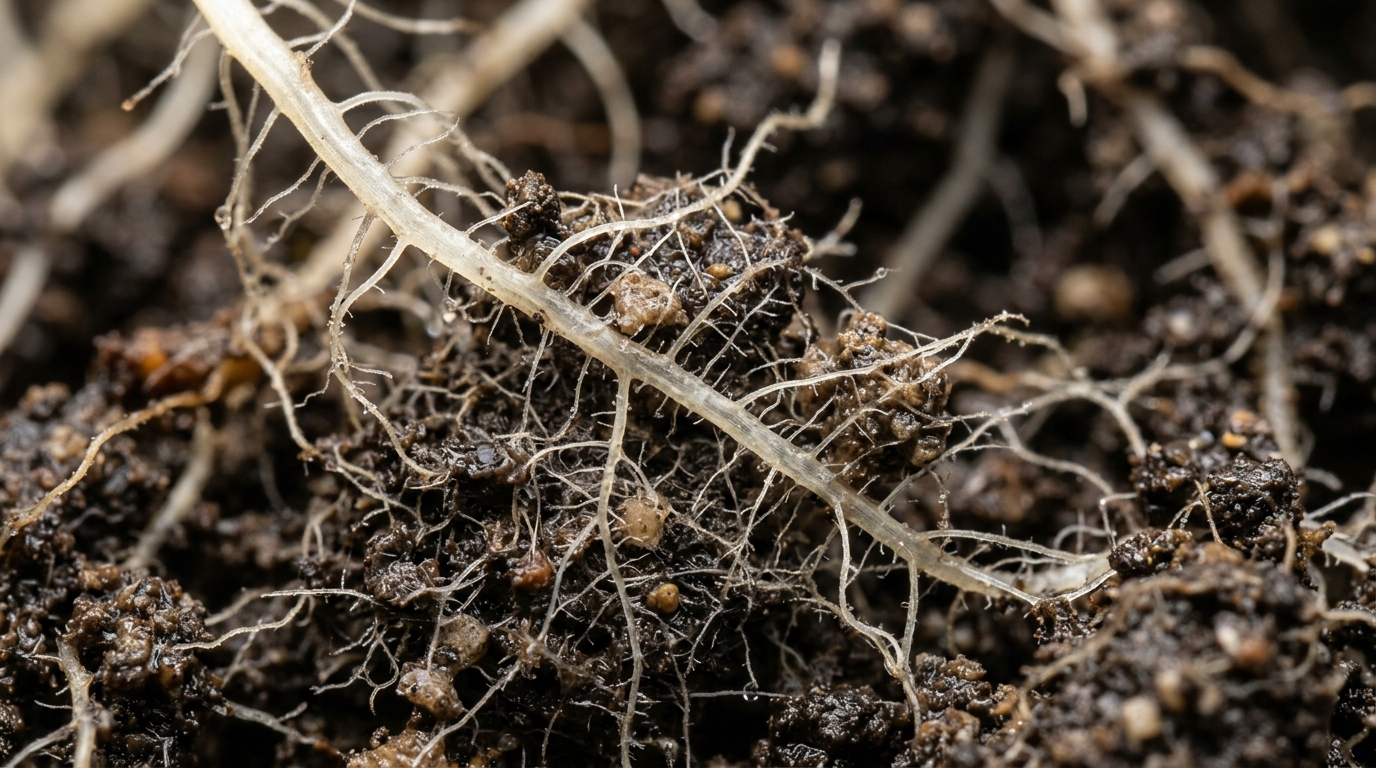
Using the tomato rhizosphere as an experimental model system, the researchers evaluated three distinct source microbial communities. Each of these three source communities was subjected to different dilution bottlenecks and maintained through serial propagation.
The study revealed that increasing dilution served as the main determinant of community composition and simplification across the experimental lines. In addition to the dominant role of dilution bottlenecks, repeated passage produced additional reductions in amplicon sequence variant richness, phylogenetic diversity, and community evenness. These findings demonstrate that initial dilution levels establish the primary composition of the surviving microbiome, while subsequent serial passage further refines community diversity across taxonomic and phylogenetic dimensions.
Importantly, the observed diversity loss was not accompanied by a uniform deterioration in bacterial colonization or plant performance. This key result indicates that substantial microbiome simplification can occur without a parallel collapse in these system-level properties.
From the resulting endpoint communities, candidate Minimal Microbiome prototypes were selected for detailed analysis.
To evaluate the ecological cohesiveness of the reconstructed synthetic consortia, the authors conducted invasion experiments challenging them with the original complex microbial fractions. The reconstructed communities strongly restricted the establishment of the original complex fractions, demonstrating significant resistance against invasion by the ancestral pool. However, the experimental outcomes also indicated that invasion success depended markedly on invader identity, showing that resistance to establishment varied depending on which specific microbial fractions were introduced.
In direct comparisons, the drift-derived communities proved at least as resistant to invasion as an independently designed bottom-up synthetic community. Together, these results provide experimental support for drift-driven simplification as a viable strategy to generate reduced microbial communities whose dominant members can be isolated, reconstructed, and experimentally evaluated. By allowing ecological assembly to generate candidate community configurations before cultivation and reconstruction, this approach provides a complementary route to rational bottom-up design and function-directed top-down microbiome engineering.
Subject of Research: Microbiome simplification and synthetic community ecology
Article Title: Drift-Driven Microbiome Simplification Generates Reconstructable and Ecologically Cohesive Microbial Communities
Article References: Chaboy-Cansado, R., Cobeta, P., Gallego, R., Rastrojo, A., & Aguirre de Cárcer, D. (2026). Drift-Driven Microbiome Simplification Generates Reconstructable and Ecologically Cohesive Microbial Communities. Microbial Ecology. https://doi.org/10.1007/s00248-026-02926-9
Image Credits: AI Generated
DOI: 10.1007/s00248-026-02926-9
Keywords: Microbial ecology, Microbiome simplification, Synthetic communities, Tomato rhizosphere, Ecological cohesiveness, Invasion resistance, Serial propagation, Dilution bottlenecks, Drift-Driven, Microbiome, Simplification, Generates
News Source: Morgan Morrow. (November 7, 2026). Drift-Driven Simplification Yields Reconstructable and Cohesive Plant-Associated Microbiomes. Scienmag.