• HOME
  • NEWS
  • EXPLORE
    • CAREER
      • Companies
      • Jobs
    • EVENTS
    • iGEM
      • News
      • Team
    • PHOTOS
    • VIDEO
    • WIKI
  • BLOG
  • COMMUNITY
    • FACEBOOK
    • INSTAGRAM
    • TWITTER
Saturday, November 7, 2026
BIOENGINEER.ORG
No Result
View All Result
  • Login
  • HOME
  • NEWS
  • EXPLORE
    • CAREER
      • Companies
      • Jobs
        • Lecturer
        • PhD Studentship
        • Postdoc
        • Research Assistant
    • EVENTS
    • iGEM
      • News
      • Team
    • PHOTOS
    • VIDEO
    • WIKI
  • BLOG
  • COMMUNITY
    • FACEBOOK
    • INSTAGRAM
    • TWITTER
No Result
View All Result
Bioengineer.org
No Result
View All Result
Home NEWS Science News Health

AI Connectome Models Predict Cognitive Performance in Multiple Sclerosis

by
November 7, 2026
in Health
Reading Time: 2 mins read
0
AI Connectome Models Predict Cognitive Performance in Multiple Sclerosis

AI Connectome Models Predict Cognitive Performance in Multiple Sclerosis

Share on FacebookShare on TwitterShare on LinkedinShare on RedditShare on Telegram

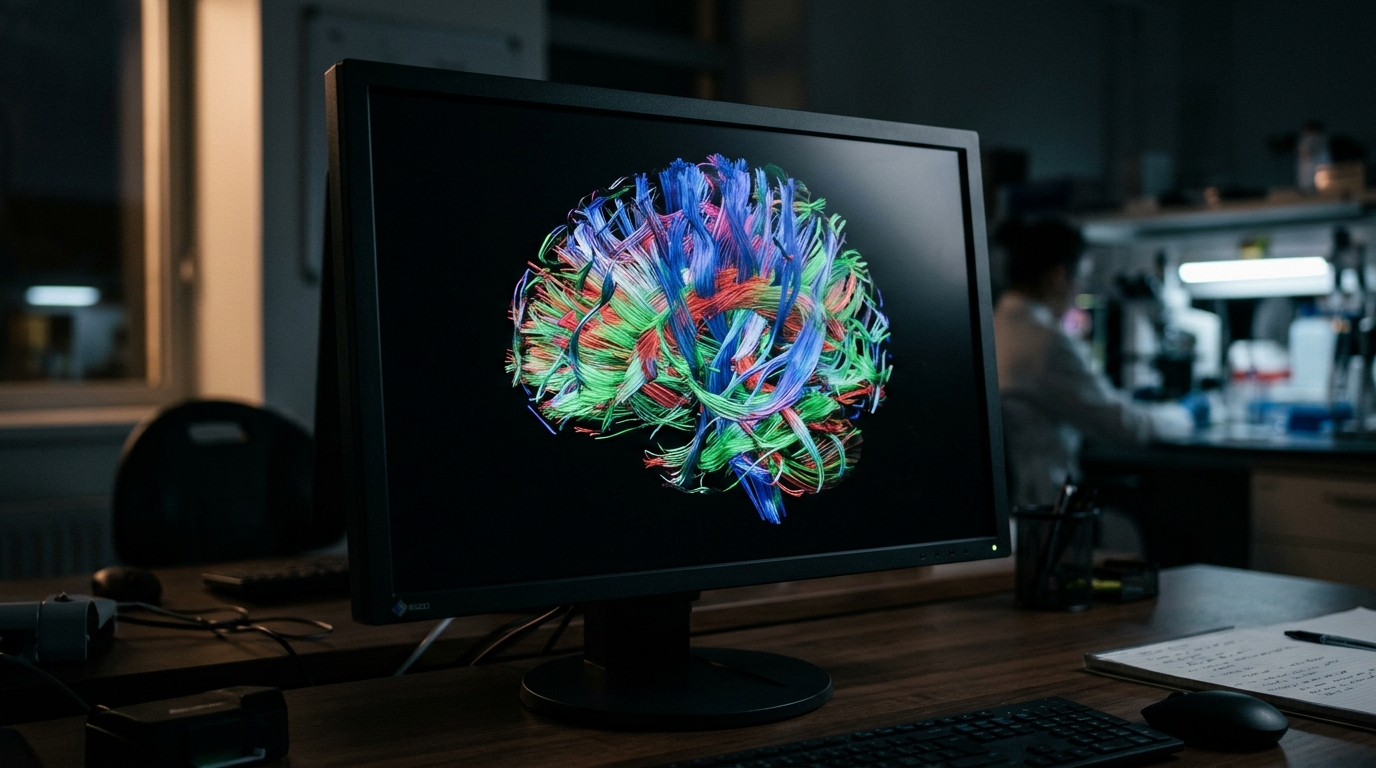
Artificial intelligence models analyzing routine structural brain scans can estimate structural and functional connectivity networks to predict cognitive outcomes in people with multiple sclerosis, according to a study published in Nature Communications. The research evaluated whether estimated structural connectivity and estimated functional connectivity could identify the neural circuits associated with baseline cognitive performance and predict cognitive function after four years of follow-up.

Structural and functional connectomes provide important insights into the relationships between neural circuits and cognitive functioning in individuals with multiple sclerosis. However, the diffusion and functional magnetic resonance imaging techniques conventionally required to map these connectomes are expensive and time-consuming, factors that currently prevent their regular use in clinical environments. Earlier research showed that estimated structural and functional connectomes generated from multiple sclerosis lesion masks through artificial intelligence can predict physical disability as effectively as connectomes directly measured using diffusion and functional imaging.

To evaluate cognitive predictions, the investigators studied a cohort of 171 individuals diagnosed with multiple sclerosis. The team applied the Network Modification tool to estimate structural connectivity networks from lesion masks extracted from clinically acquired structural magnetic resonance imaging scans. These estimated structural networks were subsequently provided as inputs to Krakencoder, an artificial intelligence encoder-decoder model used to estimate functional connectivity networks.

The study found that regional estimates of structural and functional connectivity achieved their highest predictive accuracy when forecasting long-term performance on the Symbol Digit Modalities Test at four-year follow-up. For these predictions, regional estimated structural connectivity attained a median Spearman’s correlation coefficient of 0.58, while regional estimated functional connectivity achieved a median Spearman’s correlation coefficient of 0.56. Specific regional circuit alterations were linked to cognitive performance: decreased estimated structural and functional connectivity in the cerebellum and increased estimated functional connectivity within the default mode network were associated with lower follow-up test scores.

The authors concluded that estimated connectome measures derived from clinically standard magnetic resonance imaging scans and artificial intelligence models can effectively predict cognitive measures in multiple sclerosis. Utilizing lesion-based connectome estimates may help inform future clinical trials by pinpointing specific brain circuits that could be targeted with non-invasive therapies designed to improve cognitive function.

Subject of Research: Predicting cognitive performance in multiple sclerosis using AI-estimated brain connectomes

Article Title: Predicting follow-up cognition using estimated structural and functional connectivity networks and artificial intelligence in multiple sclerosis

Article References: Tozlu, C., Ong, D., Piccirillo, C., Schwartz, H., Jaywant, A., Nguyen, T., Jamison, K., Gauthier, S. A., & Kuceyeski, A. (2026). Predicting follow-up cognition using estimated structural and functional connectivity networks and artificial intelligence in multiple sclerosis. Nature Communications. https://doi.org/10.1038/s41467-026-75827-7

Image Credits: AI Generated

DOI: 10.1038/s41467-026-75827-7

Keywords: Multiple Sclerosis, Artificial Intelligence, Brain Connectomes, Cognitive Function, Symbol Digit Modalities Test, Structural MRI, Krakencoder, Cerebellum, Predicting, follow-up, cognition, estimated

News Source: Scienmag.

Tags: Artificial IntelligenceBrain Connectomescerebellumcognitioncognitive functionestimatedfollow-upKrakencoderMultiple SclerosisPredictingStructural MRISymbol Digit Modalities Test
Share12Tweet7Share2ShareShareShare1

Related Posts

MicroRNA Out-Seed Variants Linked to Breast Cancer Subtypes in Vietnamese Women

MicroRNA Out-Seed Variants Linked to Breast Cancer Subtypes in Vietnamese Women

November 7, 2026
Staphylococcus Aureus and Drug Resistance Rise Along Ethiopian Camel Milk Supply Chain

Staphylococcus Aureus and Drug Resistance Rise Along Ethiopian Camel Milk Supply Chain

November 7, 2026

Derlin-1 Protein Expression Linked to Cervical Cancer and High-Risk HPV Infection

November 7, 2026

Paediatric Asthma Emergency Acuity and Hospitalizations Surged in Alberta After Pandemic

November 7, 2026

POPULAR NEWS

  • Recycled Plastic Cladding Reinforced With Steel Fibers Withstands Intense Heat

    Recycled Plastic Cladding Reinforced With Steel Fibers Withstands Intense Heat

    29 shares
    Share 12 Tweet 7
  • Fungal Lys1 Enzymes Show Conserved Folds but Divergent Catalytic Kinetics

    29 shares
    Share 12 Tweet 7
  • Paediatric Asthma Emergency Acuity and Hospitalizations Surged in Alberta After Pandemic

    29 shares
    Share 12 Tweet 7
  • New Algorithm Accelerates Polarization and Direction-of-Arrival Estimation for Curved Sensor Arrays

    29 shares
    Share 12 Tweet 7

About

We bring you the latest biotechnology news from best research centers and universities around the world. Check our website.

Follow us

Recent News

MicroRNA Out-Seed Variants Linked to Breast Cancer Subtypes in Vietnamese Women

Staphylococcus Aureus and Drug Resistance Rise Along Ethiopian Camel Milk Supply Chain

Derlin-1 Protein Expression Linked to Cervical Cancer and High-Risk HPV Infection

Subscribe to Blog via Email

Enter your email address to subscribe to this blog and receive notifications of new posts by email.

Join 86 other subscribers
  • Contact Us

Bioengineer.org © Copyright 2023 All Rights Reserved.

Welcome Back!

Login to your account below

Forgotten Password?

Retrieve your password

Please enter your username or email address to reset your password.

Log In
No Result
View All Result
  • Homepages
    • Home Page 1
    • Home Page 2
  • News
  • National
  • Business
  • Health
  • Lifestyle
  • Science

Bioengineer.org © Copyright 2023 All Rights Reserved.