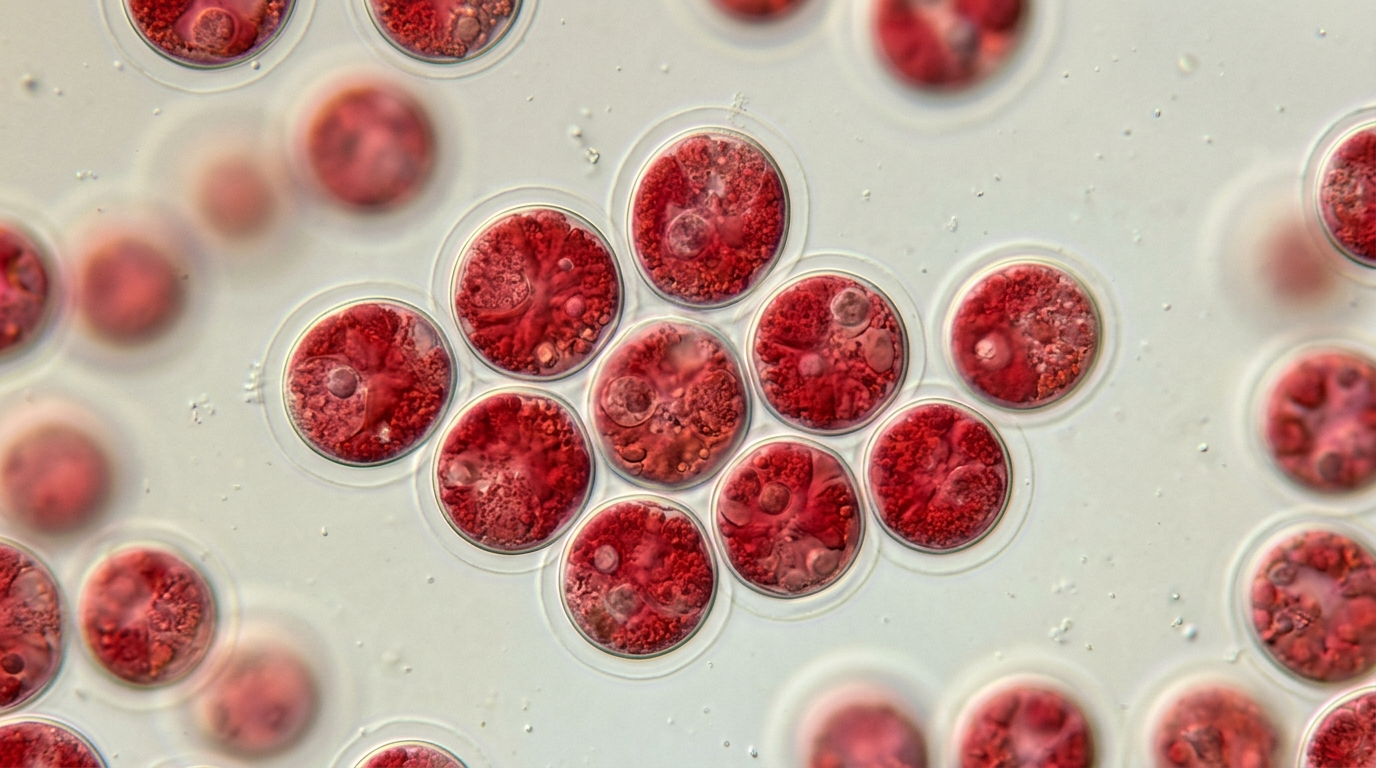
Researchers have achieved the heterologous expression of recombinant dengue virus capsid–premembrane–envelope (C-prM-E) structural antigen constructs representing all four serotypes (DV1–DV4) in the red microalga Porphyridium purpureum. The demonstration establishes a microalgal expression platform aimed at supporting the development of plant-derived dengue vaccine candidates.
The dengue virus remains a significant global health threat, while existing vaccines continue to raise concerns regarding safety, efficacy, and cost-effectiveness. Microalgae offer an alternative approach for producing non-naturally occurring proteins, supported by their Generally Recognized As Safe (GRAS) status, straightforward scalability, and capacity to perform eukaryotic post-translational modifications.
To generate the antigens, gene constructs containing capsid–premembrane–envelope polyprotein fragments with C-terminal epitope tags were cloned into pCAMBIA1301 vectors. The vectors were subsequently introduced into P. purpureum using Agrobacterium tumefaciens-mediated transformation.
Chromosomal integration of all four serotype constructs was confirmed via polymerase chain reaction amplification, which produced the expected 2.5-kilobase amplicons. Subsequent SDS-PAGE analysis identified protein bands at approximately 85 kDa, matching the predicted molecular weight of the processed CprME-derived proteins.
Western blot assays using anti-DENV-2 and anti-FLAG antibodies verified that the recombinant antigens were identical and exhibited immune system reactivity across all four serotypes. These findings indicate that P. purpureum provides an effective production system that may facilitate scalable manufacturing of tetravalent dengue vaccines, especially in resource-limited regions where the virus is prevalent.
In the study, the researchers cloned gene constructs containing capsid-premembrane-envelope polyprotein fragments with C-terminal epitope tags into pCAMBIA1301 vectors, using Agrobacterium tumefaciens-mediated transformation to introduce them into Porphyridium purpureum. Polymerase chain reaction amplification confirmed chromosomal integration across all four serotypes by yielding the expected 2.5-kilobase amplicons.
Protein evaluation using SDS-PAGE identified bands at approximately 85 kDa, matching the predicted molecular weight of the processed structural proteins. Subsequent western blot assays using anti-DENV-2 and anti-FLAG antibodies confirmed that the recombinant antigens reacted with the immune system across all four serotypes, supporting the platform’s potential for producing plant-derived tetravalent dengue vaccine candidates in resource-limited settings.
The global health burden imposed by the dengue virus is compounded by limitations associated with current vaccine options, which exhibit notable shortcomings regarding safety, protective efficacy, and overall cost-effectiveness. In response to these constraints, microalgal production hosts offer an alternative strategy for generating non-naturally occurring recombinant proteins. Organisms such as the red microalga Porphyridium purpureum combine several advantageous manufacturing properties, including a Generally Recognized As Safe designation, straightforward cultivation scalability, and the eukaryotic cellular machinery necessary to carry out complex post-translational modifications on synthesized viral antigens.
To establish expression across the entire antigenic breadth of the virus, recombinant constructs were engineered to encompass the capsid, premembrane, and envelope structural polyprotein domains for all four dengue virus serotypes, designated DV1 through DV4. Each polyprotein gene fragment incorporated a C-terminal epitope tag to aid characterization before insertion into pCAMBIA1301 expression vectors. Delivery into Porphyridium purpureum host cells was then mediated through Agrobacterium tumefaciens transformation, introducing the recombinant viral cassettes into the microalga.
Molecular validation confirmed stable genomic incorporation across every target serotype. Polymerase chain reaction analysis successfully amplified the expected 2.5-kilobase DNA products, demonstrating that the structural gene sequences had integrated into the host microalga chromosomes. Electrophoretic assessment via sodium dodecyl sulfate-polyacrylamide gel electrophoresis revealed protein bands resolving near 85 kilodaltons. This observed migration aligned with the predicted theoretical mass for the processed capsid-premembrane-envelope recombinant proteins, indicating that the algal cells appropriately synthesized the engineered viral antigens.
To establish antigenic properties and identity, investigators performed immunoblot testing utilizing both anti-FLAG and anti-DENV-2 antibodies. The western blot analyses confirmed that the recombinant proteins produced across all four serotypes reacted with the immune reagents and displayed structural uniformity. By demonstrating robust expression and immune system interactivity for DV1, DV2, DV3, and DV4, the research highlights P. purpureum as a viable microalgal host for manufacturing cost-effective, plant-derived vaccine candidates. This platform holds particular promise for enabling scalable, large-scale production of tetravalent formulations to serve dengue-endemic areas facing substantial economic and healthcare resource constraints.
Subject of Research: Expression of recombinant dengue virus antigens in red microalgae
Article Title: Heterologous expression of recombinant dengue virus C-prM-E structural antigens from all four serotypes in the red microalga Porphyridium purpureum
Article References: Utomo, D. I. S., Bayu, A., Rasyid, M. L. A., Nurhasanah, A., Rahmawati, S. I., Purbani, D. C., Noerdjito, D. R., Indriani, D. W., & Putra, M. Y. (2026). Heterologous expression of recombinant dengue virus C-prM-E structural antigens from all four serotypes in the red microalga Porphyridium purpureum. AMB Express. https://doi.org/10.1186/s13568-026-02113-6
Image Credits: AI Generated
DOI: 10.1186/s13568-026-02113-6
Keywords: Dengue virus, Porphyridium purpureum, Microalgae, Recombinant antigens, Vaccine development, Heterologous expression, Agrobacterium tumefaciens, Heterologous, expression, recombinant, dengue, virus
News Source: Kristina Jarvis. (November 7, 2026). Red Microalga Expresses Dengue Structural Antigens Across All Four Serotypes. Scienmag.