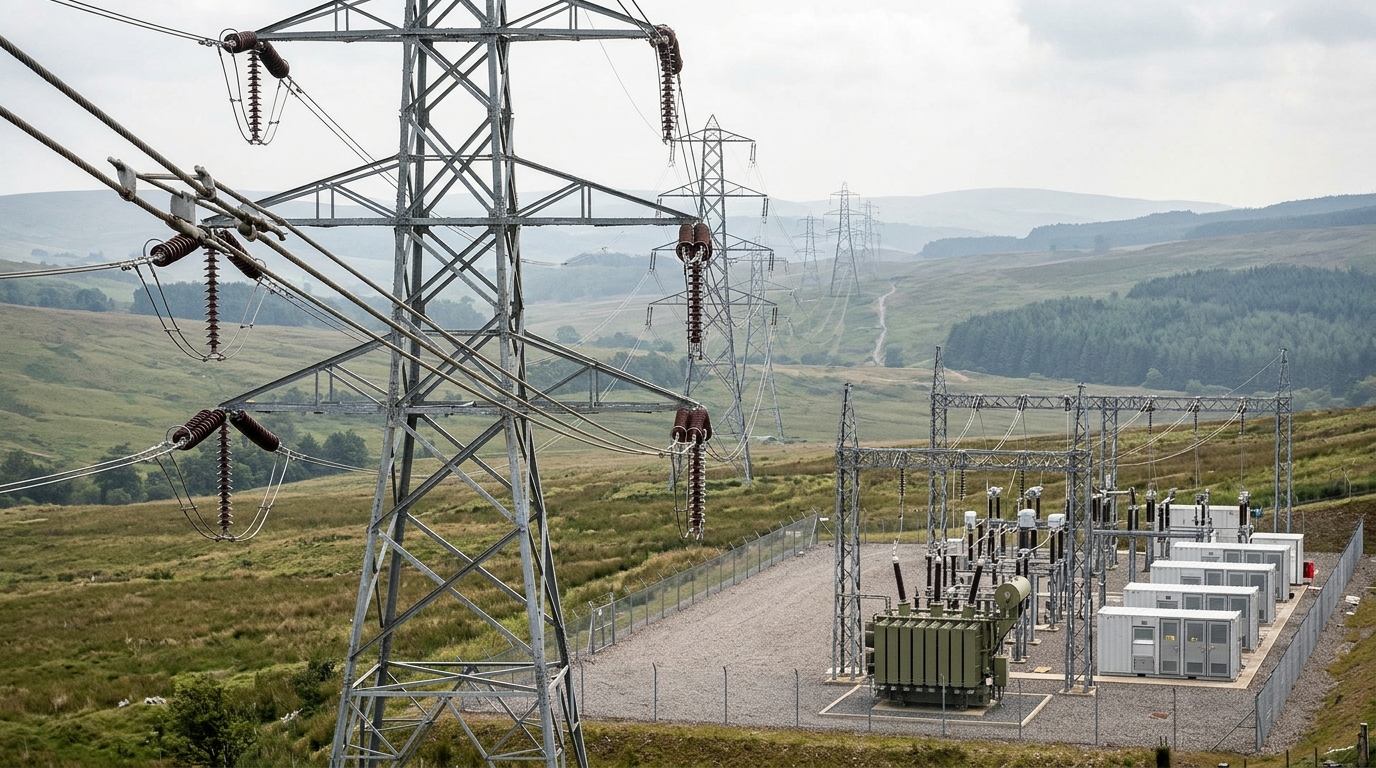
Modern power distribution networks are undergoing a structural shift characterized by the rapid integration of distributed renewable energy resources, prompting widespread development of microgrids to manage local generation, storage, and consumption. Microgrids enable the coordinated operation of distributed energy resources, such as doubly fed induction generator wind turbines, photovoltaic arrays, fuel cells, combined heat and power systems, battery energy storage systems, diesel generators, and controllable loads. While this transition reduces reliance on fossil-fueled thermal generation and lowers greenhouse gas emissions, the progressive substitution of conventional synchronous plants introduces significant operating challenges. Chief among these issues are the decline in overall power system inertia, elevated frequency excursions following disturbances, and heightened fluctuations in voltage and active and reactive power flows.
Microgrid protection deviates substantially from traditional distribution network protection paradigms due to bidirectional power flows and the widespread deployment of inverter-interfaced energy resources. In conventional distribution networks, protective apparatus are sized to clear large, unidirectional short-circuit currents supplied by bulk generation. Conversely, microgrids operating with decoupled distributed generation units face severe current contribution constraints, particularly in islanded configurations where power electronic inverters possess limited thermal overloading capability that restricts fault current outputs to two to three times their rated values. Compounding these dynamics, microgrids are susceptible to both internal faults and external grid disturbances caused by lightning, freezing weather, equipment failures, animal or tree interference, and mechanical damage to overhead lines or insulated underground cables.
To investigate how physical separation from the main utility grid influences transient dynamics during system failures, researchers developed a specialized simulation tool using the MATLAB and Simulink environment. Microgrids frequently connect to main distribution networks across short distances or through medium-length lines in resource-rich rural areas. Transmission lines are conventionally classified based on their geometric configuration and physical span into short lines of less than 80 kilometers, medium lines spanning between 80 and 240 kilometers, and long lines exceeding 240 kilometers. While long transmission corridors exceeding 240 kilometers are generally economically unjustifiable for standard electrical microgrid links, short and medium lines represent the primary medium for tying distributed energy systems to utility points of common coupling.
The mathematical modeling of transmission lines dictates how electrical disturbances propagate between the microgrid and the wider power system. For short-line models under 80 kilometers, shunt capacitance is negligible, allowing the electrical relationship between sending-end and receiving-end voltages and currents to be described entirely by total line resistance and inductive reactance. Under this formulation, sending-end voltage equals the receiving-end voltage plus the product of total impedance and receiving-end current, while sending-end current equals receiving-end current. In contrast, medium-line models spanning 80 to 240 kilometers must explicitly account for combined shunt capacitances that form substantial parallel admittances between conductors and ground, requiring nominal pi or T equivalent circuit representations that incorporate both series impedance and distributed shunt admittance.
The simulation platform was validated using a detailed case study of an interconnected microgrid incorporating high renewable energy penetration alongside conventional backup generation and storage. The primary power source consists of a 9-megawatt wind farm comprising six doubly fed induction generators, each rated at 1.5 megawatts and controlled via maximum power point tracking algorithms. Backup generation is supplied by an asynchronous quick-start diesel generator rated at 1.8 megavolt-amperes with a fixed power factor of 0.93, capable of delivering a maximum active power output of 1.68 megawatts. Dedicated battery energy storage systems are connected to the direct-current links of each individual wind turbine to balance generation with load demands, mitigate renewable intermittency, and maintain voltage stability during severe operating events.
The modelled microgrid topology features three core buses connected through two adjustable distributed-parameter transmission lines, with dual step-up transformers positioned before and after the line segments to match operational voltage levels with the 25-kilovolt main utility network. Local load demands situated under the intermediate load bus draw 6 megawatts of active power and 2 megavars of reactive power, while surplus generated energy is exported across the interconnecting transmission lines to the utility grid through the point of common coupling. To examine the unobstructed propagation of electrical faults and isolate the physical impact of transmission line distance, automated protective tripping mechanisms and breaker isolation sequences were deliberately deactivated during the simulation analysis.
System performance was assessed across a 60-second observation window under a constant simulated wind speed of 12 meters per second, ensuring steady-state operation within the generator control zone and avoiding pitch-control tripping actions. During the initial 25 seconds, all system voltages, currents, and powers stabilized to nominal reference values, with only slight differences attributable to normal transmission line losses. At 40 seconds, a temporary 0.2-second short-circuit fault was introduced at the 25-kilovolt grid-side bus to assess network continuity. Two distinct disturbance scenarios were evaluated: a single-phase short-circuit fault and a more severe three-phase short-circuit fault, with transmission line length progressively varied across short and medium distances.
In the single-phase short-circuit scenario, simulation results demonstrated clear behavioral divergences governed by interconnecting line length. At the generator terminals, active power output collapsed to zero during the fault because power could not be transferred across the short-circuited interface to the utility grid. To stabilize the turbine direct-current links, converter control priorities shifted, permitting reactive power generation to surge. While longer transmission lines experienced lower fault current amplitudes at the moment of failure due to the damping impedance provided by physical distance, they exhibited pronounced electrical oscillations following fault clearance, extending the troubleshooting and stabilization interval. Conversely, shorter lines experienced larger initial fault amplitudes but achieved rapid post-fault recovery without sustained oscillations.
Application of the three-phase short-circuit fault amplified disturbance magnitudes across the surveyed parameters, producing substantial voltage excursions, steeper transient undershoots, and pronounced overshoots. On the generator side, active power plummeted instantaneously to zero while reactive power output increased sharply to arrest direct-current link voltage degradation. On the 25-kilovolt grid bus, parameters exhibited inverse behavior: active power surged while reactive power dropped, maintaining total complex power equilibrium. Voltage drops at the grid bus were most pronounced for short line interconnections where terminal apparatus were situated close to the fault origin, whereas longer transmission lines provided greater immediate buffering at the cost of prolonged settling times.
Comparative evaluation reveals a fundamental trade-off between transient fault mitigation and steady-state stability margins in interconnected microgrids. Shorter transmission lines demonstrate superior performance during steady-state operation and post-fault recovery, rapidly clearing parameter deviations and re-establishing equilibrium. Longer transmission lines provide superior initial stability margins at the exact moment a fault occurs by attenuating initial current spikes through added impedance, but their extended electrical length reduces overall stability margins, heightening the risk of sustained instability following severe disturbances. Consequently, utility operators must carefully calibrate protection schemes, relay settings, and islanding criteria according to the specific sensitivity of installed microgrid equipment and the physical length of the interconnecting corridor.
Subject of Research: Impacts of transmission line length and fault severity on interconnected microgrid performance and protection
Article Title: The impacts of the transmission line length in an interconnected micro-grid on its performance and protection at different fault levels
Article References: Khoshkalam, A., & Ali, D. (2024). The impacts of the transmission line length in an interconnected micro-grid on its performance and protection at different fault levels. Green Technology, Resilience, and Sustainability, 4(1), Article 1. https://doi.org/10.1007/s44173-024-00016-y
Image Credits: AI Generated
DOI: 10.1007/s44173-024-00016-y
Keywords: Microgrids, Transmission Line Length, Fault Analysis, Wind Energy, DFIG, Power System Stability, Distributed Generation, Power Electronics, impacts, transmission, line, length
News Source: Denise Maddox. (November 7, 2026). Transmission Line Length Directly Impacts Interconnected Microgrid Fault Stability and Protection. Scienmag.