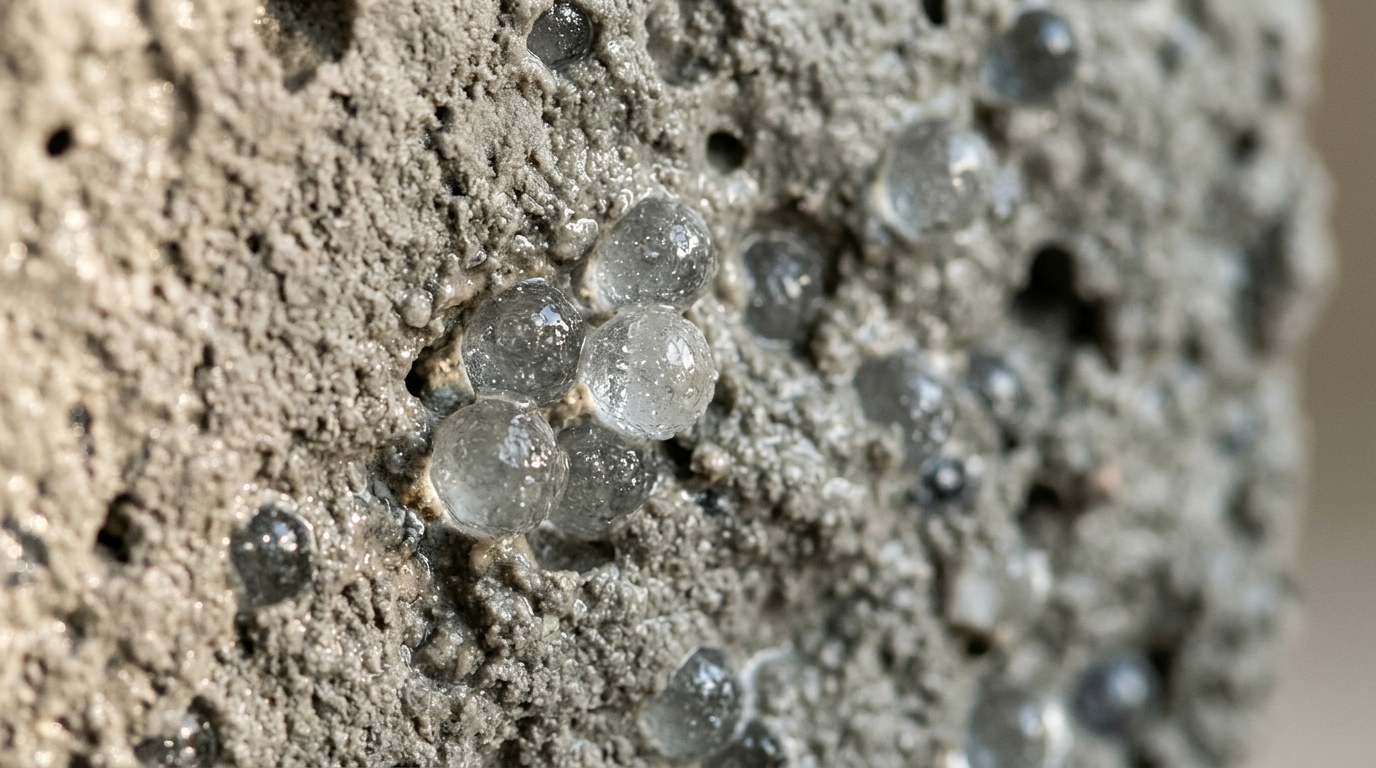
An experimental investigation into superabsorbent polymer (SAP)-modified cement paste has demonstrated that ambient curing temperatures fundamentally govern early hydration kinetics and the underlying performance mechanisms of the composite material. In these cementitious systems, superabsorbent polymers dynamically regulate the ongoing hydration process through reversible, temperature-sensitive water absorption and release behavior, functioning as responsive internal moisture reservoirs that react directly to surrounding thermal curing conditions.
The experimental evaluation revealed pronounced kinetic shifts when cement pastes were cured across different temperature regimes. At an elevated ambient temperature of 40°C, the characteristic hydration induction period vanishes entirely from the reaction sequence. Under these warm 40°C conditions, the hydration rate rises by more than 50 percent compared with curing conducted at 20°C. Nevertheless, despite this substantial thermal acceleration, the superabsorbent polymer continues to delay early hydration, confirming that ambient temperature remains the primary governing factor dictating early-stage reaction kinetics.
Beyond the initial induction and acceleration stages, the polymer additive consistently improves late-stage cement hydration examined between 7 and 28 days across all tested curing temperatures. Although late-stage hydration improvements were documented at every evaluation temperature, the superabsorbent polymer demonstrated its optimal efficacy when paste specimens were cured at 20°C. This persistent internal curing action ensures continuous cement hydration over extended curing durations while fully preserving the specific types of hydration products generated in the hardening paste.
Microstructural assessments explained the underlying physical mechanisms responsible for these macroscopic performance gains. The superabsorbent polymer effectively redistributes internal pore water within the paste, converting uncombined free water into capillary water and gel water without changing the total quantity of mixing water added to the batch. This internal water redistribution maintains the identity of the hydration phases while noticeably enhancing their overall crystallinity. Simultaneously, the polymer actively inhibits the detrimental preferential growth of calcium hydroxide crystals along the (001) crystallographic plane, a mechanism that prevents microstructural weakness and stabilizes long-term concrete durability.
These experimental findings offer practical insights for the targeted material design of superabsorbent polymers intended for pavement concrete deployed across diverse climate zones. By demonstrating how environmental temperatures govern internal moisture release, hydration kinetics, and crystal growth, the study provides valuable scientific evidence to bridge existing performance gaps between controlled laboratory curing environments and variable real-world field conditions.
Subject of Research: Temperature-dependent hydration mechanisms of superabsorbent polymer-modified cement paste
Article Title: Ambient temperature effects on hydration kinetics and performance mechanisms of SAP-modified cement paste
Article References: Tan, Y., Wang, H., & Chen, H. (2026). Ambient temperature effects on hydration kinetics and performance mechanisms of SAP-modified cement paste. Discover Materials. https://doi.org/10.1007/s43939-026-01057-9
Image Credits: AI Generated
DOI: 10.1007/s43939-026-01057-9
Keywords: superabsorbent polymers, cement paste, hydration kinetics, curing temperature, microstructure, calcium hydroxide, concrete durability, pavement concrete, Ambient, temperature, effects, hydration
News Source: Neil Sanderson. (November 7, 2026). Ambient Temperature Governs Hydration Kinetics in Superabsorbent Polymer Modified Cement Paste. Scienmag.