A comprehensive systematic review and meta-analysis published in Bioelectronic Medicine indicates that supervised machine learning models can predict therapeutic responses to neuromodulation in patients diagnosed with drug-resistant epilepsy, achieving a pooled area under the receiver operating characteristic curve of 0.84 with a 95 percent confidence interval between 0.79 and 0.88. Conducted by Alejandro Quintero-Villegas, Fylaktis Fylaktou, Jaclyn Morales, and Theodoros P. Zanos, the investigation synthesized available literature to evaluate how accurately computational classifiers forecast which individuals will experience substantial clinical benefit from electrical stimulation interventions.
Epilepsy is defined by the International League Against Epilepsy as a brain disorder characterized by an enduring predisposition to epileptic seizures. In the United States, an estimated 1.2 percent of the population has active epilepsy, representing approximately 3.5 million individuals, comprising 3 million adults and 500,000 children as of 2021, with annual care costs reaching up to 30,000 dollars per patient. Notably, these figures may underestimate current burdens, as the 3.5 million estimate relied on a 2021 national population base of 331 million, whereas the 2024 census recorded 342,787,750 residents. Approximately 15 to 30 percent of patients fail to respond to at least two trials of antiseizure medications, establishing a condition known as drug-resistant epilepsy.
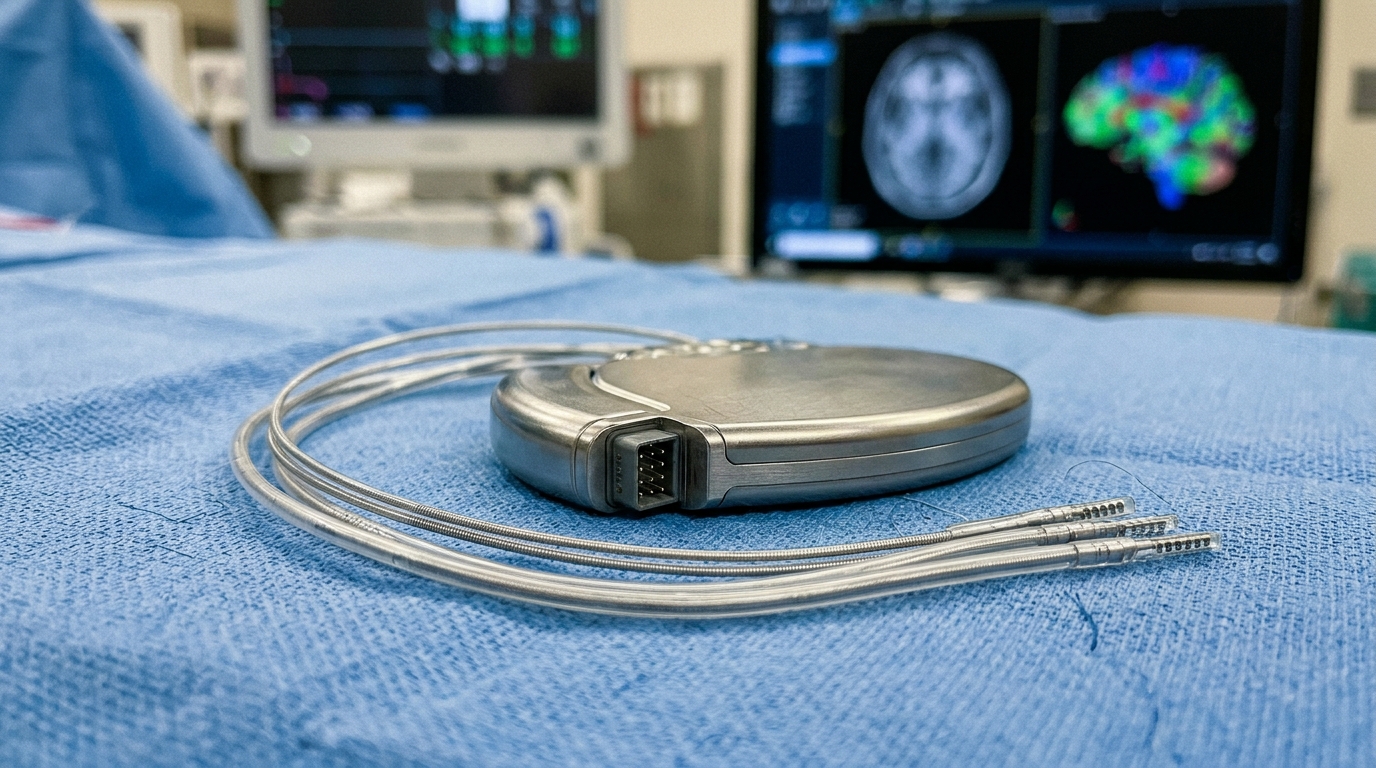
Epidemiological syntheses demonstrate that drug-resistant epilepsy carries a prevalence of 13.7 percent in population- or community-based samples, rising to 36.3 percent in clinic-based cohorts. The disorder entails elevated healthcare expenditures, disability, and mortality relative to drug-responsive epilepsy. Although surgical resection of the epileptogenic focus serves as the primary intervention, many patients are ineligible. Palliative interventions such as vagus nerve stimulation, deep brain stimulation, responsive neurostimulation in cortical or subcortical configurations, and cathodal transcranial direct current stimulation are deployed to suppress seizure frequency and severity. Because fewer than 5 percent of recipients achieve complete seizure freedom, treatment response is clinically defined as a reduction of at least 50 percent in seizure frequency.
To locate relevant literature, investigators registered a formal protocol in the International Prospective Register of Systematic Reviews under registration identifier CRD42024543952. A medical librarian developed and conducted extensive search strings across PubMed, Embase, Scopus, and the Cochrane Library from inception through July 15, 2024, supplemented by targeted searches on Google Scholar and reference list evaluations through August 15, 2024. The queries returned an initial pool of 4,451 records. After de-duplication, 3,362 unique citations underwent title and abstract screening, leaving 524 studies for full-text review against strict inclusion and exclusion criteria.
The full-text evaluation excluded 512 candidate publications due to ineligible patient populations, incorrect clinical interventions, inappropriate study designs, unsuitable clinical settings, non-peer-reviewed status, or non-English language publication. A final set of 12 peer-reviewed human research articles met all requirements, representing a cumulative total of 535 patients across combined training, testing, and validation cohorts. Within this corpus, 11 investigations evaluated vagus nerve stimulation, while a single study analyzed cathodal transcranial direct current stimulation. Across these 12 publications, investigators evaluated 17 distinct classification models, reflecting instances where identical patient cohorts were evaluated with differing feature configurations.
The analytical models identified in the systematic synthesis relied exclusively on traditional supervised machine learning architectures rather than deep learning techniques. Support vector machines represented the dominant algorithm, accounting for 10 of the 17 trained models. Random forest classifiers comprised four models derived from a single cohort evaluated across different feature sets, alongside applications of extreme-gradient boosting, linear discriminant analysis, and naive Bayes classifiers. Cross-validation methods varied among the experiments, with fivefold cross-validation utilized in eight instances, tenfold partitioning in five, and leave-one-out cross-validation applied in four. Patient sample sizes within the training-testing cohorts remained modest, spanning from 17 to 70 individuals.
Input features leveraged diverse physiological and neuroimaging modalities to predict neuromodulation success. Electroencephalography served as the most frequent data source across five studies, while diffusion tensor imaging, functional magnetic resonance imaging, and magnetoencephalography each supported two studies. In multiple publications, elevated structural or functional connectivity metrics correlated with favorable clinical responses following vagus nerve stimulation, potentially reflecting therapy-induced desynchronization across cerebral networks. Other diagnostic features included electrocardiography-derived heart rate variability and laryngeal motor evoked potentials captured via electroencephalography, reflecting parasympathetic autonomic pathways and vagal integrity.
Synthesis via a random-effects model using the metafor software package in R version 4.4.2 established an overall pooled area under the receiver operating characteristic curve of 0.84 with moderate statistical heterogeneity, marked by an I-squared value of 43.8 percent. Across all evaluated training-testing and external validation cohorts, the models achieved a mean accuracy of 0.76 plus or minus 0.11, recall of 0.77 plus or minus 0.19, precision of 0.83 plus or minus 0.08, specificity of 0.76 plus or minus 0.22, and an F1 score of 0.83 plus or minus 0.10. External validation cohorts yielded comparable performance characteristics to the initial derivation cohorts.
Subgroup analyses stratified by patient demographics indicated notable performance variations alongside reduced within-group heterogeneity. Models developed exclusively in pediatric cohorts, which represented seven of the twelve included studies, demonstrated a pooled area under the curve of 0.88 with a 95 percent confidence interval of 0.84 to 0.92 and an I-squared value of 20.2 percent. In contrast, models trained on adult-only populations yielded a lower pooled area under the curve of 0.76 with a confidence interval of 0.70 to 0.83 and an I-squared statistic of 18.2 percent. The authors noted that clinical etiologies in adults frequently involve diverse structural lesions and functional abnormalities, whereas pediatric cases often present with distinct age-dependent epileptic syndromes or specific genetic etiologies.
Methodological quality assessments conducted using the Prediction Model Risk of Bias Assessment Tool revealed substantial constraints across the published literature. Only six of the twelve included studies demonstrated an overall low risk of bias, with high risk most frequently observed within the statistical analysis domain. In evaluating clinical applicability, half of the studies displayed low concern, while the outcome domain exhibited frequent unclear ratings and the participant domain showed the highest risk. Furthermore, only five of the twelve studies incorporated independent external cohorts to validate predictive accuracy, and advanced imaging modalities such as magnetoencephalography and tractography present accessibility barriers in standard clinical practice, underscoring the necessity of larger multicenter prospective cohorts.
Beyond diagnostic modeling, the authors highlighted the clinical and economic implications of neuromodulation, where precise outcome forecasting remains critical. Therapeutic response rates in published literature exhibit substantial variance, commonly ranging from 30 percent in studies with a low risk of bias up to 70 percent in investigations bearing high bias risks. Brain-invasive interventions such as responsive neurostimulation generally demonstrate higher response rates, reaching approximately 70 percent, compared to non-brain-invasive alternatives such as vagus nerve stimulation, which achieve response rates around 50 percent. Concurrently, these interventional procedures entail significant therapeutic risks, with adverse events documented in up to one-third of treated patients. The financial burden associated with these surgical procedures is also substantial, averaging approximately 88,000 dollars per individual for vagus nerve stimulation and roughly 100,000 dollars for deep brain stimulation and responsive neurostimulation devices. Accurately anticipating treatment responsiveness before surgical implantation could prevent patients unlikely to benefit from enduring surgical complications and substantial procedural expenditures.
The necessity for sophisticated algorithmic models stems directly from the complex biological heterogeneity of drug-resistant epilepsy. The clinical disorder involves multifaceted pathogenic processes, including altered pharmacokinetics, specific genetic polymorphisms and mutations, structural modifications in cellular drug targets, aberrant neural network remodeling and plasticity, and localized neuroinflammation. Although multimodal computational frameworks are theoretically well suited to capture these intricate biological mechanisms, current implementations remain operationally restricted. Most evaluated investigations combined routine clinical records with only a single supplementary data source, such as electrocardiography, electroencephalography, or connectomics via diffusion tractography. Furthermore, advanced diagnostic modalities such as magnetoencephalography and diffusion tract imaging face accessibility constraints in routine medical centers, hindering their widespread clinical translation and practical deployment across broader healthcare settings.
Across individual publications, classification performance displayed noticeable variations among algorithms and cohorts. In pediatric training-testing datasets, support vector machine architectures documented by Mithani and colleagues achieved standout discrimination, reaching areas under the receiver operating characteristic curve of 0.93 across two separate evaluations. Within external validation testing, Chen and colleagues obtained an area under the curve of 0.91 utilizing a support vector machine with an accompanying standard error of 0.12, alongside an area of 0.90 utilizing an extreme-gradient boosting classifier. Conversely, an adult model developed by Brázdil and colleagues recorded an area under the curve of 0.48, demonstrating predictive performance slightly below random classification and skewing overall adult pooled outcomes. To assemble these findings rigorously, reviewers Alejandro Quintero-Villegas and Fylaktis Fylaktou conducted independent eligibility screenings, adjudicating unresolved disputes through consultation with Theodoros P. Zanos. The investigators utilized Covidence software for standardized metric extraction, calculating unlisted classification parameters from published confusion matrices and computing missing standard errors through established mathematical formulas.
Subject of Research: Machine learning prediction of neuromodulation therapy response in drug-resistant epilepsy
Article Title: Predicting response to neuromodulation therapies in drug-resistant epilepsy using machine learning models: a meta-analysis and systematic review
Article References: Quintero-Villegas, A., Fylaktou, F., Morales, J., & Zanos, T. P. (2025). Predicting response to neuromodulation therapies in drug-resistant epilepsy using machine learning models: a meta-analysis and systematic review. Bioelectronic Medicine, 11(1), Article 27. https://doi.org/10.1186/s42234-025-00191-8
Image Credits: AI Generated
DOI: 10.1186/s42234-025-00191-8
Keywords: drug-resistant epilepsy, neuromodulation, vagus nerve stimulation, machine learning, meta-analysis, systematic review, AUROC, clinical neurology, Predicting, response, therapies, drug-resistant
News Source: Kendall Mcintyre. (November 7, 2026). Machine Learning Predicts Neuromodulation Outcomes in Drug-Resistant Epilepsy Meta-Analysis. Scienmag.