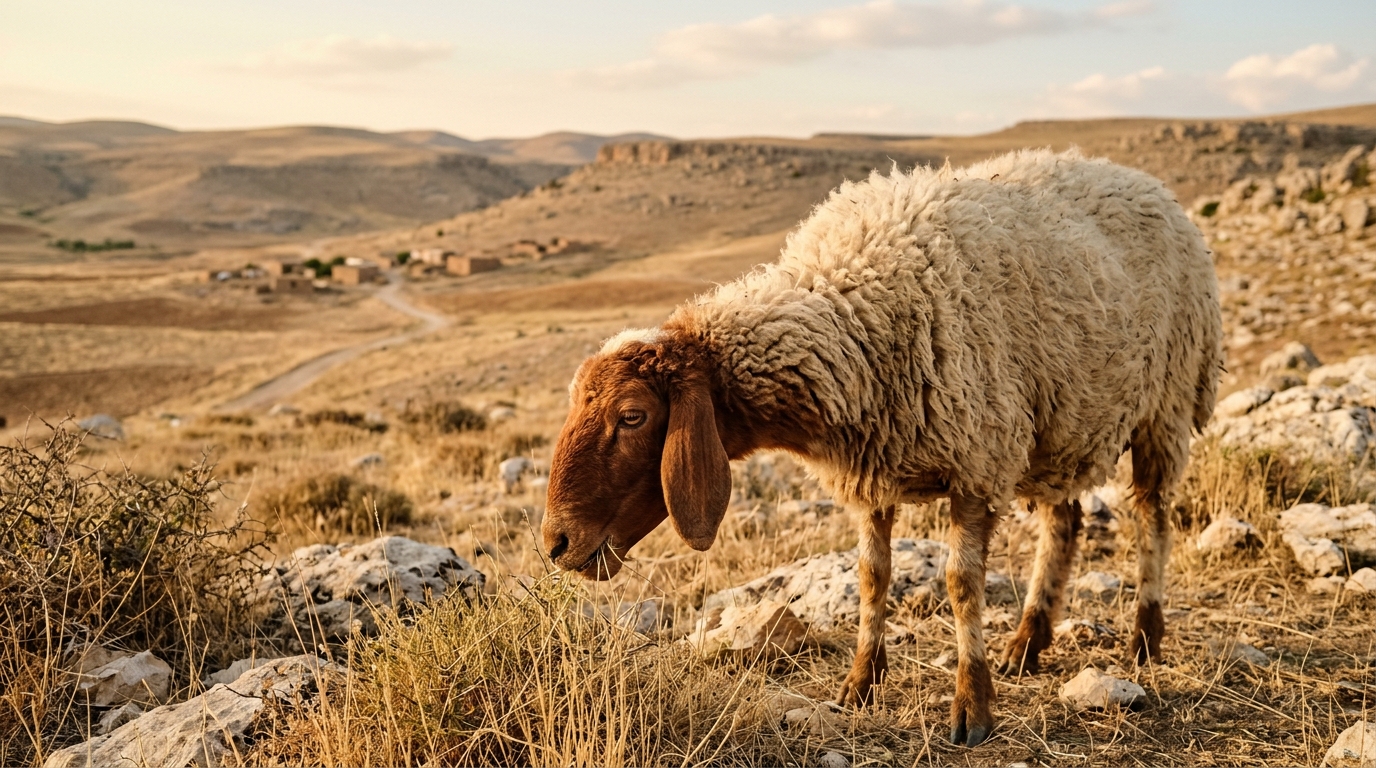
A high-density genomic investigation of Turkish Awassi sheep has identified extensive footprints of natural and artificial selection across the breed’s genome, uncovering specific candidate genes tied to lactation performance, carcass composition, lipid metabolism, and resilience against severe environmental stressors. Conducted by an international team of researchers from institutions in Türkiye, the United States, and Italy, the study resolved 397,315 high-quality single-nucleotide polymorphisms across 32 unrelated animals using double-digest restriction-site-associated DNA sequencing. The authors observed a high degree of genetic variability accompanied by a notably low inbreeding coefficient, demonstrating that the Turkish Awassi population has retained considerable genetic integrity within southeastern Anatolia, a region recognized as part of the historical Fertile Crescent where sheep were first domesticated nearly 11,000 years ago. By mapping regions under intense directional selection through runs of homozygosity and detecting shifts in allele frequency distributions with Tajima’s D, the investigation established a comprehensive molecular catalog linking the breed’s notable dairy output and hardiness to distinct genomic intervals.
The Awassi sheep constitutes approximately 4 percent of the total sheep population in Türkiye and represents a vital economic resource for the agricultural fabric of southeastern Anatolia, serving as a primary provider of meat and milk adapted to harsh local climates. Despite its critical status among fat-tailed breeds throughout the Middle East, high-resolution genomic assessments characterizing the specific selection signatures of Turkish Awassi populations had previously remained scarce. To capture an accurate demographic picture of this livestock population without the confounding effects of close kinship, the investigators collected biological specimens from 40 animals across three independent herds reared in Şanlıurfa Province. Animals were chosen based on documented pedigree records when available or through detailed oral interviews with local livestock keepers to systematically minimize inbreeding among sampled individuals. Following genomic DNA extraction from blood samples using commercial isolation kits and validation via agarose gel electrophoresis and fluorometric quantification, sequencing libraries were constructed using the double-digest restriction-site-associated protocol.
The molecular workflow relied on double enzymatic digestion of genomic DNA using EcoRI and MspI restriction enzymes, followed by fragment purification with magnetic beads, ligation of specific adapters and barcodes with T4 DNA ligase, index tagging, and pooling. Enriched DNA fragments ranging from 300 to 500 base pairs were subsequently amplified by polymerase chain reaction and sequenced on an Illumina NovaSeq 6000 platform under a paired-end option generating 2×150 base pair reads. The sequencing run produced a total of 666,547,521 raw reads, which were subsequently processed through demultiplexing in Stacks v2, leading to the removal of 15,214,598 reads that lacked proper barcode or index tags. An additional 13,026,659 reads were eliminated during automated quality trimming and adapter filtration in fastp. The remaining high-quality reads were aligned to the Ovis aries ARS-UI_Ramb_v3.0 reference assembly using Bowtie 2, where 26,489,710 reads failed to map. Ultimately, 611,816,554 reads, representing 91.8 percent of the raw data, were retained for downstream variant discovery using the BCFtools pipeline.
Variant filtration established strict quality standards, restricting candidate markers to biallelic single-nucleotide polymorphisms located on autosomes with read depths between 20 and 100 and quality scores of at least 20, while all insertions, deletions, and non-autosomal markers were purged from the dataset. Initial calling yielded 2,226,186 single-nucleotide polymorphisms and 107,318 insertions and deletions across the sequenced animals. Using the PLINK toolset, markers were further filtered against thresholds requiring a minor allele frequency of at least 0.05 and a genotyping completion rate of at least 0.90. Stringent individual-level filtering excluded eight animals due to individual call rates dropping below 90 percent, leaving 32 high-performing animals genotyped across 397,315 high-quality autosomal single-nucleotide polymorphisms. Across these validated markers, the average minor allele frequency was estimated at 0.333. The observed heterozygosity stood at 0.312, falling only slightly below the expected heterozygosity of 0.335, while the overall homozygosity metric reached 0.020, confirming that the sampled population maintains substantial genetic diversity with minimal autozygosity.
Demographic modeling using the SNep program demonstrated a sustained historical decline in effective population size across the past 700 generations, falling from an estimated historical effective size of 5,237 animals down to 147 individuals in the most recent 10 generations. This trajectory reflects regional animal management practices and historical demographic shifts in southeastern Anatolia over centuries of animal husbandry. Analysis of genome-wide linkage disequilibrium decay, evaluated through the PopLDdecay tool, mirrored this demographic trajectory by showing a rapid reduction in the mean squared correlation coefficient between marker pairs over physical distances. Linkage disequilibrium dropped sharply within the first 100 to 200 kilobases of separation, confirming a large ancestral effective population size while displaying moderate linkage disequilibrium at short physical distances that is characteristic of continuous, long-term selection pressure. This particular linkage disequilibrium architecture provided the empirical resolution required to pinpoint localized selective sweeps using both runs of homozygosity and Tajima’s D statistics.
Evaluation of continuous homozygous tracts across the autosomal genome using the detectRUNS package identified 2,798 distinct runs of homozygosity islands across the 32 evaluated sheep. Every identified segment fell within the shortest classified length bracket of 0 to 2 megabases, exhibiting an overall mean tract length of 0.73 megabases, with no tracts exceeding 2 megabases anywhere in the dataset. Because extended stretches of homozygosity indicate recent parental relatedness while shorter segments reflect ancient inbreeding events, this absence of long tracts indicates that autozygosity in Turkish Awassi sheep is driven by ancient population bottlenecks rather than recent consanguineous matings. The resulting inbreeding coefficient based on runs of homozygosity was calculated at 0.025, which closely matched the general homozygosity metric of 0.020. This relatively modest level of inbreeding contrasts sharply with higher inbreeding coefficients and extensive homozygous tracts observed in several European and intensive commercial dairy breeds that have experienced restricted gene flow and widespread artificial insemination.
To isolate positive selection footprints from background genomic patterns, the researchers focused on the extreme top 0.1 percent threshold of empirical single-nucleotide polymorphism distributions, requiring scanning windows to contain at least five markers. The runs of homozygosity approach located 449 significant single-nucleotide polymorphisms grouped across eight distinct genomic intervals distributed over six chromosomes, overlapping 21 protein-coding genes identified through the BioMart database. In contrast, the sliding-window Tajima’s D analysis, executed in VCFtools across 50-kilobase windows with a 25-kilobase step size, identified 151 significant markers across 20 genomic intervals on 12 chromosomes, encompassing 48 candidate protein-coding genes. Interestingly, zero overlapping protein-coding genes were shared between the two detection methodologies. This total divergence stems from their differing sensitivities: Tajima’s D captures relatively recent directional sweeps and deviations from neutrality over shorter historical horizons, whereas short homozygous segments reflect ancient bottlenecks and foundational selective pressures established earlier in the breed’s evolutionary history.
The functional annotation of candidate loci under selection revealed clusters of genes governing milk yield, lactation biology, and reproductive efficiency. Prominent among these were the steroidogenic enzyme genes AKR1C3 and AKR1D1, which are central to the metabolic conversion of steroid hormones that regulate mammary gland development and lactation persistence. These hormonal regulators were supplemented by EEF1A1, TMEM267, and ZNF131, which have been linked in ruminants to milk protein synthesis and sustained milk production. Within the neuroendocrine axis, selective sweeps directly targeted the oxytocin and vasopressin genes, OXT and AVP. These hormones control maternal bonding and the neuroendocrine milk ejection reflex during milking and suckling, promoting both lamb survival and efficient dairy harvest. Selection signatures were also identified across genes linked to prolificacy and reproductive cycle dynamics, including CAMK4, RREB1, ITPKB, DYNC2H1, and LRRN1, balancing reproductive efficiency against the demands of heavy lactation.
Selection signals were also identified in genomic regions regulating muscular development, skeletal structure, and the breed’s hallmark fat tail. Markers on chromosomes 1 and 19 coincided with PBX1 and KBTBD8, while additional signatures aligned with the HOXA gene cluster encompassing HOXA1, HOXA2, and HOXA3. The HOXA cluster and PBX1 represent major developmental regulators of skeletal morphogenesis, bone formation, and body conformation, indicating consistent artificial selection for meat output and structural integrity alongside dairy traits. Concurrently, homeobox genes within the HOXA cluster have documented roles in tail fat accumulation in fat-tailed sheep breeds, demonstrating a shared developmental role in both skeletal framework and localized adipogenesis. Energy storage and lipid mobilization were further represented by HMGCS1, which directs cholesterol biosynthesis, STARD4, which mediates intracellular cholesterol transport, and additional candidates including NR1H4, FAR1, and NET1, conferring metabolic adaptations for surviving intermittent nutritional scarcity.
The study also identified selective sweeps in genes associated with cellular protection, immunity, and survival in semi-arid environments. Signatures in ABCB1 pointed to mechanisms of physiological resistance against dietary toxins and gastrointestinal parasites, while immune-regulatory loci including TSLP, IL17D, IL6, MNDA, GALNTL6, and SKAP2 reflect adaptations against endemic pathogens. Notably, the mucosal chemokine gene CCL28 provides local mucosal defense within the mammary gland, representing a prospective barrier protecting high-yielding dairy ewes from mastitis under dusty pasture conditions. Together with thermoregulatory and metabolic signaling genes such as GJB6, GJB2, SIM1, and NKAIN2, these findings show that centuries of traditional pastoralism have shaped a resilient genome. The authors concluded that the identified selection signatures offer precise molecular targets for genomic breeding and marker-assisted selection, allowing producers to enhance milk and meat yields while safeguarding the adaptive integrity of the Turkish Awassi breed.
Subject of Research: Genome-wide selection signatures and genetic diversity in Turkish Awassi sheep
Article Title: Genome-wide selection signatures in Turkish Awassi sheep: uncovering the genetic basis of production traits and adaptation
Article References: Meydan, H., Demir, E., Bilginer, Ü., Doğru, H., Kaya, S., Argun Karsli, B., Aktaş, Y., Atmaca, V., Perini, F., & Karsli, T. (2026). Genome-wide selection signatures in Turkish Awassi sheep: uncovering the genetic basis of production traits and adaptation. Archives Animal Breeding, 69(4), 605-617. https://doi.org/10.5194/aab-69-605-2026
Image Credits: AI Generated
Keywords: Awassi sheep, genomics, selection signatures, runs of homozygosity, Tajima's D, livestock genetics, adaptation, animal breeding, Genome-wide, selection, signatures, Turkish
News Source: Juliet Wilcox. (November 6, 2026). Genomic Analysis Uncovers Selection Signatures in Turkish Awassi Sheep. Scienmag.