Precursor lesions of gastric cardia adenocarcinoma exhibit stage-associated mucosal microbiome remodeling that co-occurs with host epigenetic alterations, according to a cross-sectional multi-omics study. The investigation evaluated microbial community changes across the progression of gastric cardia tissues, specifically analyzing normal gastric cardia mucosa, intestinal metaplasia, and intraepithelial neoplasia while examining concurrent host epigenetic modifications in the context of a malignancy recognized for marked geographic clustering.
The cross-sectional investigation utilized 16S rRNA gene sequencing on 71 gastric cardia mucosal samples, comprising 17 Normal specimens, 44 intestinal metaplasia specimens, and 10 intraepithelial neoplasia specimens. These mucosal microbiome profiles were integrated with previously published DNA methylation and RNA sequencing datasets derived from matched samples. To evaluate Helicobacter pylori colonization independently, researchers assessed an expanded cohort consisting of distinct individuals with no overlapping participants using immunohistochemistry.
Microbial community composition differed significantly across histological groups, yielding a Bray–Curtis PERMANOVA R² of 0.115 (P = 0.001), an association that persisted after adjusting for participant age and sex. In contrast, unadjusted analyses showed that microbial alpha diversity did not differ significantly among the histological categories. Within the primary cohort, the genus Helicobacter was enriched in the combined intestinal metaplasia and intraepithelial neoplasia group, while immunohistochemistry testing in the independent expanded cohort identified the highest rate of Helicobacter pylori positivity in the intraepithelial neoplasia group, accounting for 19 of 33 cases.
Taxonomic analyses revealed distinct shifts in individual bacterial abundances across lesion stages, including a lower relative abundance of Neisseria in precancerous lesion samples. Conversely, Greengenes2-assigned putative species Gemella morbillorum and Leptotrichia trevisanii showed higher relative abundances in intraepithelial neoplasia specimens. Furthermore, an exploratory dysbiosis score demonstrated a positive correlation with a host gene silencing score (Spearman rho = 0.61, P = 5.51 × 10⁻⁵), a relationship that retained nominal significance after adjusting for age, sex, and histological stage.
The researchers noted critical methodological limitations, emphasizing that because microbial and host features were selected and evaluated within the study datasets, the score-based associations remain susceptible to feature-selection bias. Consequently, the observed association between dysbiosis and host gene silencing must be interpreted as hypothesis-generating and requires independent cohort validation. Longitudinal tissue sampling and functional biological studies remain necessary to establish temporal sequences and clarify whether these microbial shifts exert functional biological effects in gastric cardia tumorigenesis.
Subject of Research: Stage-associated mucosal microbiome remodeling and host epigenetic alterations in gastric cardia precursor lesions
Article Title: Stage-associated mucosal microbiome remodeling and host epigenetic alterations in gastric cardia precancerous lesions: a cross-sectional multi-omics study
Article References: Liao, X., Liu, Z., Wang, Z., Zhou, S., Lei, Z., Xu, G., Chen, S., Zhuang, Q., Chen, G., Li, B., Gu, M., Zhang, D., Zhao, S., & Lin, R. (2026). Stage-associated mucosal microbiome remodeling and host epigenetic alterations in gastric cardia precancerous lesions: a cross-sectional multi-omics study. Gut Pathogens. https://doi.org/10.1186/s13099-026-00897-3
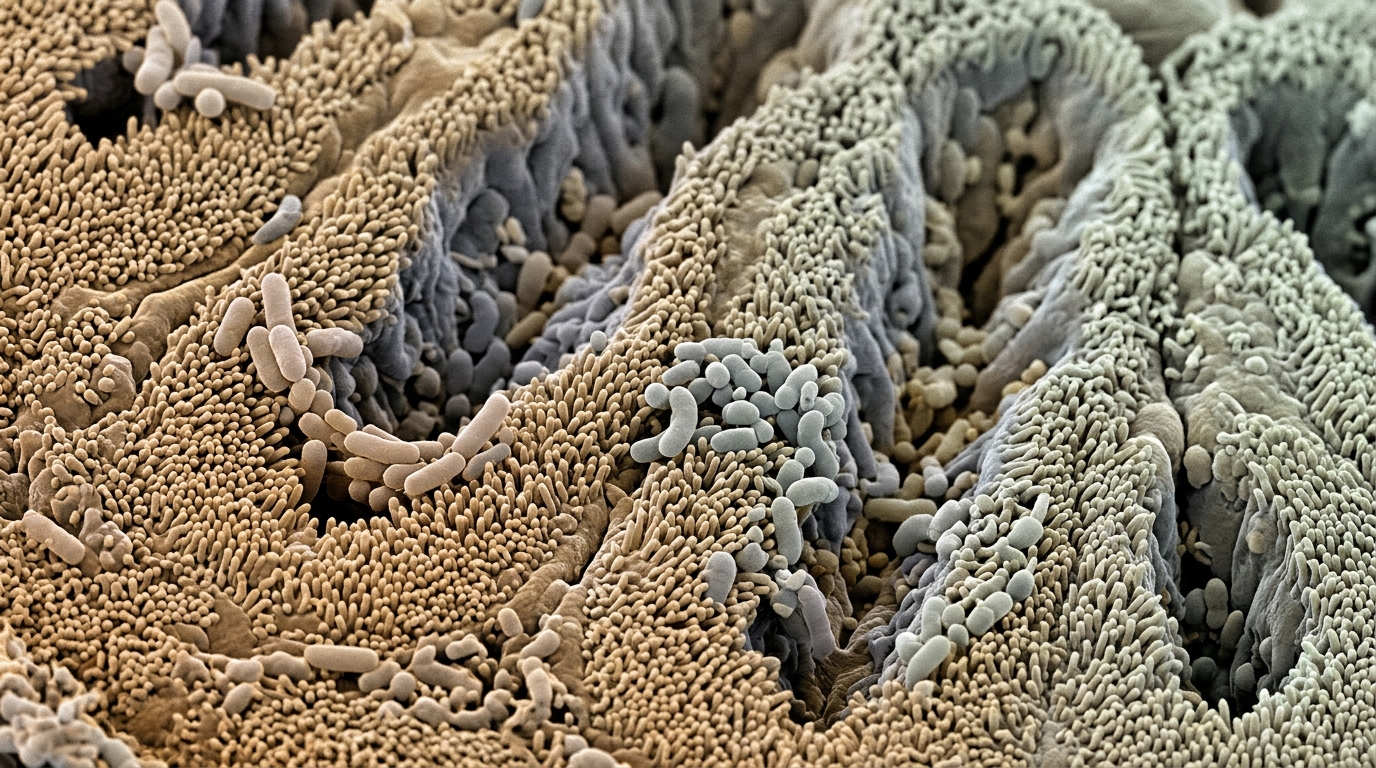
Image Credits: AI Generated
DOI: 10.1186/s13099-026-00897-3
Keywords: gastric cardia adenocarcinoma, mucosal microbiome, epigenetics, intestinal metaplasia, intraepithelial neoplasia, Helicobacter pylori, DNA methylation, 16S rRNA sequencing, Stage-associated, mucosal, microbiome, remodeling
News Source: Morgan Morrow. (November 6, 2026). Microbiome Remodeling and Host Epigenetic Alterations Characterize Gastric Cardia Precursor Lesions. Scienmag.