In an extensive computational study evaluating automated diagnostic methods for pandemic triage, researchers have established a standardized benchmarking framework to compare thirteen pretrained convolutional neural network architectures across seven gradient-based optimization algorithms for identifying COVID-19 from lung ultrasound images. Published in Frontiers in Radiology, the investigation addressed the critical need for reliable, portable, and radiation-free diagnostic workflows by systematically evaluating deep transfer learning performance under strictly controlled conditions. Using static image frames derived from the public POCOVID-Net repository, the comparative benchmark demonstrated that the DenseNet-121 architecture trained with the Adam optimization algorithm achieved flawless classification performance in a hold-out test split, securing one hundred percent accuracy, sensitivity, specificity, positive predictive value, F1-score, and area under the receiver operating characteristic curve. Subsequent stratified five-fold cross-validation on this top-performing configuration confirmed high stability, yielding a mean accuracy of 99.26 percent with an exceptionally narrow ninety-five percent confidence interval ranging from 99.11 percent to 99.42 percent.
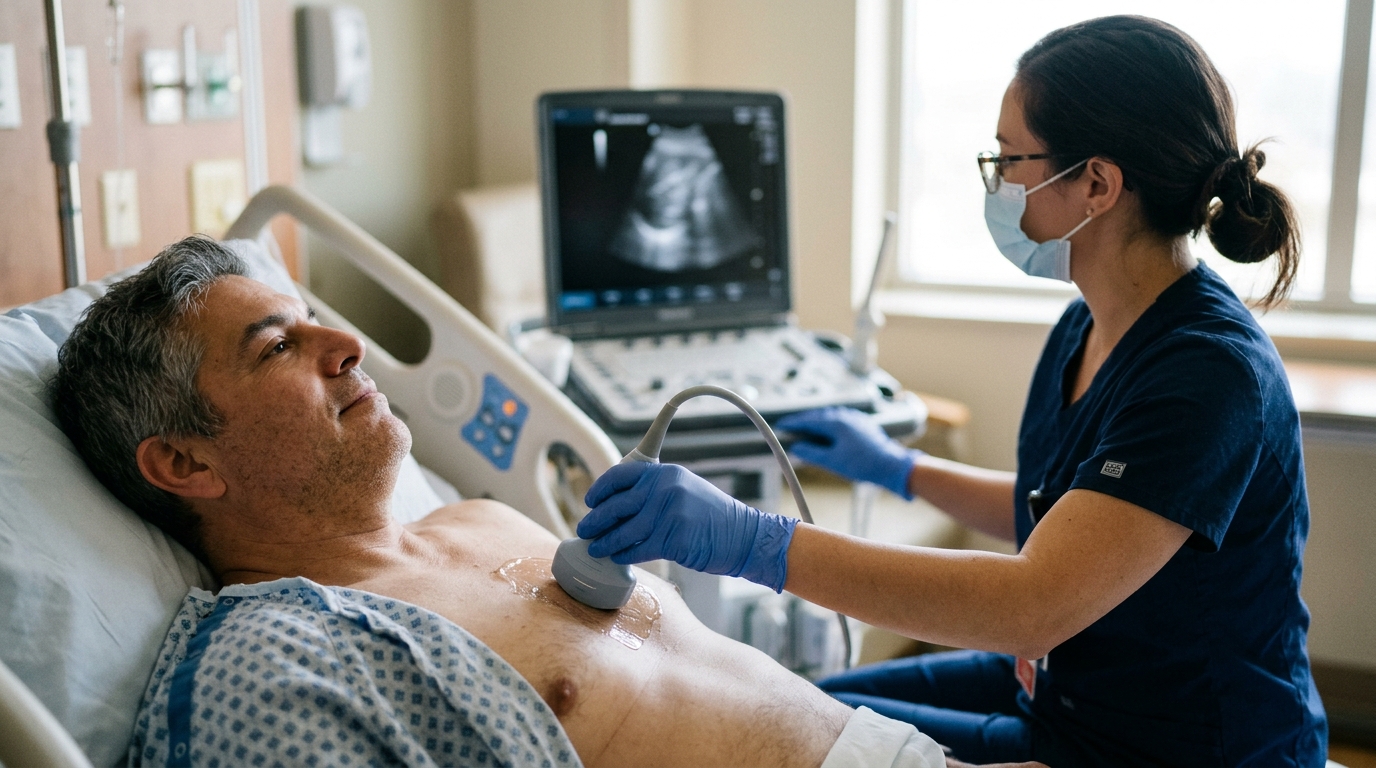
The research team framed their benchmark around the severe operational hurdles encountered by conventional diagnostic modalities during the acute pandemic. Although reverse transcription polymerase chain reaction assays remain the standard laboratory method for confirming viral infection, molecular testing often entails prolonged processing turnaround times, elevated logistical expenses, and noticeable false-negative rates during high-volume screening operations. Meanwhile, standard radiological modalities such as computed tomography and conventional chest radiography provide vital anatomical evaluation, but they present major deployment barriers, including ionizing radiation hazards, substantial financial burdens, and demanding infection-control measures required between consecutive scans. These obstacles restrict their widespread utility in resource-constrained clinics and make routine monitoring impractical for vulnerable patient groups like pregnant women and bedridden emergency patients. In contrast, lung ultrasound represents a cost-effective, non-invasive, and highly mobile diagnostic tool suitable for bedside point-of-care implementation. Despite these distinct clinical advantages, rigorous and reproducible evaluations comparing how modern deep neural architectures interact with various optimization techniques on lung ultrasound data had not been comprehensively conducted.
To establish an empirical foundation, the authors utilized the public POCOVID-Net database, a curated collection of point-of-care lung ultrasound recordings acquired by clinical practitioners across multiple medical institutions. The imaging data were gathered using commercial ultrasound scanners from multiple manufacturers, including General Electric, Philips, and Siemens, employing both convex and linear transducer probes across anterior, lateral, and posterior lung zones. Experienced clinicians manually selected representative static frames from recorded video clips, targeting acoustic features characteristic of pulmonary pathology such as vertical B-lines, consolidations, and pleural irregularities. The patient cohort covered diverse disease severity levels confirmed through laboratory testing, while the non-COVID comparison cohort comprised patients suffering from bacterial pneumonia, non-COVID viral infections, acute respiratory distress syndrome, and healthy controls. Because ultrasound videos were recorded at three hertz with seventeen frames per sequence, the authors extracted an initial sample consisting of 455 COVID-19 frames and 226 non-COVID frames across adult patients.
To counteract the risk of overfitting inherent in training deep neural architectures on modest sample sizes, the researchers introduced an extensive data augmentation pipeline. The geometric transformations applied to the original images included random rotational adjustments, horizontal and vertical translations within a ten-pixel displacement boundary, random reflections along both spatial axes, uniform scaling between 0.5 and 5.0, and directional shearing. This systematic augmentation procedure generated a substantial working pool totaling 3,185 COVID-19 images and 1,582 non-COVID images. The dataset was partitioned into an eighty percent training subset and a twenty percent independent testing subset. Without augmentation, the baseline set contained 364 COVID-19 and 181 non-COVID images for training, alongside 91 COVID-19 and 45 non-COVID images for evaluation. With augmentation applied, the training subset comprised 2,548 COVID-19 and 1,265 non-COVID images, while the hold-out testing set contained 637 COVID-19 and 317 non-COVID images, enabling reliable parameter optimization while preserving class distributions.
To maximize transfer learning efficacy, each network was initialized with pre-trained ImageNet parameters, functioning as a generic visual feature extractor before undergoing targeted fine-tuning. The native classification head of each pre-trained model was removed and substituted with a specialized binary classification structure. This custom head incorporated a global average pooling layer, followed by a fully connected dense layer containing 128 units with rectified linear unit activation, a dropout layer with a rate of 0.5 to discourage feature co-adaptation, and a terminal dense layer with sigmoid activation to output class probabilities. Head parameters were initialized using the He normal method. Model fine-tuning was executed over thirty training epochs using a mini-batch size of thirty-two, exploring learning rates spanning from 0.001 to 0.01. Training was performed within a Python computational environment using Keras on TensorFlow, supported by high-performance graphics processing hardware with 25.45 gigabytes of memory, and cross-checked on an Intel Core i3 workstation.
The study evaluated thirteen distinct convolutional neural network architectures representing distinct evolutionary milestones in deep learning. These included AlexNet, an eight-layer pioneer with roughly 72 million parameters, alongside VGG-16 and VGG-19, which employ repetitive small three-by-three convolution kernels across sixteen and nineteen layers, totaling 134.3 million and 139.6 million parameters respectively. Residual learning was analyzed through ResNet-50, ResNet-101, and ResNet-152, which incorporate shortcut skip connections that bypass intermediate transformations to alleviate vanishing gradient degradation across 23.6 million to 58.4 million parameters. Dense convolutional networks included DenseNet-121, DenseNet-169, and DenseNet-201, which concatenate feature maps from each layer directly to all subsequent layers, facilitating extensive feature reuse with relatively compact parameter budgets between 7.0 million and 18.3 million. The benchmarking also incorporated multiscale architectures, notably InceptionV3 and Inception-ResNet-V2, depthwise separable convolutions via the 71-layer Xception model, and MobileNetV2, which employs inverted residual bottlenecks to achieve classification with merely 2.38 million parameters.
Seven gradient-based optimization algorithms were assessed across all architectures to determine how mathematical update mechanisms influence convergence stability. Standard stochastic gradient descent applies single-sample updates, but its fixed learning rate often produces noisy trajectories on non-convex surfaces. Adaptive optimizers resolve this issue: Adagrad computes individual parameter learning rates based on cumulative historical squared gradients, though its monotonically shrinking step size frequently causes premature stagnation. Adadelta modifies this approach by maintaining an exponentially decaying window of historical gradients, eliminating the need for a global learning rate but occasionally exhibiting convergence instability. RMSProp regulates step size using an exponential moving average of squared gradients. Adam combines momentum smoothing with adaptive scaling, effectively dampening high-variance gradient oscillations during training. AdaMax expands on Adam by utilizing an infinity norm over gradients to reduce sensitivity to noisy updates, while Nadam integrates Nesterov accelerated momentum into Adam to calculate lookahead updates, accelerating descent across complex loss surfaces.
Evaluating the ninety-one architecture and optimizer configurations under the hold-out testing partition revealed substantial performance variations. Across all evaluated CNNs, the Adam optimizer consistently yielded the highest diagnostic scores. Paired with Adam, DenseNet-121 attained perfect one hundred percent marks across accuracy, sensitivity, specificity, precision, F1-score, and area under the curve. AdaMax demonstrated reliable secondary performance, securing over 99.16 percent accuracy on nearly all backbones, while Nadam attained top-tier metrics, including 99.90 percent accuracy with DenseNet-121 and Inception-ResNet-V2. Conversely, Adagrad and Adadelta performed poorly across several models, with Adadelta achieving only 94.65 percent accuracy on Xception and Inception-ResNet-V2. Architectural comparisons showed that ResNet models maintained accuracy above ninety-eight percent across most settings due to residual skip connections. DenseNet architectures delivered the highest overall consistency by promoting dense feature reuse, although DenseNet-201 exhibited sensitivity to optimizer selection, declining to 92.97 percent under Adagrad. Meanwhile, VGG models delivered dependable but comparatively lower accuracy, and MobileNetV2 achieved up to 99.47 percent accuracy under Adam.
To verify that the flawless hold-out performance of DenseNet-121 was not a byproduct of a fortuitous data split, the researchers performed stratified five-fold cross-validation. Across the individual folds, the network recorded consistent accuracies of 99.18 percent, 99.34 percent, 99.11 percent, 99.42 percent, and 99.27 percent. This produced a mean accuracy of 99.26 percent with a standard deviation of 0.13 percent and a ninety-five percent confidence interval of 99.11 percent to 99.42 percent, alongside a mean precision of 99.34 percent, sensitivity of 99.41 percent, specificity of 98.98 percent, F1-score of 99.37 percent, and area under the curve of 99.84 percent. The authors benchmarked these outcomes against prior published ultrasound detection models using one-sample t-tests with four degrees of freedom. The cross-validated performance of DenseNet-121 achieved statistically significant improvements over all six comparator studies (p less than or equal to 0.025), including Horry et al.’s VGG-16 (98.54 percent), Julia et al.’s Inception-V3 (91.50 percent), Che et al.’s Multi-Scale RCNN (95.11 percent), Elhouby et al.’s ensemble (95.00 percent), Randieri et al.’s lightweight CNN (97.48 percent), and Talukder et al.’s fine-tuned EfficientNetB4 (99.11 percent).
Despite these strong benchmarking results, the authors outlined significant methodological limitations that govern lung ultrasound and deep learning systems. Ultrasound imaging is inherently operator-dependent, with visual quality influenced by probe choice, machine calibration, and clinician skill. The experimental protocol omitted denoising filters, leaving models vulnerable to intrinsic speckle noise present in real-world ultrasound streams. Crucially, the analysis was conducted entirely on the single POCOVID-Net repository without independent multicenter validation across external patient cohorts or imaging vendors. Furthermore, because static frames were extracted from video sequences before data augmentation, near-duplicate acoustic patterns could have spanned across the training and testing sets if patient-level separation was not strictly guaranteed in the source database, potentially yielding optimistic classification estimates.
Additional constraints involve the diagnostic scope of the control cohort, which included only bacterial pneumonia and healthy individuals, omitting confounding conditions like acute respiratory distress syndrome, pulmonary edema, and non-COVID viral infections that present similar B-line features in clinical triage. Moreover, the images reflect ancestral viral strains collected prior to widespread vaccination, leaving generalization to newer variants unconfirmed. Consequently, the authors emphasized that lung ultrasound AI models should serve as rapid screening aids rather than standalone diagnostic tools. Future research should prioritize external multi-center trials, incorporate noise-aware preprocessing filters, integrate feature interpretability mechanisms, and extend classification heads to multi-class differentiation and pulmonary severity grading.
Subject of Research: Deep transfer learning benchmarking for COVID-19 lung ultrasound classification
Article Title: A systematic benchmarking of deep transfer learning architectures and optimization strategies for COVID-19 detection from lung ultrasound images
Article References: Dadhirao, C., Kamireddy, R. R., Sadi, R. P. R., Kadha, V., Mishra, M., & Batchu, R. K. (2026). A systematic benchmarking of deep transfer learning architectures and optimization strategies for COVID-19 detection from lung ultrasound images. Frontiers in Radiology, 6, Article 1848424. https://doi.org/10.3389/fradi.2026.1848424
Image Credits: AI Generated
DOI: 10.3389/fradi.2026.1848424
Keywords: lung ultrasound, deep learning, DenseNet-121, COVID-19 diagnostics, transfer learning, convolutional neural networks, Adam optimizer, medical imaging, systematic, benchmarking, deep, transfer
News Source: Ophelia Keating. (November 6, 2026). Benchmarking Deep Transfer Learning Models for COVID-19 Lung Ultrasound Detection. Scienmag.