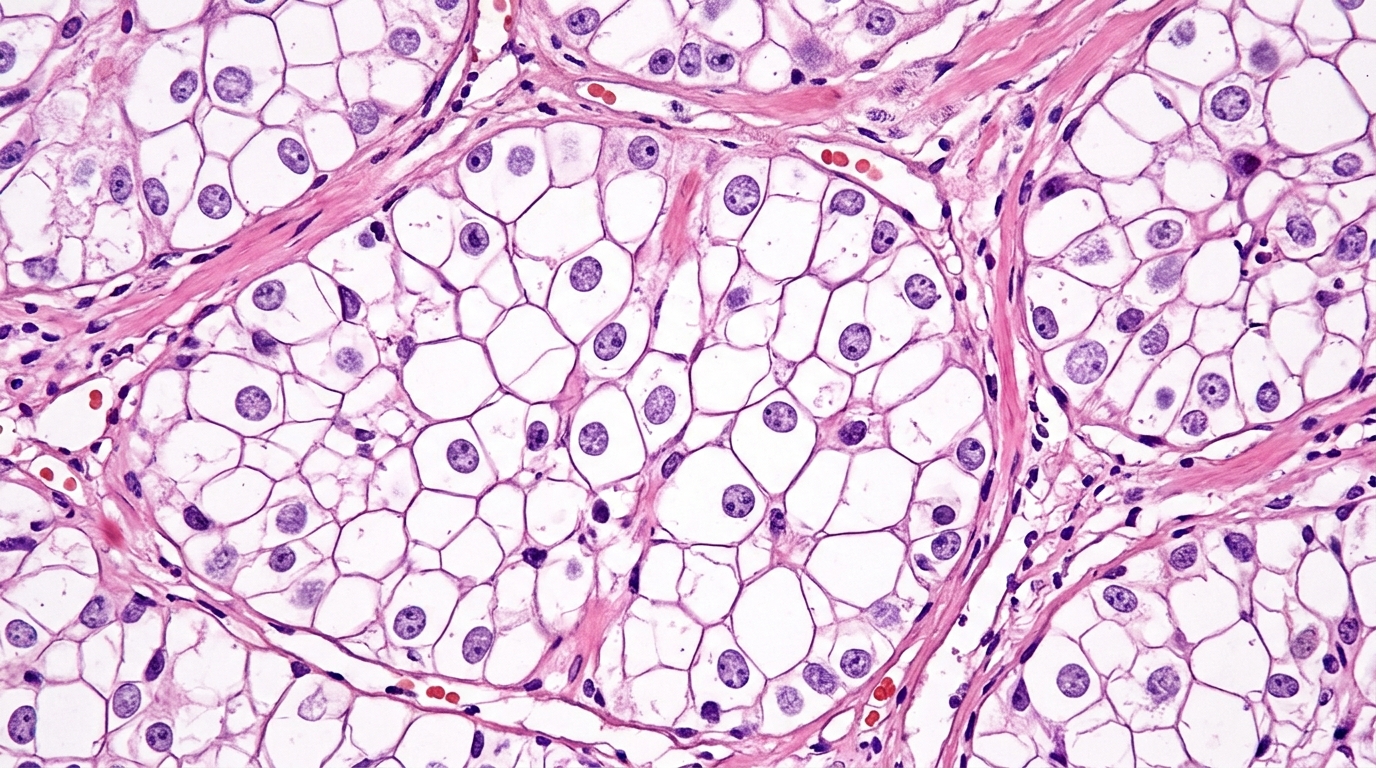
In a retrospective evaluation of clear cell renal cell carcinoma, researchers have identified that a novel lipid metric—the preoperative low-density to non-low-density lipoprotein cholesterol ratio—is significantly associated with tumor risk and acts as an independent prognostic factor for patient survival outcomes. Clear cell renal cell carcinoma represents a malignancy where disorders of lipid metabolism have been linked to tumor development, though specific relationships between distinct circulating lipid parameters and disease trajectory have remained insufficiently elucidated. By analyzing clinical data from 401 clear cell renal cell carcinoma patients treated between June 2013 and June 2023 alongside comparative data from 518 participants in the 2015 China Health and Retirement Longitudinal Study, the study evaluated the capacity of this novel lipid biomarker to identify disease risk, enhance automated machine learning classification, and forecast overall and progression-free survival following diagnosis.
The statistical evaluation of patient lipid profiles established a robust association between elevated low-density to non-low-density lipoprotein cholesterol ratios and the presence of clear cell renal cell carcinoma. Using logistic regression analysis, the investigators recorded an odds ratio of 15.446 for clear cell renal cell carcinoma risk, supported by a 95 percent confidence interval extending from 9.882 to 24.142 and a significance level of p less than 0.001. To explore the underlying mathematical nature of this relationship beyond linear assumptions, the authors implemented restricted cubic spline models. This non-linear analytical approach revealed a distinct J-shaped relationship between the low-density to non-low-density lipoprotein cholesterol ratio and clear cell renal cell carcinoma risk.
Beyond baseline association tests, the study investigated whether incorporating this novel lipid metric could improve the discriminatory power of computational prediction systems designed to identify clear cell renal cell carcinoma cases. Several machine learning algorithms were trained and comparatively evaluated, with the light gradient boosting machine and extreme gradient boosting architectures demonstrating the highest discriminatory performance among the tested models. When the low-density to non-low-density lipoprotein cholesterol ratio was integrated into these machine learning frameworks, both models exhibited statistically significant improvements in diagnostic classification. The incremental predictive value of the metric in machine learning models was evaluated using integrated discrimination improvement, net reclassification improvement, and area under the curve.
To inspect the internal decision mechanics of the machine learning architectures and verify which clinical features drove model output, the researchers utilized Shapley Additive Explanations. Across the evaluated models, Shapley Additive Explanations identified the low-density to non-low-density lipoprotein cholesterol ratio as the single most influential variable governing the prediction of clear cell renal cell carcinoma. This prominent feature importance confirmed that variations in the balance between low-density lipoprotein cholesterol and non-low-density lipoprotein cholesterol fractions contributed more substantially to the discriminatory outputs of the tree-based gradient boosting models than other examined lipid parameters.
The investigation also tracked patient trajectories over time using Kaplan–Meier survival curves and Cox proportional hazards regression analyses to determine whether preoperative lipid ratios corresponded to post-diagnostic disease course. The survival analyses revealed that clear cell renal cell carcinoma patients presenting with higher preoperative low-density to non-low-density lipoprotein cholesterol ratios experienced significantly shorter overall survival and reduced progression-free survival compared to patients with lower measured ratios. In Cox regression analyses, an elevated ratio was found to be an independent prognostic factor for overall survival, yielding a hazard ratio of 2.001 with a 95 percent confidence interval of 1.048 to 3.822 and a p-value of 0.036. Similarly, the metric proved to be an independent prognostic factor for progression-free survival, generating a hazard ratio of 2.571 with a 95 percent confidence interval of 1.206 to 5.481 and a p-value of 0.014.
The study authors concluded that the preoperative low-density to non-low-density lipoprotein cholesterol ratio serves as a notable independent prognostic factor for both overall survival and progression-free survival while simultaneously boosting the discriminatory capacity of predictive machine learning models in clear cell renal cell carcinoma. The investigators noted that as a low-cost biomarker, the ratio may serve as a potential discrimination marker and may be useful for prognostic risk assessment in patients with clear cell renal cell carcinoma. However, the authors noted that its use as a potential discrimination marker remains pending external validation.
Subject of Research: Prognostic significance of the low-density to non-low-density lipoprotein cholesterol ratio in clear cell renal cell carcinoma
Article Title: Prognostic role of preoperative low density to non-low-density lipoprotein cholesterol ratio in clear cell renal cell carcinoma: A retrospective study
Article References: Qiao, Y., Wang, Z., Zheng, H., Li, Z., Dong, Y., Tian, G., Shen, Y., Chong, T., & Chong, Y. (2026). Prognostic role of preoperative low density to non-low-density lipoprotein cholesterol ratio in clear cell renal cell carcinoma: A retrospective study. Cancer Causes & Control, 37(11), Article 190. https://doi.org/10.1007/s10552-026-02270-w
Image Credits: AI Generated
DOI: 10.1007/s10552-026-02270-w
Keywords: clear cell renal cell carcinoma, lipid metabolism, prognostic biomarker, machine learning, overall survival, progression-free survival, cholesterol ratio, retrospective study, Prognostic, role, preoperative, density
News Source: Nathaniel Bowman. (November 6, 2026). Preoperative Lipid Ratio Predicts Clear Cell Renal Cell Carcinoma Risk and Survival. Scienmag.