• HOME
  • NEWS
  • EXPLORE
    • CAREER
      • Companies
      • Jobs
    • EVENTS
    • iGEM
      • News
      • Team
    • PHOTOS
    • VIDEO
    • WIKI
  • BLOG
  • COMMUNITY
    • FACEBOOK
    • INSTAGRAM
    • TWITTER
Saturday, November 7, 2026
BIOENGINEER.ORG
No Result
View All Result
  • Login
  • HOME
  • NEWS
  • EXPLORE
    • CAREER
      • Companies
      • Jobs
        • Lecturer
        • PhD Studentship
        • Postdoc
        • Research Assistant
    • EVENTS
    • iGEM
      • News
      • Team
    • PHOTOS
    • VIDEO
    • WIKI
  • BLOG
  • COMMUNITY
    • FACEBOOK
    • INSTAGRAM
    • TWITTER
No Result
View All Result
Bioengineer.org
No Result
View All Result
Home NEWS Science News Technology

Optimized Gaussian Process Regression Predicts Splitting Tensile Strength of Blended Concrete

by
November 6, 2026
in Technology
Reading Time: 2 mins read
0
Optimized Gaussian Process Regression Predicts Splitting Tensile Strength of Blended Concrete

Optimized Gaussian Process Regression Predicts Splitting Tensile Strength of Blended Concrete

Share on FacebookShare on TwitterShare on LinkedinShare on RedditShare on Telegram

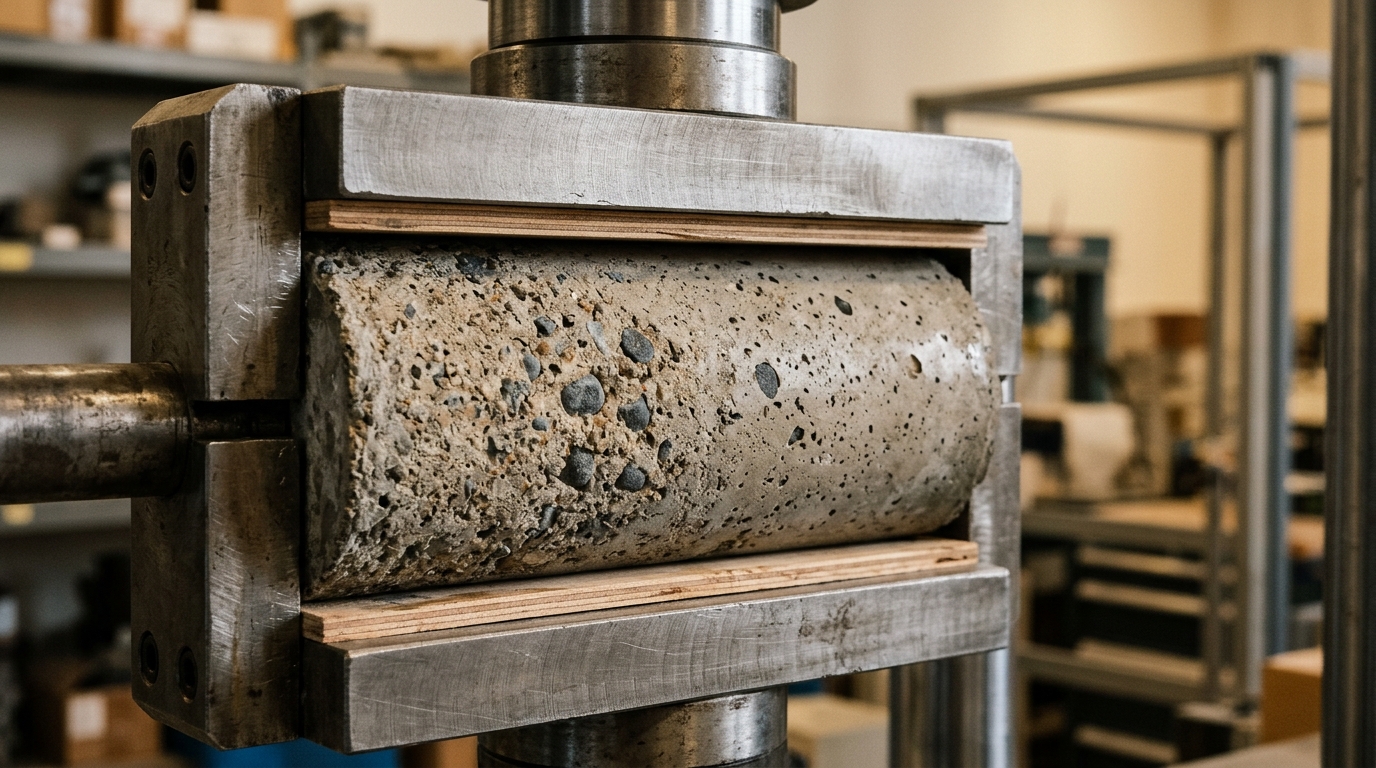
Researchers have developed an explainable machine-learning framework using optimized Gaussian process regression to predict the splitting tensile strength of concrete incorporating supplementary cementitious materials. The study focused on materials commonly utilized to lower reliance on conventional Portland cement by modeling tensile performance directly from mixture proportions.

The analysis evaluated a dataset of 395 valid concrete mixtures compiled from a global supplementary cementitious materials database. Eight specific mixture components were selected as model predictors: cement, water, coarse aggregate, fine aggregate, fly ash, silica fume, ground granulated blast-furnace slag, and superplasticizer.

To evaluate predictor relevance across the dataset, the researchers applied maximum relevance minimum redundancy, F-test, RReliefF, and Random Forest feature importance methods. A wide selection of regression algorithms was subsequently tested in the MATLAB Regression Learner environment using five-fold cross-validation, where Rational Quadratic Gaussian Process Regression demonstrated the best baseline performance.

The baseline Rational Quadratic model recorded a root mean square error of 0.51 MPa, a mean absolute error of 0.34 MPa, a mean absolute percentage error of 10.02 percent, and a coefficient of determination of 0.85. Investigators then explored model optimization using Bayesian optimization, random search, and grid search techniques. While all three optimization methods yielded comparable predictive accuracy, Bayesian optimization was selected for the final architecture because it required the shortest training time.

The resulting Bayesian-optimized Gaussian process regression model attained a root mean square error of 0.41898 MPa, a mean squared error of 0.17554 MPa², a mean absolute error of 0.29095 MPa, a mean absolute percentage error of 8.9 percent, and a coefficient of determination of 0.89. Compared with the baseline model, these metrics reflected a 17.85 percent decrease in root mean square error and a 32.48 percent decrease in mean squared error.

Model interpretability was assessed through partial dependence plots and SHAP analysis, which identified water and cement as the dominant predictors of tensile strength. Within the model predictions, higher water content was generally associated with lower splitting tensile strength, whereas higher cement content was associated with higher strength. The authors noted that the predictive performance of this data-driven framework is bounded by the specific range of mixtures represented in the analyzed dataset.

Subject of Research: Machine learning prediction of concrete splitting tensile strength

Article Title: Explainable machine learning for predicting the splitting tensile strength of SCM-blended concrete using optimized Gaussian process regression

Article References: Alnaqbi, A., Salim, A. M., Al-Zu’bi, M., Elnaml, I., Alotaibi, A., & Youssef, A. M. (2026). Explainable machine learning for predicting the splitting tensile strength of SCM-blended concrete using optimized Gaussian process regression. Discover Materials. https://doi.org/10.1007/s43939-026-01074-8

Image Credits: AI Generated

DOI: 10.1007/s43939-026-01074-8

Keywords: machine learning, Gaussian process regression, concrete strength, supplementary cementitious materials, splitting tensile strength, Bayesian optimization, explainable artificial intelligence, SHAP analysis, Explainable, machine, learning, predicting

News Source: Blake Davidson. (November 6, 2026). Optimized Gaussian Process Regression Predicts Splitting Tensile Strength of Blended Concrete. Scienmag.


Tags: Bayesian Optimizationconcrete strengthExplainableExplainable Artificial IntelligenceGaussian Process RegressionlearningmachineMachine LearningPredictingSHAP analysissplitting tensile strengthsupplementary cementitious materials
Share12Tweet7Share2ShareShareShare1

Related Posts

When an AI accelerator slows your intrusion detector: Raspberry Pi 5 and Hailo-8 put to the test

When an AI accelerator slows your intrusion detector: Raspberry Pi 5 and Hailo-8 put to the test

November 7, 2026
Wild Animals Can Now Fit Their Own GPS Collars in a Capture-Free Breakthrough

Wild Animals Can Now Fit Their Own GPS Collars in a Capture-Free Breakthrough

November 7, 2026

Machine Learning Pinpoints Three Genes Linking Type 2 Diabetes to Worse Bypass Surgery Outcomes

November 7, 2026

Dual AI Architecture Predicts Disaster Cascades to Optimize Regional Emergency Responses

November 7, 2026

POPULAR NEWS

  • Socioeconomic Status Associated with HPV Vaccination Willingness and Preferences in College Males

    Socioeconomic Status Associated with HPV Vaccination Willingness and Preferences in College Males

    29 shares
    Share 12 Tweet 7
  • Advances in Organoid Coculture Platforms for Cancer Research and Immunotherapy

    29 shares
    Share 12 Tweet 7
  • Porous Graphene Mesosponge Boosts Lithium-Ion Battery Power and Energy Density

    29 shares
    Share 12 Tweet 7
  • Scoping review maps 12 non-drug nursing interventions for older caregivers

    29 shares
    Share 12 Tweet 7

About

We bring you the latest biotechnology news from best research centers and universities around the world. Check our website.

Follow us

Recent News

Blood cell ratios run lower in asthma-COPD overlap than COPD, meta-analysis finds

Online HIV Research Cohorts Uncover Widespread Participant Fraud and Deceptive Tactics

Study Evaluates Infection Screening Markers Among Voluntary Blood Donors in Addis Ababa

Subscribe to Blog via Email

Enter your email address to subscribe to this blog and receive notifications of new posts by email.

Join 86 other subscribers
  • Contact Us

Bioengineer.org © Copyright 2023 All Rights Reserved.

Welcome Back!

Login to your account below

Forgotten Password?

Retrieve your password

Please enter your username or email address to reset your password.

Log In
No Result
View All Result
  • Homepages
    • Home Page 1
    • Home Page 2
  • News
  • National
  • Business
  • Health
  • Lifestyle
  • Science

Bioengineer.org © Copyright 2023 All Rights Reserved.