• HOME
  • NEWS
  • EXPLORE
    • CAREER
      • Companies
      • Jobs
    • EVENTS
    • iGEM
      • News
      • Team
    • PHOTOS
    • VIDEO
    • WIKI
  • BLOG
  • COMMUNITY
    • FACEBOOK
    • INSTAGRAM
    • TWITTER
Sunday, November 8, 2026
BIOENGINEER.ORG
No Result
View All Result
  • Login
  • HOME
  • NEWS
  • EXPLORE
    • CAREER
      • Companies
      • Jobs
        • Lecturer
        • PhD Studentship
        • Postdoc
        • Research Assistant
    • EVENTS
    • iGEM
      • News
      • Team
    • PHOTOS
    • VIDEO
    • WIKI
  • BLOG
  • COMMUNITY
    • FACEBOOK
    • INSTAGRAM
    • TWITTER
No Result
View All Result
Bioengineer.org
No Result
View All Result
Home NEWS Science News Chemistry

Coastal Chile Study Identifies Elevated Soil Metal Exposure Risks in Children

by
November 6, 2026
in Chemistry, Health
Reading Time: 2 mins read
0
Coastal Chile Study Identifies Elevated Soil Metal Exposure Risks in Children

Coastal Chile Study Identifies Elevated Soil Metal Exposure Risks in Children

Share on FacebookShare on TwitterShare on LinkedinShare on RedditShare on Telegram

Children in urban coastal settings of south-central Chile face toxicological vulnerabilities to soil metal(loid)s approximately one order of magnitude greater than adults, according to a spatial exposure modeling investigation. The elevated risk metrics observed among younger residents encompass both non-carcinogenic and carcinogenic assessments, with oral ingestion identified as the primary pathway driving localized exposure disparities.

The study evaluated the spatial heterogeneity and human health hazards associated with arsenic, copper, and zinc in urban soils across three structurally linked coastal localities: Dichato, Tomé, and Penco. To examine surface variations across these communities, researchers executed a systematic 500-meter sampling grid that collected a total of 183 soil samples across the municipal environments.

Chemical analysis of the collected soil samples was performed using inductively coupled plasma optical emission spectrometry. The research team subsequently mapped spatial concentration distributions through ordinary kriging interpolation and estimated toxicological outcomes using United States Environmental Protection Agency exposure modeling frameworks.

Although all three studied localities share a uniform Paleozoic geological basement, the observed spatial concentration patterns revealed notable local variability. These distributions suggest that localized anthropogenic inputs and distinct surficial weathering pathways potentially drive localized exposure vectors across the coastal landscape.

In evaluating non-carcinogenic outcomes, cumulative hazard indices across all examined sectors remained safely below the regulatory threshold of one. This metric indicates that non-carcinogenic toxicological exposures to the measured elements do not exceed current regulatory benchmarks across the surveyed municipal zones.

Carcinogenic risk modeling, however, revealed values nearing regulatory thresholds for children in specific communities. Calculated using the arsenic oral slope factor, the corrected cumulative lifetime cancer risk reached 9.17 × 10⁻⁵ for children in Penco and 6.65 × 10⁻⁵ for children in Tomé, placing both cohorts within the USEPA-defined acceptable risk range of 10−6 to 10−4 while approaching its upper bound.

While these exposure metrics remain within the acceptable regulatory range and do not breach official benchmarks, the researchers emphasize the need for continued monitoring and targeted mitigation. Ongoing surveillance is particularly advised to prevent potential metal(loid) mobilization during future civil construction projects or land-use transitions in these sensitive coastal areas.

Subject of Research: Spatial variability and human health risks of urban soil metal(loid)s in coastal Chile

Article Title: Spatial variability of soil metal(loid)s driving differential human health and carcinogenic risks in coastal south-central Chile

Article References: Celis, J. E., Espejo, W., Tejeda, A., Sandoval-Leal, B., & Sandoval, M. (2026). Spatial variability of soil metal(loid)s driving differential human health and carcinogenic risks in coastal south-central Chile. Environmental Geochemistry and Health, 48(17), Article 682. https://doi.org/10.1007/s10653-026-03573-2

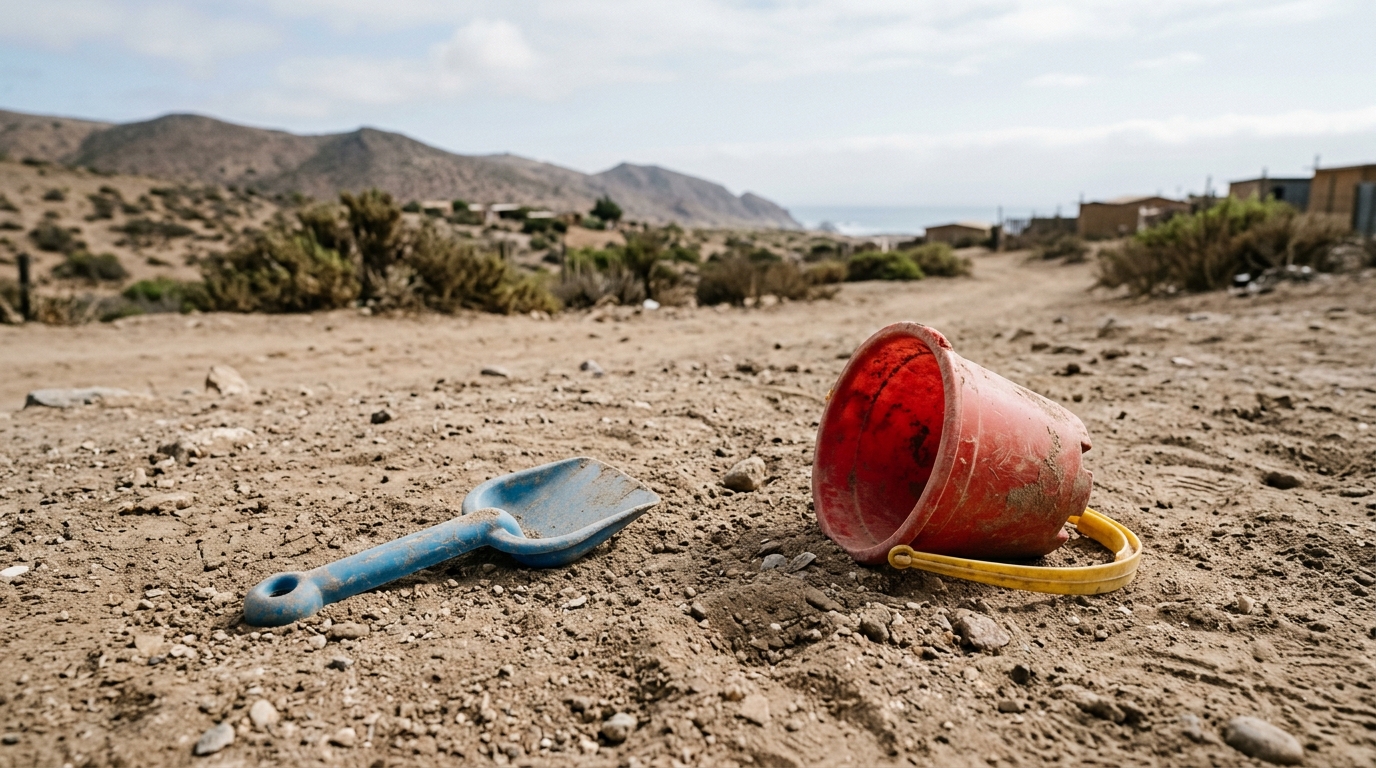
Image Credits: AI Generated

DOI: 10.1007/s10653-026-03573-2

Keywords: soil contamination, metal(loid)s, arsenic, Chile, environmental health, health risk assessment, toxicology, USEPA modeling, Spatial, variability, soil, metal

News Source: Bethany Barker. (November 6, 2026). Coastal Chile Study Identifies Elevated Soil Metal Exposure Risks in Children. Scienmag.


Tags: arsenicChileEnvironmental Healthhealth risk assessmentmetalmetal(loid)ssoilsoil contaminationspatialToxicologyUSEPA modelingvariability
Share12Tweet7Share2ShareShareShare1

Related Posts

Iodine Measurements on Photon-Counting CT Track CA 19-9 in Pancreatic Cancer

Iodine Measurements on Photon-Counting CT Track CA 19-9 in Pancreatic Cancer

November 8, 2026
Survey Assesses Syrian Parents' Knowledge of Pediatric Epistaxis First Aid

Survey Assesses Syrian Parents’ Knowledge of Pediatric Epistaxis First Aid

November 8, 2026

Digital Support Program Boosts Positive Views Among Chinese-American Dementia Caregivers

November 8, 2026

Qualitative Study Explores Environmental Influences on Young Rural Women’s Physical Activity

November 8, 2026

POPULAR NEWS

  • Review: Numerical Simulation of Supersonic Fuel Film Cooling

    Review: Numerical Simulation of Supersonic Fuel Film Cooling

    29 shares
    Share 12 Tweet 7
  • Survey Assesses Syrian Parents’ Knowledge of Pediatric Epistaxis First Aid

    29 shares
    Share 12 Tweet 7
  • Ezetimibe and Sericin Combination Reduces Cadmium Neurotoxicity in Rat Study

    29 shares
    Share 12 Tweet 7
  • UKRI Backs Five Research Hubs Developing Health Technologies With £52 Million

    29 shares
    Share 12 Tweet 7

About

We bring you the latest biotechnology news from best research centers and universities around the world. Check our website.

Follow us

Recent News

Iodine Measurements on Photon-Counting CT Track CA 19-9 in Pancreatic Cancer

Review: Numerical Simulation of Supersonic Fuel Film Cooling

Survey Assesses Syrian Parents’ Knowledge of Pediatric Epistaxis First Aid

Subscribe to Blog via Email

Enter your email address to subscribe to this blog and receive notifications of new posts by email.

Join 86 other subscribers
  • Contact Us

Bioengineer.org © Copyright 2023 All Rights Reserved.

Welcome Back!

Login to your account below

Forgotten Password?

Retrieve your password

Please enter your username or email address to reset your password.

Log In
No Result
View All Result
  • Homepages
    • Home Page 1
    • Home Page 2
  • News
  • National
  • Business
  • Health
  • Lifestyle
  • Science

Bioengineer.org © Copyright 2023 All Rights Reserved.