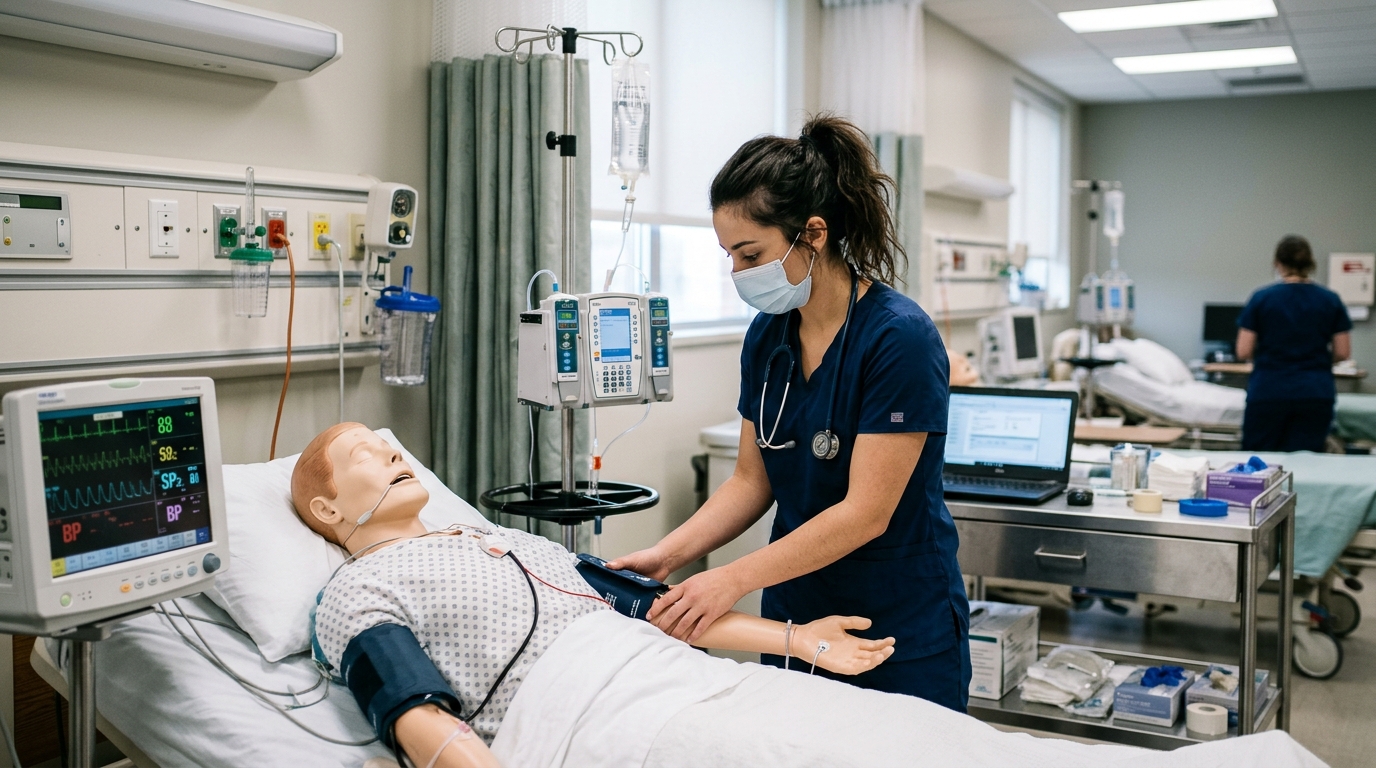
A systematic review and meta-synthesis investigating nursing learners’ experiences with generative artificial intelligence in simulation and skills training reveals that the technology offers perceived educational value as an interactive practice tool while facing persistent technical and relational limitations. Drawing from fifteen reports representing 14 qualitative studies published between late 2022 and mid-2026, the synthesis demonstrates that generative artificial intelligence can support accessible rehearsal, communication practice, and clinical reasoning when deployed alongside established simulation modalities. However, the qualitative evidence also shows that these learning experiences are constrained by technical disruptions, relational limits, and unreliable outputs, with short exposures and uneven study depth limiting definitive conclusions about sustained learning.
The synthesis was conducted to address a critical evidence gap surrounding the expanding adoption of generative artificial intelligence in nursing simulation and practical skills development. As nursing education programs increasingly incorporate generative tools into their curricula, institutional implementation and scaling decisions require comprehensive, learner-centered evidence regarding educational efficacy, practical constraints, and learner safety. To inform these educational decisions, the research team sought to synthesize how nursing learners experience generative artificial intelligence-supported training, exploring both the perceived educational benefits of these platforms and the structural safeguards required to support effective learning.
To locate eligible qualitative studies, the investigators conducted a comprehensive literature search across five major electronic databases—MEDLINE, Embase, CINAHL, PsycINFO, and ERIC—along with systematic citation tracking, covering literature published between November 2022 and June 21, 2026. The review team structured their study eligibility criteria using the SPIDER framework to capture qualitative research on nursing learners. Methodological rigor was maintained through independent screening and data extraction conducted by two reviewers. Methodological quality across included reports was formally appraised using the Joanna Briggs Institute Critical Appraisal Checklist for Qualitative Research, and findings were synthesized using Thomas and Harden’s thematic synthesis methodology, with confidence in each analytical theme assessed using the GRADE-CERQual framework.
Across the fifteen included reports representing 14 distinct studies, the thematic synthesis generated four central analytical themes describing learner interactions with generative tools. The first theme, supported by moderate confidence under GRADE-CERQual assessment, identified accessible rehearsal and perceived gains in learner confidence and clinical readiness. The second theme, established with high confidence, revealed that artificial intelligence-mediated interaction provided valuable support for interpersonal communication, clinical reasoning, and case application. The third theme, assessed with moderate confidence, described perceived realism alongside persistent technical disruptions and relational limitations. The fourth theme, also supported by moderate confidence, identified verification, feedback, and structured reflection as critical safeguards perceived by learners during artificial intelligence exercises.
The findings illustrate that the perceived educational value of generative artificial intelligence in nursing simulation is fundamentally shaped by low-pressure practice environments, responsive dialogue, and active opportunities for learners to evaluate generated material. Nonetheless, the synthesized evidence demonstrates that these experiences were frequently undermined by relational shortcomings, software and technical disruptions, and inaccurate or unreliable model outputs.
In their conclusions, the authors emphasized that the successful use of generative artificial intelligence in nursing education depends heavily on integration with established simulation guidance, particularly the incorporation of verification processes, educator feedback, and structured debriefing sessions. The review authors also highlighted notable methodological limitations in the existing body of literature, observing that brief intervention exposures and uneven qualitative depth across the included studies restrict what can be concluded about sustained learning, safety, and the transfer of skills to actual clinical environments.
Subject of Research: Generative artificial intelligence in nursing simulation and skills training
Article Title: Learners’ experiences of generative artificial intelligence-supported simulation and skills training in nursing education: a meta-synthesis
Article References: Zhang, Y., Tang, M., Cao, S., Yang, L., Hu, Y., Chen, Q., & Li, Y. (2026). Learners’ experiences of generative artificial intelligence-supported simulation and skills training in nursing education: a meta-synthesis. BMC Medical Education. https://doi.org/10.1186/s12909-026-10792-9
Image Credits: AI Generated
DOI: 10.1186/s12909-026-10792-9
Keywords: nursing education, generative artificial intelligence, simulation training, skills training, meta-synthesis, thematic synthesis, educational technology, clinical simulation, Learners, experiences, generative, artificial
News Source: Courtney Benton. (November 6, 2026). Meta-Synthesis Explores Generative AI for Nursing Simulation and Skills Training. Scienmag.