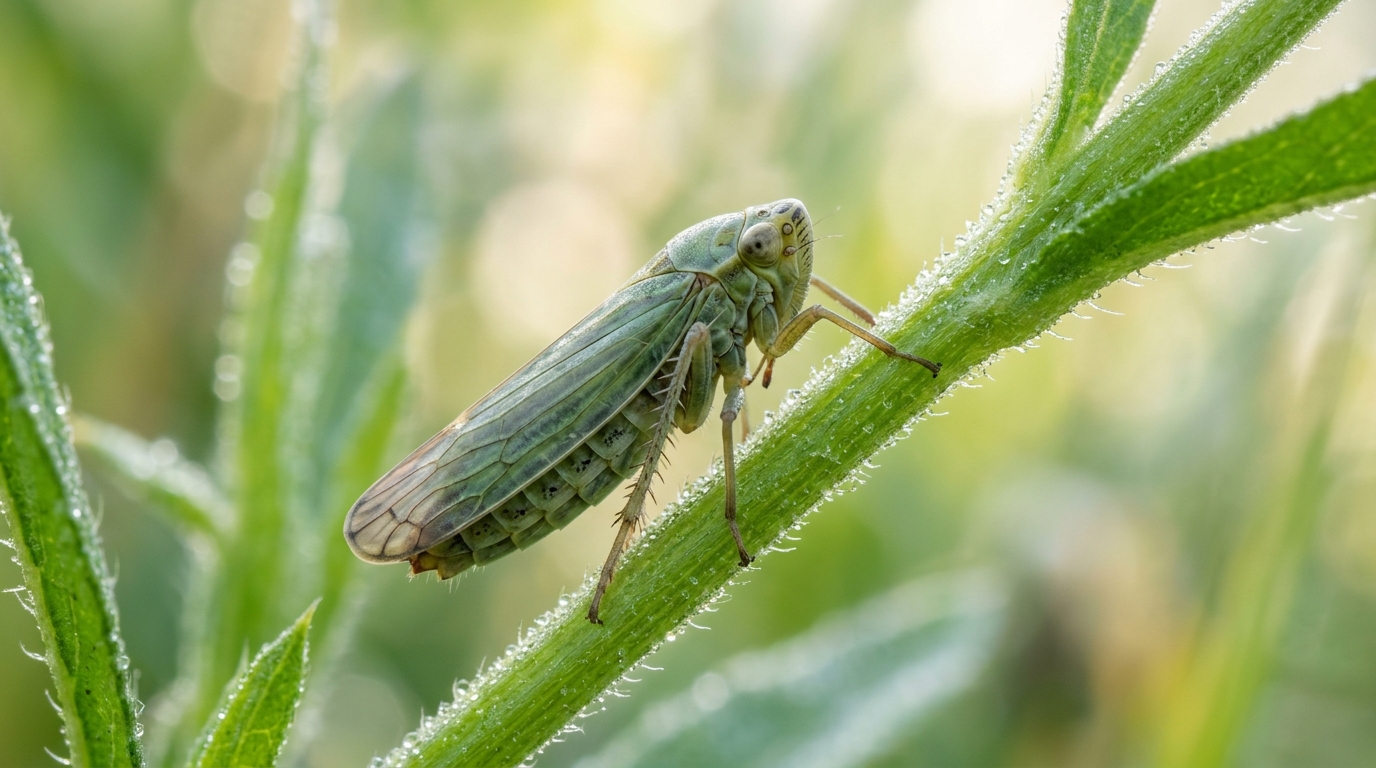
A functional screening of core RNA interference pathways in hemipteran insects has revealed that depleting the central small interfering RNA pathway gene DCR2 does not detectably alter viral accumulation or the abundance of virus-derived small interfering RNAs in the small brown planthopper, Laodelphax striatellus. Under the experimental conditions of the investigation, substantial depletion of DCR2 failed to produce a measurable impairment of antiviral small interfering RNA responses. This unexpected observation challenges assumptions drawn from traditional model systems, demonstrating that the primary enzyme associated with small interfering RNA generation can be substantially reduced in this insect without causing a detectable compromise in measured antiviral defense.
This absence of a detectable antiviral phenotype following DCR2 knockdown is not restricted to Laodelphax striatellus alone. A similar lack of detectable antiviral phenotypes following DCR2 knockdown was observed in three other representative hemipteran insects representing different families and genera: Sogatella furcifera, Nilaparvata lugens, and Bemisia tabaci. In insects, small silencing RNA pathways serve as crucial post-transcriptional gene silencing mechanisms involved in antiviral defense, gene regulation, and transposon suppression, comprising the microRNA, Piwi-interacting RNA, and small interfering RNA pathways. While these three pathways have been well-studied in model insects such as fruit flies and mosquitoes from the order Diptera, their functional roles in non-model insects have remained largely unexplored.
In addition to examining the small interfering RNA pathway, the comprehensive functional screening evaluated the roles of the microRNA and Piwi-interacting RNA pathways in Laodelphax striatellus. The investigation demonstrated that genes within the microRNA pathway, specifically AGO1 and DCR1, alongside genes within the Piwi-interacting RNA pathway, specifically Piwi and AGO3, are essential for the survival, development, and fecundity of Laodelphax striatellus. However, despite their essential requirement for insect survival and reproduction, neither the microRNA pathway nor the Piwi-interacting RNA pathway is actively involved in the antiviral response. These results demonstrate that while these two pathways govern vital biological processes, they do not mediate active antiviral defense in this hemipteran insect.
Beyond knockdown assays, the researchers employed CRISPR/Cas9-mediated knockout to dissect the developmental importance of DCR2 in Laodelphax striatellus. Complete knockout of DCR2 resulted in embryonic lethality in homozygous mutant strains, confirming that the gene is indispensable for embryonic development. In contrast, heterozygous mutant strains showed significantly prolonged developmental duration while surviving. When evaluated for antiviral competence, these DCR2-heterozygous mutants with reduced DCR2 expression showed no change in viral accumulation. These genetic outcomes demonstrate that DCR2 possesses an essential developmental role in the insect, yet partial depletion of DCR2 does not measurably compromise antiviral immunity under the tested conditions.
Functional RNAi-of-RNAi assays provided further evidence regarding gene silencing activity in Laodelphax striatellus. In these experiments, pre-knockdown of DCR2 did not detectably reduce the silencing of a subsequently introduced double-stranded RNA reporter. Coupled with the observation that knocking down DCR2 produces no detectable change in viral accumulation or the abundance of virus-derived small interfering RNAs, the findings show that substantial depletion of DCR2 does not detectably impair antiviral siRNA responses under these experimental conditions. Collectively, the study broadens the understanding of the organization and biological functions of conserved small silencing RNA pathways in hemipteran insects, revealing vital developmental requirements alongside unexpected antiviral dynamics.
Subject of Research: RNAi pathways and antiviral immunity in hemipteran insects
Article Title: Functional dissection of conserved RNAi pathways in antiviral immunity of several hemipteran insects
Article References: Zhang, Y., Ye, Z.-X., Ma, Q.-L., Wang, B.-Y., Zhuo, J.-C., Huang, H.-J., Zhang, C.-X., Chen, J.-P., & Li, J.-M. (2026). Functional dissection of conserved RNAi pathways in antiviral immunity of several hemipteran insects. PLOS Pathogens, 22(10), e1014753. https://doi.org/10.1371/journal.ppat.1014753
Image Credits: AI Generated
DOI: 10.1371/journal.ppat.1014753
Keywords: RNA interference, hemipteran insects, antiviral immunity, DCR2, small brown planthopper, Laodelphax striatellus, gene silencing, Functional, dissection, conserved, RNAi, pathways
News Source: Gavin Prescott. (November 6, 2026). Conserved RNAi Pathways Show Distinct Antiviral and Developmental Roles in Hemipteran Insects. Scienmag.