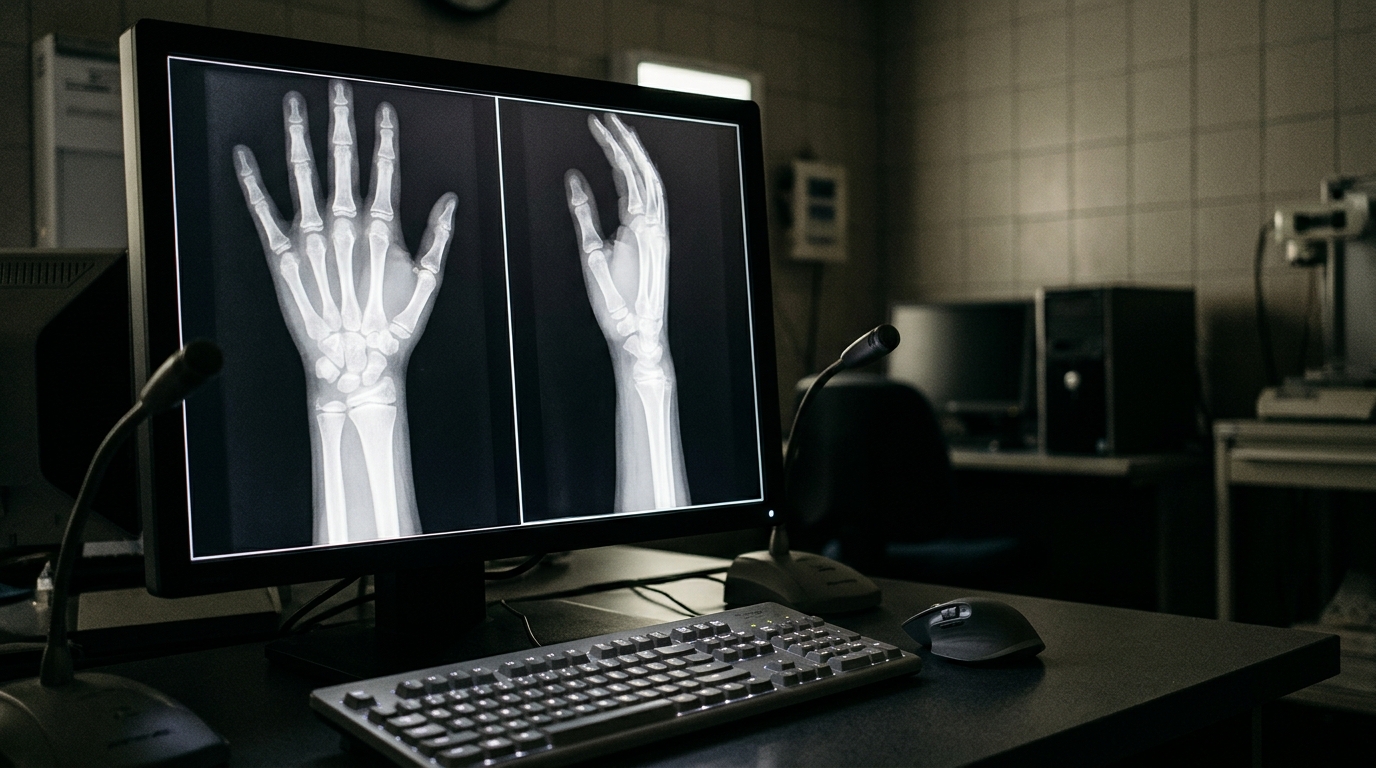
Standalone artificial intelligence models achieved a pooled sensitivity of 92.0% and a pooled specificity of 87.9% for detecting appendicular fractures on pediatric radiographs, according to a systematic review and meta-analysis published in Pediatric Radiology. Across the evaluated literature, standalone models demonstrated an area under the hierarchical summary receiver operating characteristic curve of 0.96, with pooled sensitivity 95% confidence intervals spanning 90.4% to 93.4% and specificity confidence intervals ranging from 84.5% to 90.6%.
The meta-analysis evaluated sixteen studies identified through a comprehensive literature search from inception through February 1, 2026, investigating AI models applied to plain pediatric radiographs. Researchers utilized a bivariate random-effects meta-analysis to determine pooled diagnostic metrics and conducted subgroup analyses across anatomical sites, comparator types, and units of analysis. The researchers highlighted that pediatric fracture detection on plain radiographs can be challenging, and missed fractures can lead to important clinical consequences.
Subgroup comparisons revealed no statistically significant differences in diagnostic performance between per-image and per-patient analysis units (P = 0.78). In addition, differences in diagnostic performance among physicians using AI models, standalone AI models, and physicians interpreting radiographs without AI assistance were not statistically significant (P = 0.20). A Fagan nomogram analysis established that at a 50% pre-test probability, a positive AI evaluation elevated post-test fracture probability to 90%, whereas a negative AI finding reduced post-test probability to 7%.
Despite the high diagnostic accuracy observed, the review identified considerable heterogeneity across included investigations, with I² values ranging from 49% to 78%. While AI models demonstrate considerable diagnostic accuracy for identifying pediatric appendicular fractures on radiography, the authors concluded that this notable heterogeneity and concerns regarding real-life clinical implementation emphasize the need for prospective studies with standardized methodologies.
Subject of Research: Diagnostic performance of artificial intelligence for pediatric appendicular fractures
Article Title: Evaluating the diagnostic performance of artificial intelligence for pediatric appendicular fractures: a systematic review and meta-analysis
Article References: Pahlevan-Fallahy, M.-T., Salmanian, E., Asgari, A.-M., Kian, N., Malek, M., & Shaker, F. (2026). Evaluating the diagnostic performance of artificial intelligence for pediatric appendicular fractures: a systematic review and meta-analysis. Pediatric Radiology. https://doi.org/10.1007/s00247-026-06823-8
Image Credits: AI Generated
DOI: 10.1007/s00247-026-06823-8
Keywords: artificial intelligence, pediatric radiology, appendicular fractures, diagnostic accuracy, systematic review, meta-analysis, radiographs, fracture detection, Evaluating, diagnostic, performance, artificial
News Source: Harold Sullivan. (November 6, 2026). Meta-Analysis Assesses AI Accuracy in Pediatric Appendicular Fracture Detection. Scienmag.