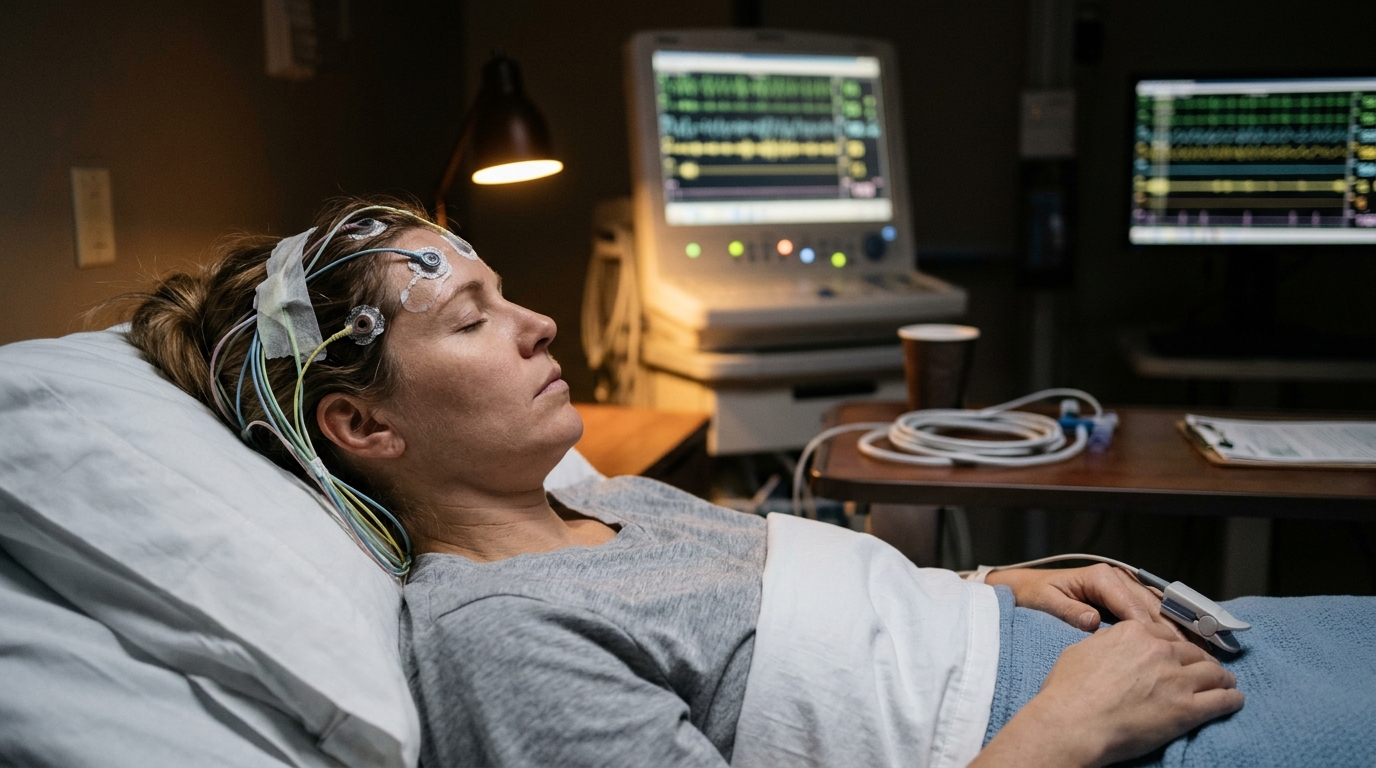
People with epilepsy have long reported that sleep and seizures are entangled: nocturnal seizures fragment sleep, while disrupted sleep can trigger seizures. A new genetic study now shows that this clinical relationship has a measurable biological counterpart in the genome. By combining large-scale genome-wide association studies (GWAS) of epilepsy and seven sleep-related traits, researchers found extensive shared genetic architecture between genetic generalised epilepsy (GGE) and sleep traits, including a genetic correlation between GGE and short sleep. Yet when they tested whether one trait causally drives the other using Mendelian randomisation, no causal relationship emerged in either direction, suggesting the overlap reflects shared polygenic influences rather than a direct cause-and-effect chain.
The study, published in Annals of Clinical and Translational Neurology, drew on GWAS summary statistics from European-ancestry populations. For epilepsy, the researchers used the most recent International League Against Epilepsy (ILAE) GWAS, covering focal epilepsy (14,939 cases and 42,436 controls) and genetic generalised epilepsy (6,952 cases and 42,436 controls). For sleep, they analysed seven self-reported traits from UK Biobank and other public sources: sleep duration, habitual short sleep (less than 7 hours per day), habitual long sleep (more than 9 hours per day), morningness chronotype, insomnia, daytime napping and daytime sleepiness, with sample sizes ranging from roughly 339,926 to 452,633 participants. The team chose self-reported measures over monitor-derived ones because the self-report datasets are substantially larger and publicly available.
The first analytical stream examined global genetic correlations across the whole genome using linkage disequilibrium score regression (LDSC). After Bonferroni correction across 14 sleep-epilepsy trait pairs, two significant associations emerged, both involving GGE. Short sleep showed a positive genetic correlation with GGE (global rg = 0.16, adjusted p = 0.003), while sleep duration showed a negative correlation (global rg = −0.12, adjusted p = 0.03). Because short sleep is a binary trait derived from the same continuous sleep-duration data, these two signals reflect the same underlying relationship: a genetic predisposition to needing less sleep is linked to higher genetic risk for GGE, and vice versa.
Genetic correlation, however, assumes that shared variants act in the same direction. To test whether variants with opposing effects might be hiding further overlap, the researchers applied MiXeR, a bivariate causal mixture model that estimates the number of variants influencing each trait and the number influencing both, regardless of effect direction. Sleep traits were estimated to contain between 6,500 and 9,300 trait-influencing variants each, roughly three times the estimate for GGE (2,940 variants). Bivariate analyses then revealed that an estimated 97% of GGE’s predicted causal variants were shared with sleep duration and 94% with short sleep, with 75% to 85% shared with the remaining five sleep traits. Because the five traits without significant genome-wide correlation are included in this overlap, the result implies that many shared variants act in opposing directions, cancelling each other out in a standard correlation analysis. The authors note that MiXeR provides no formal significance test for these estimates and that linkage disequilibrium means the shared-variant estimates may reflect nearby variants rather than single pleiotropic ones, so the proportions should be interpreted with caution.
Bidirectional two-sample Mendelian randomisation was then used to ask whether the genetic correlations imply causality. Using independent genome-wide significant variants as instrumental variables, the analysis found no sleep-epilepsy relationship that met the pre-specified criteria for causal inference in either the forward direction (sleep traits as exposure, epilepsy as outcome) or the reverse direction. This null result, combined with the strong genetic correlations, led the authors to conclude that the observed sleep-epilepsy genetic overlap likely reflects a shared polygenic basis rather than direct causality.
To move from whole-genome statistics to specific genes, the team applied summary-data-based Mendelian randomisation (SMR), integrating the GWAS data with brain-specific expression quantitative trait loci (eQTLs) from 2,865 human postmortem brain cortex samples of European ancestry. After correcting for 10,534 tested genes, the analysis identified 115 genes significantly associated with sleep traits and six genes associated with GGE; no genes reached the threshold for focal epilepsy. One gene stood out as pleiotropic, influencing both trait classes: RMI1 was significantly associated with GGE (β = 0.22, adjusted p = 6.93 × 10⁻⁴) and with daytime napping (β = 0.03, adjusted p = 0.009). RMI1 has an established role in genomic stability and DNA damage response, but the mechanisms connecting it to sleep and epilepsy remain unclear, and the authors caution that future functional studies are needed to determine whether the link is biological or a statistical artefact of shared genomic architecture.
Cross-referencing the remaining SMR hits with curated gene resources highlighted additional candidates. Fifteen significant SMR genes overlapped with the Genes4Epilepsy repository of 1,078 monogenic epilepsy genes, including two epilepsy SMR hits (AP3D1 and HNRNPK) and 13 sleep SMR hits. Among the broader candidate set, GRIN2A, a well-established monogenic epilepsy gene, showed significant associations with sleep traits in its brain expression. GRIN2A is an important cause of developmental and/or epileptic encephalopathy with spike-and-wave activation in sleep, and in rare cases its pathogenic variants have been associated with self-limited epilepsy with centro-temporal spikes, in which brief focal seizures typically occur during early sleep or one to two hours before awakening. Consistent with this, Grin2a-deficient mice exhibit sleep-related epileptiform discharges and transient alterations in slow-wave sleep during development, providing independent, though animal-based, support for a mechanistic link. KANSL1 also showed broad associations with multiple sleep traits, including daytime napping, daytime sleepiness, sleep duration and long sleep; pathogenic variants in KANSL1 cause Koolen-de Vries syndrome, in which up to half of affected individuals develop epilepsy with features resembling SeLECTS, including seizures triggered by sleep.
The second analytical stream zoomed in on individual genomic regions. Using Local Analysis of [co]Variant Association (LAVA) across 2,495 pre-partitioned loci, the researchers identified 20 significant bivariate correlations between sleep traits and epilepsy at 16 cytogenetic regions. The strongest positive local correlation was between GGE and morningness at 2q32.2–q32.3 (local rg = 1, adjusted p = 9.9 × 10⁻⁶), and the strongest negative correlation was between GGE and sleep duration at 2p16.1 (local rg = −1, adjusted p = 9.8 × 10⁻⁶). GGE showed 16 significant connections across all sleep traits except long sleep, at 13 distinct regions, with GGE-morningness accounting for five and GGE-daytime napping for three. Focal epilepsy had four connections, with morningness, long sleep and short sleep, at three regions, all distinct from those involving GGE. Cross-checking the 16 significant regions against the Genes4Epilepsy resource identified 22 epilepsy-associated genes, plus two genes regulating sleep and circadian rhythm, PER3 and RORB. Six genes had already emerged from the SMR analyses, including three established monogenic epilepsy genes: CAMTA1 and RERE at 1p36.23, and SLC38A3 at 3p21.31. Notably, CAMTA1 sits near the core circadian clock gene PER3, while RORB, another clock gene with established GGE and developmental and epileptic encephalopathy associations, lies at a 9q21.13 locus linked to GGE-daytime sleepiness, though it could not be tested for gene-trait associations because it was absent from the brain eQTL dataset.
Finally, colocalisation analysis with COLOC was applied to the 16 significant regions to test whether sleep and epilepsy share the same causal variant at each locus. Four loci showed posterior probabilities of 0.8 or higher, providing suggestive evidence for shared causal variants within three cytogenetic regions (2p16.1, 2q32.2–q32.3 and 3p21.2–p21.31). However, when the team applied SuSiE fine-mapping to these four loci, the approach failed to conclusively confirm shared causal variants. The authors note that this does not preclude different variants in the same genes or gene networks contributing to the sleep-epilepsy relationship, and that current epilepsy GWAS, particularly for focal epilepsy, may remain underpowered to detect such signals.
The study has several limitations. Epilepsy GWAS sample sizes remain modest, and the broad focal epilepsy summary statistics were underpowered for MiXeR analysis, which is why those results are not reported. All analyses were restricted to European-ancestry individuals, limiting generalisability to other populations. The sleep traits were self-reported, whereas epilepsy cases were ascertained through neurologist referral and diagnosis, an asymmetry that may have introduced recall bias or misclassification and attenuated or distorted the genetic relationships. The prioritisation of loci with significant local correlations may also have missed colocalised variants at nominally significant loci. Despite these caveats, the multi-method approach triangulates across methodologically distinct analyses, and the authors suggest that extending the work to specific epilepsy syndromes and calculating sleep polygenic risk scores in large, stratified cohorts could clarify whether particular sleep genetic profiles are enriched across distinct clinical presentations. The findings raise the question of whether sleep-targeted clinical interventions might eventually represent a viable strategy for improving seizure control, though the genetic evidence itself stops short of establishing causality.
Subject of Research: Genetic overlap between sleep traits and genetic generalised epilepsy
Article Title: Disentangling the Genetic Relationship Between Sleep and Epilepsy
Article References: Le, K. N., Jackson, V. E., Stirling, R. E., Gerring, Z. F., Stevelink, R., Berkovic, S. F., Scheffer, I. E., Karoly, P. J., Bahlo, M., & Oliver, K. L. (2026). Disentangling the Genetic Relationship Between Sleep and Epilepsy. Annals of Clinical and Translational Neurology, Article acn3.70568. https://doi.org/10.1002/acn3.70568
Image Credits: AI Generated
DOI: 10.1002/acn3.70568
Keywords: epilepsy, genetic generalised epilepsy, sleep duration, GWAS, Mendelian randomisation, genetic correlation, MiXeR, RMI1, GRIN2A, colocalisation, polygenic overlap, chronotype
News Source: Kendall Mcintyre. (November 6, 2026). Sleep and Epilepsy Share Genes, but Not a Direct Causal Link. Scienmag.