Researchers have identified a previously unrecognized way in which schistosome parasites manipulate the host immune system: the scavenger receptor class A1 (SR-A1) cooperates with TLR4 signaling in macrophages to drive production of TGF-β1, a cytokine that induces regulatory T cells (Tregs) and helps the parasites establish chronic infections. The study, published in PLOS Pathogens, was led by Junyao Shen, Ziling Wang, Chuanhong Huang, and colleagues, with Chuan Su among the senior authors.
Helminths are known to induce Tregs to promote long-term persistence of both parasites and hosts. TGF-β1 is essential for this process because it initiates expression of Foxp3. Although helminth infections are typically associated with high TGF-β1 levels, the mechanisms by which the parasites drive its production have remained incompletely understood.
The new work reveals a two-receptor mechanism in macrophages. Schistosome egg antigens activate the TLR4-p50 pathway, involving the NF-κB subunit p50 (also known as NF-κB1). At the same time, the antigens engage SR-A1, which upregulates c-Jun.
These two signaling arms converge at the genome. The c-Jun and p50 proteins assemble into c-Jun-p50 transcription complexes that bind the promoter of the Tgfb1 gene, the gene encoding TGF-β1. This cooperative binding enhances TGF-β1 expression, according to the authors.
The downstream consequences were examined in mice infected with Schistosoma japonicum. Elevated TGF-β1 production by macrophages subsequently induced Tregs, and this regulatory response mitigated liver immunopathology, the tissue damage caused by the host’s own inflammatory attack on parasite eggs trapped in the liver.
The authors frame the finding as a previously unrecognized host-parasite interaction. Rather than simply suppressing immunity through a single receptor, the helminth exploits a cooperative arrangement between SR-A1 and TLR4 to reprogram macrophage transcriptional output toward TGF-β1 expression and Treg induction.
Beyond its mechanistic interest, the study identifies a potential therapeutic target located in the host rather than in the parasite. Because SR-A1-TLR4 cooperation drives the immunoregulatory program that facilitates chronic infection, interfering with this pathway could, in principle, be exploited for inflammatory helminthiasis, where excessive pathology rather than pathogen clearance is the clinical problem.
Subject of Research: How the scavenger receptor SR-A1 and TLR4 cooperate in macrophages to drive TGF-β1 expression and regulatory T cell induction during schistosome infection.
Article Title: SR-A1 cooperates with TLR4-NF-κB signaling to drive macrophage TGF-β1 expression and Treg induction during schistosome infection
Article References: Shen, J., Wang, Z., Huang, C., Xue, W., Wu, Y., Fan, T., Miao, Y., Mao, C., Yu, J., Li, Y., Xu, L., Zhu, J., Chen, X., Dai, Y., Lei, Z., Zhou, S., & Su, C. (2026). SR-A1 cooperates with TLR4-NF-κB signaling to drive macrophage TGF-β1 expression and Treg induction during schistosome infection. PLOS Pathogens, 22(10), e1014732. https://doi.org/10.1371/journal.ppat.1014732
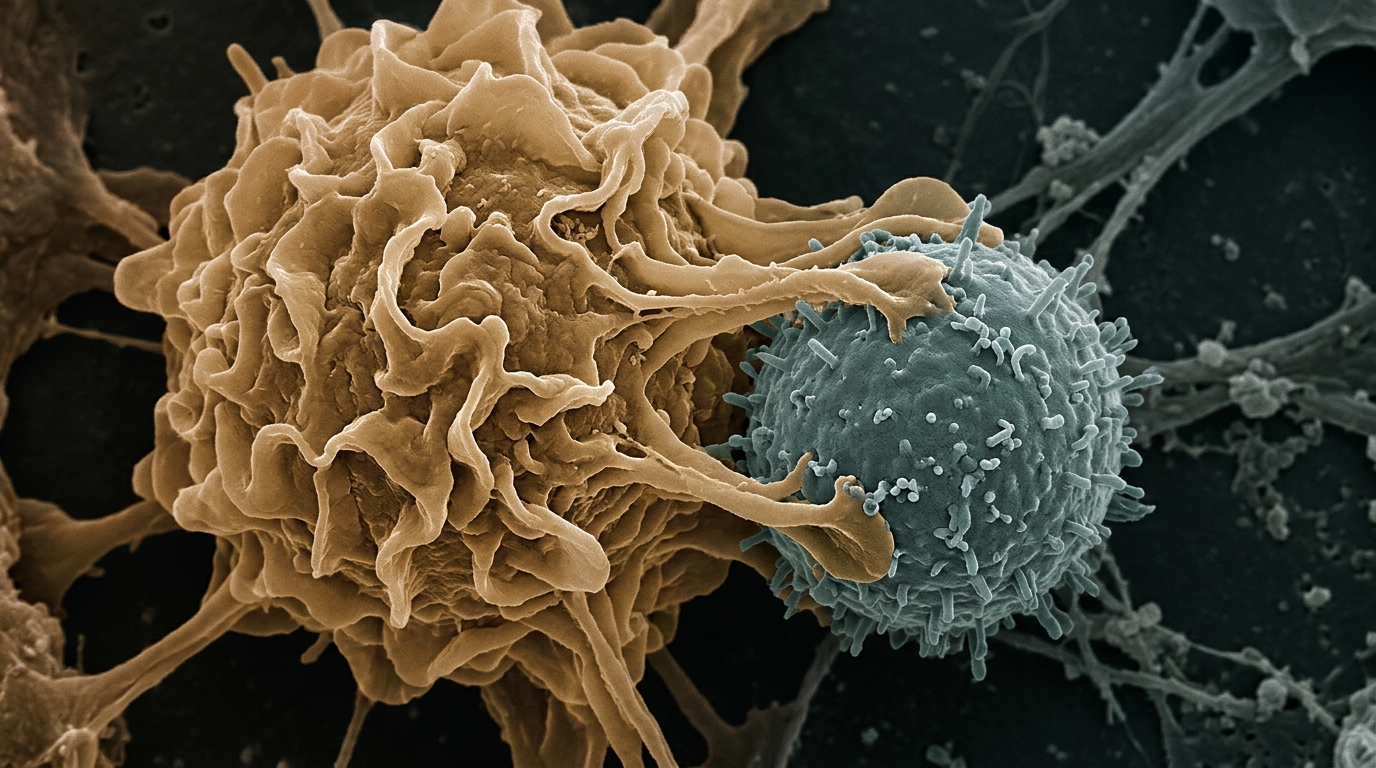
Image Credits: AI Generated
DOI: 10.1371/journal.ppat.1014732
Keywords: schistosomiasis, SR-A1, TLR4, TGF-β1, regulatory T cells, macrophages, Schistosoma japonicum, helminth infection, NF-κB, Foxp3, liver immunopathology, host-parasite interaction
News Source: Drew Townsend. (November 5, 2026). Scavenger Receptor and TLR4 Team Up to Drive TGF-β1 and Tregs in Schistosomiasis. Scienmag.