• HOME
  • NEWS
  • EXPLORE
    • CAREER
      • Companies
      • Jobs
    • EVENTS
    • iGEM
      • News
      • Team
    • PHOTOS
    • VIDEO
    • WIKI
  • BLOG
  • COMMUNITY
    • FACEBOOK
    • INSTAGRAM
    • TWITTER
Friday, November 6, 2026
BIOENGINEER.ORG
No Result
View All Result
  • Login
  • HOME
  • NEWS
  • EXPLORE
    • CAREER
      • Companies
      • Jobs
        • Lecturer
        • PhD Studentship
        • Postdoc
        • Research Assistant
    • EVENTS
    • iGEM
      • News
      • Team
    • PHOTOS
    • VIDEO
    • WIKI
  • BLOG
  • COMMUNITY
    • FACEBOOK
    • INSTAGRAM
    • TWITTER
No Result
View All Result
Bioengineer.org
No Result
View All Result
Home NEWS Science News Biology

Study Tracks Antibiotic Resistance Dynamics Across Cattle Slurry Digestion and Composting

by
November 5, 2026
in Biology
Reading Time: 2 mins read
0
Study Tracks Antibiotic Resistance Dynamics Across Cattle Slurry Digestion and Composting

Study Tracks Antibiotic Resistance Dynamics Across Cattle Slurry Digestion and Composting

Share on FacebookShare on TwitterShare on LinkedinShare on RedditShare on Telegram

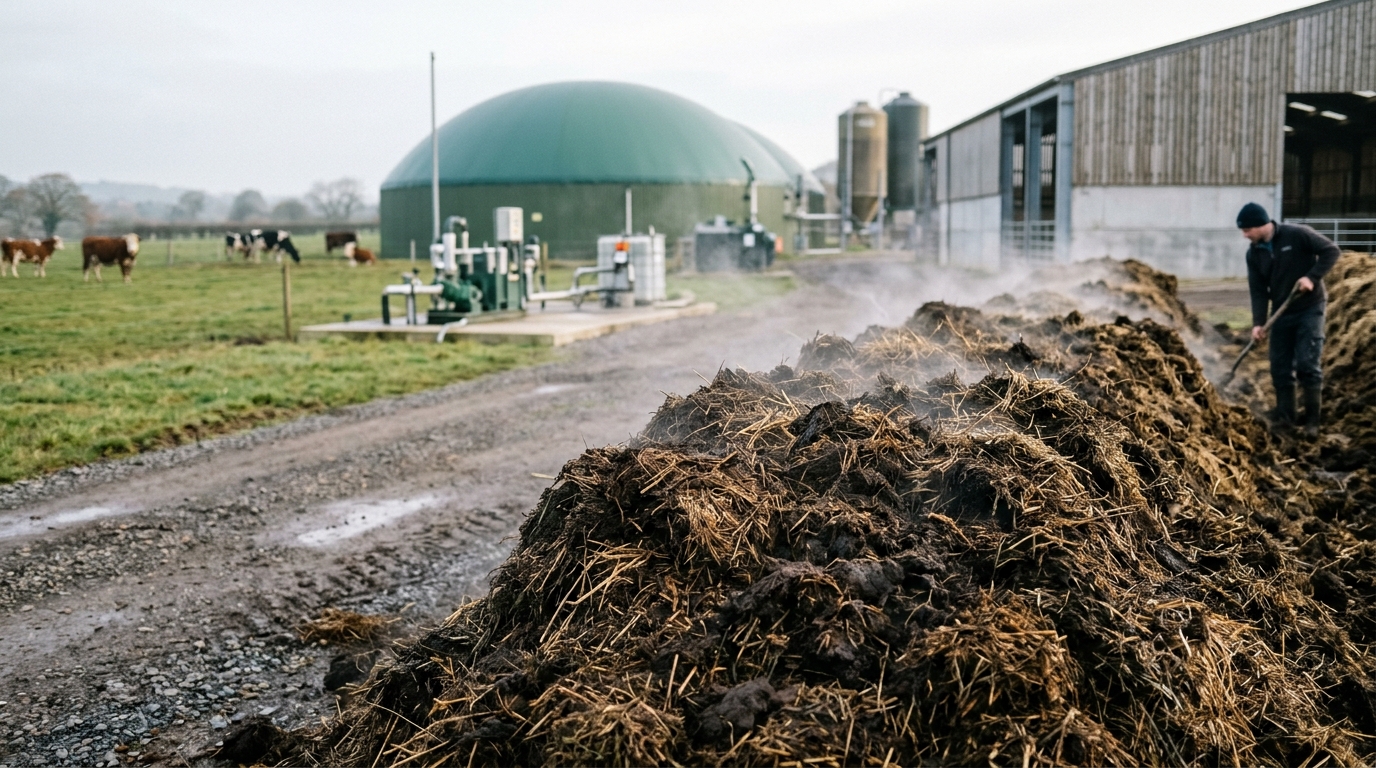
In a single full-scale campaign evaluating an integrated anaerobic digestion-composting system treating cattle slurry, comprehensive viromic and metagenomic analyses revealed that the relative abundance of total antibiotic resistance genes (RPKG) was higher in cattle slurry digestate than in raw cattle slurry, yet was lower in mature compost than in compost feedstock. The analyses also established that the relative abundance of virulence factor gene (VFG)-carrying contigs (RPKM), as well as mean ARG and VFG abundances (RPKG), were lower in mature compost than in compost feedstock, addressing critical knowledge gaps regarding agricultural waste treatment within the One Health framework.

Despite the overall reduction of total resistance gene abundance in the final compost, specific high-risk resistance genes demonstrated extreme recalcitrance. In particular, the resistance genes aac(3)-VIIa and sul1, alongside tet(M), remained detectable in the mature compost. Metagenomic profiling identified that at the maturation stage, thermotolerant bacterial taxa dominated by Bacillota and Actinomycetota constituted the ultimate high-risk antibiotic-resistant bacteria, with ARG-carrying metagenome-assembled genomes (MAGs) affiliated with these two phyla persisting through the completion of composting.

Crucially, the carriage of specific quorum sensing regulatory genes, LuxR and DGC, within the ultimate high-risk antibiotic-resistant bacteria exhibited a highly significant positive correlation (R2 > 0.82, P < 0.001) with ARG and VFG abundances. Quorum sensing involving luxR and DGC was associated primarily with persistence and potential horizontal gene transfer. Meanwhile, although lytic phages dominated the viral community, phages functioned predominantly as ecological predators and rarely carried ARGs. During the thermophilic stage, researchers observed a marked decoupling of phage and host abundance trajectories, consistent with reduced viral abundance under thermal stress, indicating that resistant-bacteria persistence coincided with weaker virus–host coupling at high temperatures rather than viral transduction.

Based on these findings, the authors highlighted biologically targeted interventions, such as quorum sensing inhibitors or sequential phage inoculation, as potential candidate management strategies. However, the study noted that the feasibility and efficacy of such interventions remain to be rigorously tested across different feedstocks, seasons, and full-scale operating conditions before general operational recommendations can be made.

Subject of Research: Antibiotic resistance gene dynamics in anaerobic digestion and composting

Article Title: Viromic and metagenomic analyses reveal distribution and dissemination of antibiotic resistance genes in anaerobic digestion-composting systems: roles of quorum sensing and viruses

Article References: Lin, L., Xu, P., Li, H., Liu, N., Liu, C., Su, J., & Yang, X. (2026). Viromic and metagenomic analyses reveal distribution and dissemination of antibiotic resistance genes in anaerobic digestion-composting systems: roles of quorum sensing and viruses. Microbiome. https://doi.org/10.1186/s40168-026-02573-9

Image Credits: AI Generated

DOI: 10.1186/s40168-026-02573-9

Keywords: antibiotic resistance genes, anaerobic digestion, composting, quorum sensing, bacteriophages, cattle slurry, metagenomics, viromics, Viromic, metagenomic, analyses, reveal

News Source: William Thompson. (November 5, 2026). Study Tracks Antibiotic Resistance Dynamics Across Cattle Slurry Digestion and Composting. Scienmag.

Tags: anaerobic digestionanalysesantibiotic resistance genesbacteriophagescattle slurrycompostingMetagenomicmetagenomicsquorum sensingrevealViromicviromics
Share12Tweet7Share2ShareShareShare1

Related Posts

Honey Bee Colonies Are Superorganisms, and Their Microbiota Depends on How You Sequence It

Honey Bee Colonies Are Superorganisms, and Their Microbiota Depends on How You Sequence It

November 6, 2026
Jeju Island Dolphin Postmortem Uncovers Traumatic Jaw Injury and Fatal Opportunistic Pneumonia

Jeju Island Dolphin Postmortem Uncovers Traumatic Jaw Injury and Fatal Opportunistic Pneumonia

November 6, 2026

Waste-fed surfactin fermentation still trails engineered strains by tenfold titer gap

November 6, 2026

Magnesium Oxide Nanoparticles Ease Lead Stress in Radish Seedlings

November 6, 2026

POPULAR NEWS

  • Engineered Interfaces and Module Design Drive Advanced Mixed-Matrix Hydrogen Separation

    Engineered Interfaces and Module Design Drive Advanced Mixed-Matrix Hydrogen Separation

    29 shares
    Share 12 Tweet 7
  • Trust, relationships and funding gaps shape mental health implementation across England

    29 shares
    Share 12 Tweet 7
  • Honey Bee Colonies Are Superorganisms, and Their Microbiota Depends on How You Sequence It

    29 shares
    Share 12 Tweet 7
  • Umbrella Review Finds Digital Health Effective but Not Superior to Standard Therapies

    29 shares
    Share 12 Tweet 7

About

We bring you the latest biotechnology news from best research centers and universities around the world. Check our website.

Follow us

Recent News

Engineered Interfaces and Module Design Drive Advanced Mixed-Matrix Hydrogen Separation

Trust, relationships and funding gaps shape mental health implementation across England

Honey Bee Colonies Are Superorganisms, and Their Microbiota Depends on How You Sequence It

Subscribe to Blog via Email

Enter your email address to subscribe to this blog and receive notifications of new posts by email.

Join 86 other subscribers
  • Contact Us

Bioengineer.org © Copyright 2023 All Rights Reserved.

Welcome Back!

Login to your account below

Forgotten Password?

Retrieve your password

Please enter your username or email address to reset your password.

Log In
No Result
View All Result
  • Homepages
    • Home Page 1
    • Home Page 2
  • News
  • National
  • Business
  • Health
  • Lifestyle
  • Science

Bioengineer.org © Copyright 2023 All Rights Reserved.