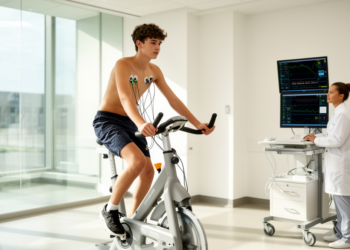
In a cross-sectional study of 100 women attending antenatal and postnatal clinics at Enugu State Teaching Hospital Parklane, 87 percent expressed interest in owning a wearable device, and 89 percent said they would adopt one if it were provided free of charge.
Venous thromboembolism, which includes deep vein thrombosis and pulmonary embolism, is a significant vascular complication during pregnancy and the postpartum period. Physiological adaptations of pregnancy create a marked hypercoagulable state that raises the risk of VTE compared with age-matched non-pregnant women. The danger does not end at delivery: the risk of VTE remains markedly elevated during the postpartum period as well, driven by physiological and anatomical changes that promote hypercoagulability and venous stasis.
In Enugu State, Nigeria, VTE has been reported to account for approximately 10 percent of pregnancy-related deaths. Globally, the condition is responsible for an estimated 20 to 40 percent of pregnancy-related deaths, making it a critical public health issue for maternal health. Several factors further raise the risk during pregnancy and after childbirth, including maternal age above 35 years, obesity, multiple gestations, a personal or family history of VTE, and cesarean delivery. Women with these risk factors require close monitoring and targeted preventive strategies, because VTE can result in maternal death, long-term complications, and increased healthcare costs.
Physical activity is a proven, non-pharmacological preventive measure. Regular activity enhances venous blood flow, reduces venous stasis, improves fibrinolytic activity, and decreases systemic inflammation, thereby lowering the likelihood of clot formation. Evidence suggests that regular physical activity during pregnancy and the postpartum period may reduce the risk of VTE by 30 to 50 percent. The American College of Obstetricians and Gynecologists recommends at least 150 minutes of moderate-intensity aerobic activity per week for pregnant and postpartum women. Yet many women struggle to meet these targets, citing physical discomfort, fatigue, lack of motivation, and limited access to safe and supportive exercise environments.
This is where wearable devices such as fitness trackers and smartwatches enter the picture. These gadgets provide personalized feedback and continuous monitoring of activity levels, heart rate, and other physiological parameters, features that may be particularly beneficial for encouraging movement among pregnant and postpartum women. Studies have shown that wearable technology can significantly increase step counts and reduce sedentary behavior in this population. By promoting regular movement and improving circulation, such devices may contribute to a reduced risk of VTE during pregnancy and the postpartum period. However, the technology is not without limitations: challenges related to data accuracy, user adherence, cost, and accessibility, especially in low-resource settings, may limit widespread adoption.
To gauge whether Nigerian women would actually embrace such devices, the research team used an analytical cross-sectional descriptive design, recruiting participants through purposive sampling at Enugu State Teaching Hospital Parklane. The study was reported in accordance with the Strengthening the Reporting of Observational Studies in Epidemiology guidelines. A total of 100 women were enrolled, half pregnant and half postpartum, all aged 18 or older and able to complete the questionnaire in English, with or without assistance. Women with a prior diagnosis of VTE or medical contraindications to physical activity were excluded. Data were collected over one month following ethical approval, and all 100 questionnaires were completed and returned with no significant missing data.
The questionnaire itself was carefully vetted before use. A panel of five experts, including two specialists in digital health and health technology and three physiotherapists with clinical and research experience, performed face and content validation, rating each item on a four-point relevance scale. A pilot study among 10 women at a non-teaching hospital tested reliability, with a Cronbach’s alpha of at least 0.7 considered acceptable. Analysis in SPSS version 25.0 relied on descriptive statistics of frequency, percentage, mean, and standard deviation, a deliberate choice reflecting the study’s goal of characterizing awareness, perceptions, and readiness to adopt the technology.
The results reveal a population that is aware of wearables but only partially informed about them. A majority of participants, 78 percent, had knowledge of wearable devices, most commonly identifying their primary purposes as daily step and physical activity tracking, cited by 74 percent, and measurement of heart rate and other vital signs, cited by 58 percent. Among those who knew about the devices, social media was the most common source of information, named by 30 percent. Yet the authors note that this knowledge is fragmented: only a quarter of respondents were aware of sleep monitoring functions, and less than one-third recognized reminder features, a pattern they attribute to selective exposure through social media, which tends to emphasize trending features rather than comprehensive health applications.
Perceptions of the devices were largely positive. A majority perceived wearables as easy to use, at 57 percent, and 53 percent believed the devices would be very helpful in promoting physical activity, while 66 percent believed wearables could motivate them to be physically active. When it came to willingness-to-use, 87 percent were interested in owning a device, with a wristwatch form factor the most preferred at 60 percent. Documented benefits of the devices were the highest motivating factor for 59 percent of participants. Most said they would own a device if it were free, and 57 percent said they could accept purchasing one within a price range below 20,000 naira. Some 55 percent said they could wear the device more than five days a week, with heart rate the most preferred measurement to be recorded, at 66 percent.
Data sharing emerged as another striking finding. Most respondents, 87 percent, showed interest in using wearables to help their health provider with health monitoring, and the same proportion were interested in sharing data, with exercise, at 68 percent, and heart rate, at 66 percent, the most comfortable data to share. About 53 percent wanted wearable-acquired feedback from their healthcare provider on a weekly basis, and a majority, 58 percent, had no data sharing privacy concerns, although 42 percent did express such concerns. The barriers, however, were clear: charging difficulties were the most reported obstacle at 51 percent, followed by high cost at 43 percent and lack of understanding of usability at 28 percent. The authors conclude that wearable technology is perceived as a promising tool to enhance physical activity and potentially prevent obstetrics-related VTE among Nigerian women, but that adoption hinges on addressing these economic, educational, and technical barriers. They also caution that reliance on self-administered questionnaires introduces the possibility of social desirability bias, that the cross-sectional design cannot determine causal relationships or changes over time, and that purposive sampling from a single hospital may limit generalizability across Nigeria.
Subject of Research: Willingness-to-use and acceptability of wearable technology for promoting physical activity to prevent obstetrics-related venous thromboembolism among pregnant and postpartum women in Enugu, Nigeria
Article Title: Perceived willingness-to-use and acceptability of wearable technology for promoting physical activity for prevention of obstetrics-related venous thromboembolism in Nigerian pregnant women
Article References: Ojukwu, C., Yamah, D., Udegbunam, I., Enebe, A., Ekowa, J., & Eleje, C. (2026). Perceived willingness-to-use and acceptability of wearable technology for promoting physical activity for prevention of obstetrics-related venous thromboembolism in Nigerian pregnant women. Bulletin of Faculty of Physical Therapy, 31(1), Article 26. https://doi.org/10.1186/s43161-026-00363-w
Image Credits: AI Generated
DOI: 10.1186/s43161-026-00363-w
Keywords: wearable technology, venous thromboembolism, pregnancy, postpartum, physical activity, Nigeria, maternal health, blood clots, fitness trackers, digital health, cross-sectional study, Enugu
News Source: Harold Sullivan. (November 5, 2026). Nigerian Pregnant Women Embrace Wearables to Guard Against Deadly Blood Clots. Scienmag.