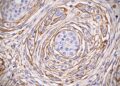
Scientists have developed a new way to purify minicircle DNA vectors and used the cleaned-up vectors to raise frataxin levels in cells from patients with Friedreich’s ataxia and in a mouse model of the disease. The work, published in Gene Therapy, describes a purification step based on biotin-conjugated oligonucleotides that bind specific DNA sequences in leftover bacterial plasmid material, allowing those contaminants to be pulled out with streptavidin-coated magnetic beads. When the resulting frataxin-expressing minicircles were delivered to patient-derived fibroblasts, the cells produced frataxin mRNA and protein at levels comparable to those seen in healthy cells. In mice, a single hydrodynamic tail vein injection of the vector increased frataxin protein roughly 18-fold in the liver and about 3-fold in the heart.
Friedreich’s ataxia is the most common autosomal recessive inherited ataxia among Europeans, affecting roughly 1 in 29,000 people. The disease stems from expanded (GAA•TTC)n repeats in the first intron of the FXN gene on chromosome 9. Most affected individuals carry two expanded alleles, while a small minority are compound heterozygous, with one expanded allele and a point mutation in the other. The expanded repeats suppress transcription of the FXN gene, reducing production of frataxin, a mitochondrial protein essential for energy production and iron-sulfur cluster assembly. The number of inherited repeats inversely correlates with age at onset and directly associates with disease severity, and repeat numbers vary between tissues, suggesting cell type-specific somatic instability during aging.
Frataxin is encoded in the nucleus as a 210 amino acid precursor that is imported into mitochondria and processed into the 130 amino acid mature form. The protein acts as an iron chaperone, helping assemble iron-sulfur cluster proteins and maintaining iron homeostasis while inhibiting the formation of reactive oxygen species. Deficiency primarily affects the nervous system, with degeneration in the dorsal root ganglia, the dentate nucleus of the cerebellum, the dorsal columns, and the spinocerebellar and corticospinal tracts of the spinal cord. Because the cerebellum coordinates movement, ataxia is the defining clinical hallmark. The heart and pancreas are also affected: impaired heart muscle structure and function leads to hypertrophic cardiomyopathy, and heart failure is the leading cause of mortality, while reduced frataxin in the pancreas drives insulin resistance and eventually diabetes mellitus.
Current therapeutic options remain limited. The approval of omaveloxolone, an Nrf2 activator that reduces oxidative stress and improves mitochondrial function, marks one recent advance. Lexeo Therapeutics has reported promising cardiac improvements from its investigational AAV gene therapy, and nomlabofusp, a recombinant frataxin replacement therapy, was well tolerated in Phase I trials with no serious adverse events, with higher and more frequent doses increasing frataxin concentration in buccal cells, skin tissue, and platelets. Gene replacement approaches must balance sufficient frataxin expression against toxicity, however, because previous cardiac mouse studies linked overexpression of human frataxin to cardiac problems.
Minicircle vectors are small circular DNA molecules produced through DNA recombination in bacteria. Site-specific recombinases excise unwanted DNA segments from a parental plasmid, leaving only the desired minicircle. Removing the bacterial backbone sequences significantly enhances and prolongs transgene expression in vivo, an effect attributed to reduced epigenetic silencing and improved transcriptional activity. Yet achieving high yields of pure minicircles is difficult because recombination is inefficient and endonuclease I-SceI must degrade the remaining parental plasmid and plasmid backbone. Residual contaminants comprise roughly 0.5 to 1.5 percent of the product and must be removed to meet regulatory requirements. Existing purification methods rely on chromatography based on protein-DNA interactions, which is costly and technically challenging to scale up.
The research team, led by investigators including Negin Mozafari and Rula Zain, refined a triplex-mediated purification strategy. They inserted a 21 base pair H-DNA-forming sequence containing seven GAA•TTC repeats into the parental plasmid as a target for the oligonucleotides. Biotinylated triplex-forming oligonucleotides bind polypurine target sequences within the parental plasmid and plasmid backbone, forming a triplex structure, and the resulting complexes are captured by streptavidin-coated magnetic beads, isolating the minicircles from impurities. The researchers also introduced clamp-type oligonucleotides, which have both linear and loop or linker regions that allow tighter, more precise hybridization around the target DNA, alongside a stacking linker designed to enhance strand invasion efficiency.
Systematic testing showed that at a concentration of 1 micromolar, a linear 15-nucleotide triplex-forming oligonucleotide outperformed a linear 21-nucleotide version after overnight hybridization, while the clamp oligonucleotide performed consistently across all buffer combinations tested. The team then validated hybridization with a BQQ-OP triplex-specific cleavage assay, because gel shift assays suggested the linear oligonucleotides might be dissociating during electrophoresis. All tested oligonucleotide forms showed the expected cleavage pattern, confirming that both linear and clamp designs can support purification. Three types of streptavidin-coated magnetic beads, MyOne C1, MyOne T1, and M-280, performed comparably, and subsequent experiments used MyOne C1. Even a short 4-hour hybridization removed impurities significantly, though at the lowest concentration of 0.13 micromolar some impurities remained, suggesting saturation. Purification efficiency stayed robust when up to 4 percent extra parental plasmid impurity was deliberately added to minicircle samples.
In cell experiments, the purified minicircle vector expressing frataxin was transfected into GM03816 fibroblasts derived from a Friedreich’s ataxia patient carrying approximately 330 and 380 GAA•TTC repeats on the two alleles. After 48 hours, the minicircle induced dose-dependent increases in frataxin mRNA measured by RT-qPCR: 94-fold at 0.8 micrograms, 19-fold at 0.6 micrograms, and 3-fold at 0.4 micrograms, compared with non-treated cells. The parental plasmid carrying the same expression cassette produced only a modest 2.13-fold increase at the highest dose. Frataxin protein levels in minicircle-transfected cells, measured by ELISA, reached levels comparable to those in healthy control fibroblasts, while the parental plasmid did not induce frataxin expression. Flow cytometry with DAPI staining revealed no detectable increase in cytotoxicity compared with non-treated controls, though a trend toward decreased viability at higher minicircle doses was noted, possibly related to the PEI transfection reagent. The researchers attributed the stronger expression from the minicircle to the absence of bacterial backbone sequences, which minimizes transcriptional silencing, and noted that the larger mRNA fold change relative to protein likely reflects differences in expression kinetics, translation, mitochondrial processing, protein stability, and assay sensitivity at the 48-hour time point.
To test the approach in vivo, the team used the Fxnnull::YG8s(GAA)>800 (YG8JR) mouse model, a transgenic strain carrying a knock-in human FXN gene with more than 800 GAA•TTC repeats that produces only about 3 percent and 5 percent of the hepatic and cardiac frataxin levels seen in its control strain. Homozygous YG8JR mice received either saline or 2.25 micrograms per gram of body weight of the minicircle vector via hydrodynamic tail vein injection, a method that predominantly targets the liver because the injected fluid enters the heart via the inferior vena cava before flowing retrogradely into the liver. Seventy-two hours later, ELISA quantification showed an approximately 18-fold increase in liver frataxin protein compared with saline-injected controls, a statistically significant result, and an approximately 3-fold increase in heart frataxin, also significant. No increase was detected in lung samples, suggesting that under these conditions delivery was largely restricted to liver and heart. The authors emphasized that the 18-fold hepatic increase was calculated relative to frataxin-deficient, saline-treated mice, not relative to normal endogenous liver levels, and that excessive frataxin overexpression has been linked to mitochondrial and cardiac toxicity in mice, with cardiac toxicity observed above roughly 20-fold normal levels while liver overexpression exceeding 90-fold normal levels produced no detectable hepatic toxicity.
The researchers outlined important limitations. Frataxin expression was assessed only at an early 72-hour time point, so long-term durability of expression, dose-response, safety, and repeat-dosing strategies remain to be evaluated in longitudinal studies. The 72-hour endpoint was designed to assess early protein expression rather than functional rescue, and behavioral correction in Friedreich’s ataxia mouse models would require sustained frataxin restoration in disease-relevant tissues over longer periods. Hydrodynamic tail vein injection is not expected to efficiently deliver the naked minicircle across the blood-brain barrier or to the dorsal root ganglia at levels sufficient for neurological rescue, so future development will require central nervous system or dorsal root ganglion-directed delivery strategies, such as intrathecal administration or targeted lipid nanoparticle or extracellular vesicle formulations. Scale-up also remains a challenge: minicircle production requires efficient recombination followed by removal of residual parental plasmid, backbone DNA, genomic DNA, RNA, proteins, and endotoxins, and further evaluation of recovery, purity, batch-to-batch reproducibility, endotoxin removal, and GMP-compatible quality-control criteria will be needed to determine whether the triplex-mediated strategy can translate to larger-scale manufacturing. Even so, the authors conclude that triplex-purified minicircles expressing frataxin represent a non-viral strategy for gene replacement in Friedreich’s ataxia, establishing a foundation that could extend to a broad range of loss-of-function genetic disorders.
Subject of Research: Non-viral minicircle DNA vector purification and frataxin gene replacement for Friedreich's ataxia
Article Title: In vivo frataxin expression of a triplex purified minicircle
Article References: Mozafari, N., Milagres, S., Cuellar, R., Lundin, K. E., Fredriks, M., Ho, T.-T., Azam, M. G., Napierala, J. S., Napierala, M., Wengel, J., Smith, C. I. E., Blomberg, P., & Zain, R. (2026). In vivo frataxin expression of a triplex purified minicircle. Gene Therapy. https://doi.org/10.1038/s41434-026-00653-x
Image Credits: AI Generated
DOI: 10.1038/s41434-026-00653-x
Keywords: Friedreich's ataxia, frataxin, minicircle DNA, gene therapy, triplex-forming oligonucleotides, non-viral vectors, FXN gene, hydrodynamic injection, plasmid purification, mouse model, patient-derived fibroblasts, iron-sulfur cluster
News Source: Ophelia Keating. (November 5, 2026). Triplex-purified minicircle DNA restores frataxin in Friedreich’s ataxia cells and mice. Scienmag.