• HOME
  • NEWS
  • EXPLORE
    • CAREER
      • Companies
      • Jobs
    • EVENTS
    • iGEM
      • News
      • Team
    • PHOTOS
    • VIDEO
    • WIKI
  • BLOG
  • COMMUNITY
    • FACEBOOK
    • INSTAGRAM
    • TWITTER
Tuesday, October 6, 2026
BIOENGINEER.ORG
No Result
View All Result
  • Login
  • HOME
  • NEWS
  • EXPLORE
    • CAREER
      • Companies
      • Jobs
        • Lecturer
        • PhD Studentship
        • Postdoc
        • Research Assistant
    • EVENTS
    • iGEM
      • News
      • Team
    • PHOTOS
    • VIDEO
    • WIKI
  • BLOG
  • COMMUNITY
    • FACEBOOK
    • INSTAGRAM
    • TWITTER
No Result
View All Result
Bioengineer.org
No Result
View All Result
Home NEWS Science News

Important new aspects are revealed about the control of cell division

Bioengineer by Bioengineer
December 12, 2017
in Science News
Reading Time: 2 mins read
0
Share on FacebookShare on TwitterShare on LinkedinShare on RedditShare on Telegram
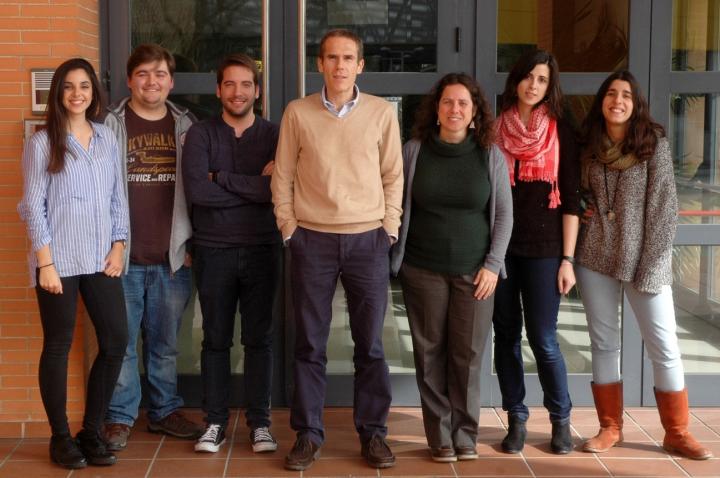
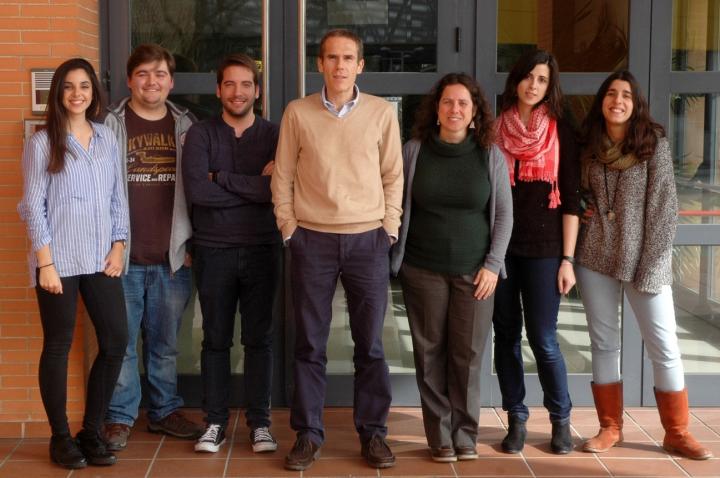
IMAGE

Credit: University of Seville

Experts from the University of Seville and the Andalusian Centre for Molecular Biology and Regenerative Medicine (Cabimer) have published a new study on the mechanisms that regulate cell division and guarantee the correct distribution of chromosomes during this process. In particular, they especially highlight the fundamental role that an organelle, specifically the nucleolus, plays in the coordination of these processes.

In the nucleolus, hijacked proteins are kept which are key to the regulation of the cell cycle. These are only released when it is necessary for them to carry out their function. The peculiar structure of the nucleolus is, however, inconvenient for the cells. So, once the genome is copied so it can be distributed between the daughter cells during cell division, the repetitive nature of Ribosomal DNA, around which the nucleolus is formed, means that unions can be generated between the chromosomes that can interfere with the correct distribution of the chromosomes during mitosis. In order to eliminate these unions, the cells promote DNA condensation, which leads to the compaction of the DNA before its distribution.

"Our study has demonstrated that precise temporal control of rDNA compaction is necessary to allow equal distribution of the chromosomes during mitosis without interfering with the correct progression of the cell cycle. Additionally, our results suggest that cells can use the degree of compaction of the nucleolus as a mechanism for stopping the progression of the cell cycle in adverse conditions, such as a lack of nutrients", explains the project director, Fernando Monje.

When the cells acquire an incorrect number of chromosomes, which is called aneuploidy, cellular tumours can appear. It is estimated that more than 90% of all solid tumours in humans are caused by aneuploidy. For that reason, understanding the mechanisms that guarantee the fidelity of the genome transmission during cell division is of enormous importance for understanding how errors in this process can cause the appearance of tumours.

"These advances in basic science open the door to future research which could help to clarify the mechanisms by which human cells guarantee the correct distribution of chromosomes during cell division. This, as has previously been indicated, will be of enormous help for understanding how errors in the functioning of these mechanisms can lead to the start of tumour growth", the researcher adds.

The experts at Cabimer are continuing to work to see how to stop cell proliferation in adverse conditions. This will allow for the identification of new factors that are involved in the appearance of diseases like cancer.

###

Media Contact

Fernando Monje
[email protected]
@unisevilla

http://www.us.es

Original Source

http://dx.doi.org/10.1016/j.cub.2017.09.028 http://dx.doi.org/10.1016/j.cub.2017.09.028

Share13Tweet8Share2ShareShareShare2

Related Posts

Shotgun genetic engineering lets mammalian cells stumble onto new metabolic pathways

Shotgun genetic engineering lets mammalian cells stumble onto new metabolic pathways

October 6, 2026
Cement Mill Physics Could Turn Desert Sand Into Farmable Soil, Study Proposes

Cement Mill Physics Could Turn Desert Sand Into Farmable Soil, Study Proposes

October 6, 2026

Inflammation-Driven Spatial Niche Sets the Stage for Early Gastric Cancer

October 6, 2026

New book recovers the forgotten legacy of the New Farmers of America

October 6, 2026
Please login to join discussion

POPULAR NEWS

  • Alloys That Shrink Their Own Grains: New PIX Mechanism Refines Metals With Heat Alone

    Alloys That Shrink Their Own Grains: New PIX Mechanism Refines Metals With Heat Alone

    29 shares
    Share 12 Tweet 7
  • Endurance Exercise Reshapes the Liver in Males and Females Through Distinct Molecular Routes

    29 shares
    Share 12 Tweet 7
  • Single Transcription Factor PU.1 Rapidly Converts Fibroblasts into Macrophage-Lineage Cells

    29 shares
    Share 12 Tweet 7
  • New Scale Measures How Ready Nurse Educators Really Are for the AI Era

    29 shares
    Share 12 Tweet 7

About

We bring you the latest biotechnology news from best research centers and universities around the world. Check our website.

Follow us

Recent News

Alloys That Shrink Their Own Grains: New PIX Mechanism Refines Metals With Heat Alone

Endurance Exercise Reshapes the Liver in Males and Females Through Distinct Molecular Routes

Single Transcription Factor PU.1 Rapidly Converts Fibroblasts into Macrophage-Lineage Cells

Subscribe to Blog via Email

Success! An email was just sent to confirm your subscription. Please find the email now and click 'Confirm' to start subscribing.

Join 85 other subscribers
  • Contact Us

Bioengineer.org © Copyright 2023 All Rights Reserved.

Welcome Back!

Login to your account below

Forgotten Password?

Retrieve your password

Please enter your username or email address to reset your password.

Log In
No Result
View All Result
  • Homepages
    • Home Page 1
    • Home Page 2
  • News
  • National
  • Business
  • Health
  • Lifestyle
  • Science

Bioengineer.org © Copyright 2023 All Rights Reserved.