Credit: SWOG/The Hope Foundation
In the largest, most rigorous study of its kind, acupuncture was found to significantly reduce the debilitating joint pain experienced by tens of thousands of women each year while being treated for early stage breast cancer, according to SWOG research results to be announced at a December 7 press conference at the San Antonio Breast Cancer Symposium.
Investigators from SWOG, the global cancer clinical trials network funded by the National Cancer Institute (NCI), conducted a randomized, blinded, multicenter trial, known as S1200, to test whether acupuncture is effective in alleviating pain caused by aromatase inhibitors, a common treatment for hormone sensitive breast cancers.
Treating this pain effectively, without the use of opioids or other drugs, is a top cancer research priority. Tens of thousands of women each year are treated with aromatase inhibitors (AIs), pills that stop the production of estrogen and essentially starve hormone receptor-positive breast cancer cells. Some women are advised to take these pills daily for up to 10 years. But as a side effect of this therapy, many women – as many as 50 percent – experience joint pain and stiffness. This affects knees, hips, hands, and wrists, and makes it difficult for women to walk, sit, climb stairs, and perform simple tasks like typing or driving.
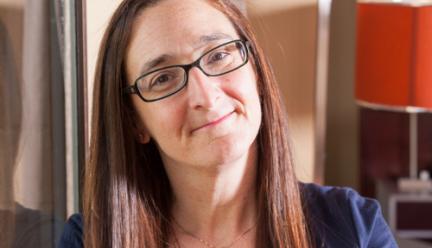
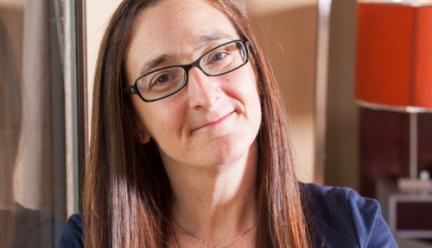
"Some of my patients have difficulty getting out of a chair," said Dr. Dawn Hershman, the lead researcher of the study and a SWOG vice chair. "As a result, with no good treatment options for their pain and stiffness, many women stop their cancer treatment. This is probably the most commonly cited reason breast cancer patients stop taking AI medication. So we need a solution – one that doesn't include opioids or drugs that can be addictive or have serious side effects. We want women to continue their cancer treatment and have a good quality of life."
SWOG researchers for years have chased a way to relieve AI pain – known as AI-Associated Musculoskeletal Syndrome (AIMSS). At last year's San Antonio Breast Cancer Symposium, Dr. N. Lynn Henry, a SWOG investigator from Huntsman Cancer Institute and co-chair of SWOG's Symptom Control and Quality of Life committee, presented findings that showed that the drug duloxetine, typically used to treat depression and anxiety, may effectively treat AIMSS.
But many women don't want to take pills to relieve symptoms caused by other pills, according to Hershman, leader of the Breast Cancer Program at the Herbert Irving Comprehensive Cancer Center at NewYork-Presbyterian/Columbia University Irving Medical Center and professor of medicine and epidemiology at Columbia. In a single-center study at Columbia, acupuncture showed promise. Hershman wanted to put it to the test in a larger, more rigorous study. Hershman and her team enrolled a total of 226 patients from 11 cancer centers nationwide and randomly assigned them to one of three arms. One group received true acupuncture. Another received sham acupuncture, a method of superficially inserting needles in different, non-therapeutic locations on the body. Finally, another group received no treatment at all.
Patients got twice-weekly treatments for six weeks, then a weekly maintenance treatment for another six weeks. Patients reported on their pain before, during, and after treatment using a variety of methods. The primary endpoint – or key indicator for the trial – was the patient's level of worst pain using the Brief Pain Inventory (BPI-WP), a patient-reported measure, at the end of the first six weeks of treatment.
Results showed that, on average, patients experienced less pain on the acupuncture arm compared with the sham and treatment-free arms. Patients experienced relief for 24 weeks.
"This work strongly shows that true acupuncture results in better outcomes for women," said Dr. Katherine Crew, a SWOG executive officer, director of the Clinical Breast Cancer Prevention Program at NewYork-Presbyterian/Columbia University Irving Medical Center and an associate professor of medicine and epidemiology at Columbia and a co-investigator on the study team. "I expect this work to influence medical practice, as well as insurers' willingness to reimburse for acupuncture during AI treatment."
Hershman will present the study findings at a press conference to be held at 7:30 am CT on December 7 at the San Antonio Breast Cancer Symposium, one of the world's most prestigious breast cancer research meetings, which last year attracted 7,470 registrants from 93 countries. The Symposium is sponsored by the Cancer Therapy & Research Center (CTRC) at UT Health Science Center San Antonio, the American Association for Cancer Research (AACR), and Baylor College of Medicine.
###
Hershman's work was supported in part by NIH grants R01AT006376, NIH/NCI/DCP grant UG1CA189974 and legacy grant U10CA37429.
Along with Drs. Hershman and Crew, the S1200 team includes: Joseph Unger, Ph.D, of Fred Hutchinson Cancer Research Center (FHCRC); Heather Greenlee, N.D., Ph.D., of FHCRC; Jillian Capodice, M.S., L.A.C. of Mount Sinai Hospital; Danika Lew, M.A., of FHCRC; Amy Darke, M.S. of FHCRC; Alice Kengla, M.D. of Kaiser Permanente Walnut Creek Medical Center; Marianne Melnik, M.D., of Spectrum Health Medical Group; Carla Jorgensen, M.D., of NCORP of the Carolinas; William Kreisle, M.D., of St. Luke's Mountain States Tumor Institute; Lori Minasian, M.D., of the National Cancer Institute's Division of Cancer Prevention; Michael Fisch, M.D., of AIM Specialty Health; and N. Lynn Henry, M.D., of Huntsman Cancer Institute.
SWOG is a global network of researchers that design and conduct cancer clinical trials, and, as part of the Nation Cancer Institute's National Clinical Trials Network, is a major part of the cancer research infrastructure in the U.S. and the world. The group's goal is to change medical practice so it improves the lives of people with cancer. Founded in 1956, SWOG's over 1,300 trials have led to the approval of 14 cancer drugs, changed the standard of cancer care more than 100 times, and saved more than 3 million years of human life. Learn more at swog.org
Media Contact
Wendy Lawton
[email protected]
503-348-8675
@SWOG
http://swog.org