

• HOME
  • NEWS
  • EXPLORE
    • CAREER
      • Companies
      • Jobs
    • EVENTS
    • iGEM
      • News
      • Team
    • PHOTOS
    • VIDEO
    • WIKI
  • BLOG
  • COMMUNITY
    • FACEBOOK
    • INSTAGRAM
    • TWITTER
Sunday, November 1, 2026
BIOENGINEER.ORG
No Result
View All Result
  • Login
  • HOME
  • NEWS
  • EXPLORE
    • CAREER
      • Companies
      • Jobs
        • Lecturer
        • PhD Studentship
        • Postdoc
        • Research Assistant
    • EVENTS
    • iGEM
      • News
      • Team
    • PHOTOS
    • VIDEO
    • WIKI
  • BLOG
  • COMMUNITY
    • FACEBOOK
    • INSTAGRAM
    • TWITTER
No Result
View All Result
Bioengineer.org
No Result
View All Result
Home NEWS Science News Technology

New automatic pipe-discharge device could speed up small-scale oil well workovers by 20–25%

by
October 30, 2026
in Technology
Reading Time: 2 mins read
0
New automatic pipe-discharge device could speed up small-scale oil well workovers by 20–25%

New automatic pipe-discharge device could speed up small-scale oil well workovers by 20–25%

Share on FacebookShare on TwitterShare on LinkedinShare on RedditShare on Telegram

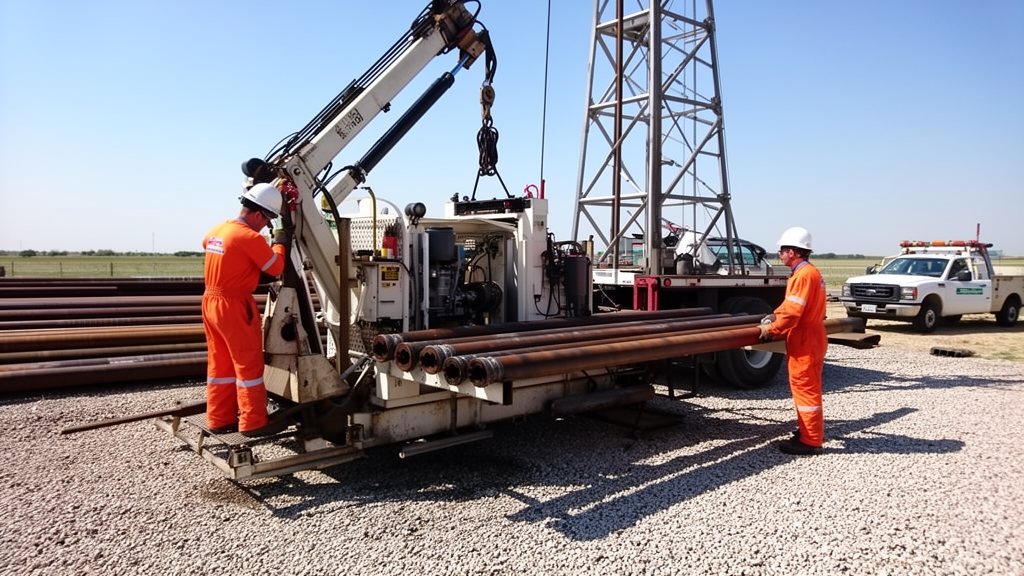
Engineers in China have designed and tested an automatic pipe-discharge device aimed at taking the manual labour out of small-scale oil well workover operations. The device, described in a design study published in Discover Applied Sciences, was developed to tackle the persistent problems of traditional small-scale workovers: long operation cycles, low automation, high manual labour intensity, poor operational safety and environmental pollution at the well site.

The device is built around two main components, a tubing slide device and the pipe-discharge device itself, forming a system that can receive tubing, convey it along a controlled path and store it in an orderly way.

A key design decision was to make the system dual-mode. The device can be operated either automatically or manually, a flexibility the researchers say allows it to meet the requirements of different sizes of tubing and different working conditions.

The designers also paid close attention to the practical constraints of small oilfield operations. The device was engineered with ease of transportation in mind, given a small footprint for crowded well sites, and designed to produce low environmental pollution, addressing one of the recurring complaints about conventional workover practice.

To validate the design, the team carried out experimental testing of the complete system. According to the study, the results show that the device has a reasonable structure and a high degree of automation, and that its workflow meets the needs of small oilfield workover operations. The experiments also demonstrated that the device operates smoothly and can reliably carry, discharge and store oil tubing, the three core functions it was designed to perform.

The quantitative results from testing are notable. The researchers report that the device can improve work efficiency by 20 to 25 percent compared with the traditional approach, while reducing the labour intensity of workers by 25 to 30 percent.

Even so, the authors conclude that the device has high promotion and application value in the field of small oilfield workover operations, arguing that its combination of automation, dual-mode operation, transportability and low environmental impact makes it a practical candidate for wider adoption.

Subject of Research: An automatic pipe-discharge device designed to automate tubing handling in small-scale oil well workover operations.

Article Title: Design study of an automatic pipe-discharge device for small-scale well workover operations

Article References: Chen, H., Meng, D., Yin, X., Shi, X., Wang, S., Zhang, H., Li, Z., Zhu, Y., & Fan, C. (2026). Design study of an automatic pipe-discharge device for small-scale well workover operations. Discover Applied Sciences. https://doi.org/10.1007/s42452-026-09791-8

Image Credits: AI Generated

DOI: 10.1007/s42452-026-09791-8

Keywords: oil and gas, well workover, pipe discharge, automation, tubing slide device, petroleum engineering, labour intensity, workover operations, mechanical design, small oilfields, Design, automatic

News Source: Denise Maddox. (October 30, 2026). New automatic pipe-discharge device could speed up small-scale oil well workovers by 20–25%. Scienmag.


Tags: automaticautomationdesignlabour intensitymechanical designoil and gaspetroleum engineeringpipe dischargesmall oilfieldstubing slide devicewell workoverworkover operations
Share12Tweet7Share2ShareShareShare1

Related Posts

Systematic review maps sustainability tensions in offshore wind development

Systematic review maps sustainability tensions in offshore wind development

October 30, 2026
Amateur maps and sketches helped put Hong Kong's wartime pillboxes on official charts

Amateur maps and sketches helped put Hong Kong’s wartime pillboxes on official charts

October 30, 2026

Heavier logging trucks only pay off when the road network lets them work

October 30, 2026

Supersulfated cement outperforms Portland cement in curbing concrete’s alkali-silica reaction

October 30, 2026

POPULAR NEWS

  • Microbial Sources and Stress Shape the Hidden Endophytes of an Invasive Plant

    Microbial Sources and Stress Shape the Hidden Endophytes of an Invasive Plant

    29 shares
    Share 12 Tweet 7
  • Firebreaks Leave Lasting Scars in Grasslands While Wildfire Heals Fast

    29 shares
    Share 12 Tweet 7
  • ZNF207 shields glutamine transporter ASCT2 from degradation to fuel liver cancer growth

    29 shares
    Share 12 Tweet 7
  • Systematic review maps sustainability tensions in offshore wind development

    29 shares
    Share 12 Tweet 7

About

We bring you the latest biotechnology news from best research centers and universities around the world. Check our website.

Follow us

Recent News

Microbial Sources and Stress Shape the Hidden Endophytes of an Invasive Plant

Firebreaks Leave Lasting Scars in Grasslands While Wildfire Heals Fast

ZNF207 shields glutamine transporter ASCT2 from degradation to fuel liver cancer growth

Subscribe to Blog via Email

Enter your email address to subscribe to this blog and receive notifications of new posts by email.

Join 86 other subscribers
  • Contact Us

Bioengineer.org © Copyright 2023 All Rights Reserved.

Welcome Back!

Login to your account below

Forgotten Password?

Retrieve your password

Please enter your username or email address to reset your password.

Log In
No Result
View All Result
  • Homepages
    • Home Page 1
    • Home Page 2
  • News
  • National
  • Business
  • Health
  • Lifestyle
  • Science

Bioengineer.org © Copyright 2023 All Rights Reserved.
