


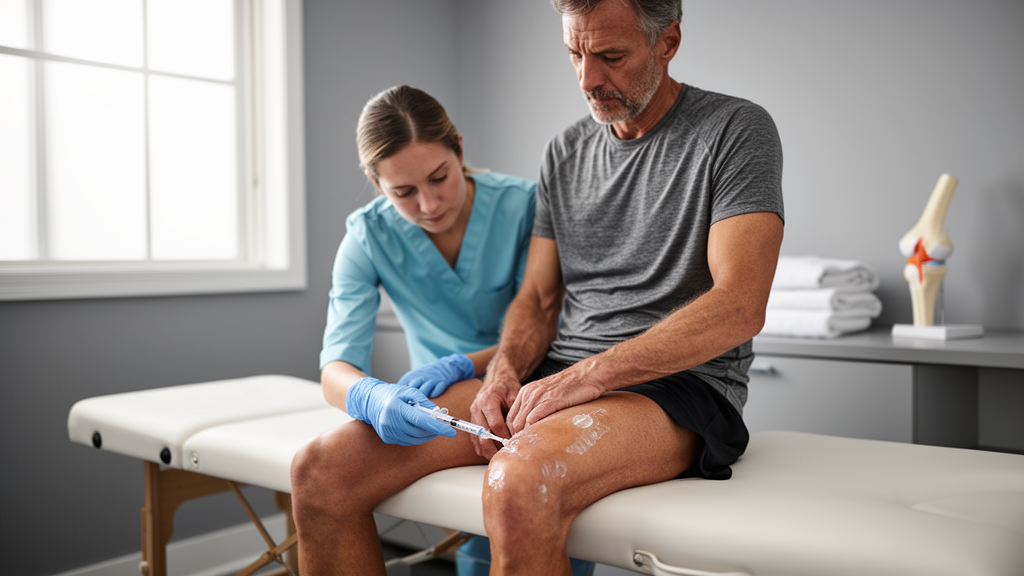
Dextrose prolotherapy added to standard exercise and manual therapy was associated with greater improvements in pain and function among patients with iliotibial band syndrome, according to a retrospective cohort study published in BMC Complementary Medicine and Therapies. The study included 103 patients diagnosed with the condition, a common cause of lateral knee pain that particularly affects physically active individuals and that can persist despite conservative treatment. Researchers compared a control group of 52 patients who received exercise and manual therapy alone with a prolotherapy group of 51 patients who received dextrose prolotherapy in addition to the same conservative program.
The investigators assessed pain intensity using the 0–10 Numeric Rating Scale and evaluated functional status with the Lower Extremity Functional Scale. Measurements were taken at five time points: baseline, week 6, month 1, month 3, and month 6. Changes over time were analyzed with mixed-design repeated measures ANOVA, and linear mixed-effects models were used as sensitivity analyses to check the robustness of the results.
At the start of the study, the two groups were comparable. No statistically significant between-group differences were observed in the measured baseline demographic and clinical characteristics, which strengthens the interpretation that later differences in outcomes reflect the added treatment rather than pre-existing imbalances between the cohorts.
Both groups improved over the follow-up period, with significant gains in NRS and LEFS scores over time. However, the analysis revealed significant group × time interactions for both outcome measures. For pain, the interaction statistic was F = 29.236 with p < 0.001, and for function it was F = 35.494 with p < 0.001. In repeated-measures designs, a significant group × time interaction indicates that the two groups changed differently over time rather than simply moving in parallel. Here, the pattern indicated greater improvement in the prolotherapy group.
The between-group separation was most evident at the final follow-up. At month 6, the prolotherapy group had lower NRS scores, meaning less pain, and higher LEFS scores, meaning better lower-extremity function, than the control group. Sensitivity analyses using linear mixed-effects models confirmed these findings, supporting the consistency of the primary analysis.
Safety data were also reported. No serious adverse events occurred during the study. Transient mild post-injection pain was recorded in nine patients, a side effect profile the authors characterized as mild and temporary. Because prolotherapy involves injections into painful musculoskeletal tissue, post-injection soreness is a relevant consideration when weighing the intervention against its observed benefits.
Dextrose prolotherapy is described in the study as a regenerative injection-based treatment used for chronic musculoskeletal pain. The authors note that evidence regarding its effectiveness in iliotibial band syndrome had been limited, which motivated the present evaluation of whether adding it to exercise and manual therapy would improve pain and functional outcomes beyond conservative care alone.
The authors concluded that dextrose prolotherapy added to exercise and manual therapy was associated with greater improvements in pain and function in patients with iliotibial band syndrome. They framed the findings as suggesting a possible adjunctive benefit rather than as definitive proof of effectiveness.
That caution reflects the study design. Because this was a retrospective cohort study, patients were not randomly assigned to the two treatment arms, and the analysis relied on existing clinical records rather than a prospectively planned protocol. Retrospective comparisons can be influenced by selection factors that the measured baseline variables did not capture, even though the observed baseline characteristics were statistically balanced. The authors therefore stated that prospective randomized controlled trials are needed to confirm the results before the approach can be considered established care for this condition.
Subject of Research: Dextrose prolotherapy as an adjunct to exercise and manual therapy for pain and function in iliotibial band syndrome
Article Title: Dextrose prolotherapy as an adjunct to exercise and manual therapy in iliotibial band syndrome: assessment of pain relief and functional improvement
Article References: Doran, M., & Ekici Zincirci, D. (2026). Dextrose prolotherapy as an adjunct to exercise and manual therapy in iliotibial band syndrome: assessment of pain relief and functional improvement. BMC Complementary Medicine and Therapies. https://doi.org/10.1186/s12906-026-05661-3
Image Credits: AI Generated
DOI: 10.1186/s12906-026-05661-3
Keywords: dextrose prolotherapy, iliotibial band syndrome, lateral knee pain, exercise therapy, manual therapy, pain relief, functional improvement, retrospective cohort study, Numeric Rating Scale, Lower Extremity Functional Scale, musculoskeletal pain, randomized controlled trials
News Source: Ophelia Keating. (October 30, 2026). Dextrose prolotherapy linked to greater pain and function gains in iliotibial band syndrome. Scienmag.



