Credit: Xi Chen/Ying Lab/USC
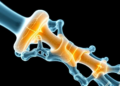
If you've seen one GSK3 molecule, do not assume that you have seen them all. A new study in Developmental Cell reveals important differences in two similar forms of GSK3, which, in excess, is implicated in diabetes, cancer, Alzheimer's disease and ALS.
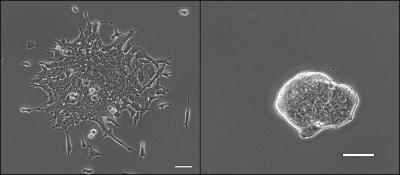
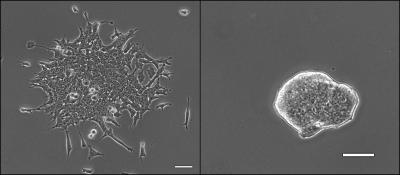
In the study, first author Xi Chen–a PhD student in the USC Stem Cell laboratory of Qi-Long Ying–describes how the two similar forms–known as GSK3-beta and GSK3-alpha–can produce very different reactions in embryonic stem cells. Inhibiting GSK3-beta can promote stem cell self-renewal, while inhibiting GSK3-alpha can trigger differentiation into neural cells.
"The key message is that selective inhibition of GSK3-alpha and GSK3-beta has very distinct effects on embryonic stem cell fates," said Ying, professor of stem cell biology and regenerative medicine at USC. "This is likely also true for other cell types."
In order to selectively inhibit these two very similar forms of GSK3, the Ying Lab called upon the expertise of colleagues in the Department of Chemistry at the USC Dornsife College of Letters, Arts and Sciences.
"This is an elegant study resulting from collaborative efforts between two labs of complementary expertise. We employed an innovative chemical approach to tackle a biological problem that would be difficult to study using conventional methods," said Chao Zhang, assistant professor of chemistry.
These findings carry implications for developing drugs that target overactive GSK3 in certain patients with diabetes, cancer, Alzheimer's disease and ALS. A drug that targets GSK3 in general could have unintended side effects. However, no drug can target one form of GSK3 without the other, because of their highly similar structures–highlighting the need for more refined approaches to treatment.
Inhibiting only GSK3-beta could also provide a useful tool for producing stem cells that are not merely "pluripotent" but able to contribute to the formation of embryos. These so-called naïve pluripotent stem cells can become any cell type in the body. Currently, scientists have derived naïve pluripotent stem cells from mice and rats, but they have not yet succeeded in obtaining naïve pluripotent stem cells from other species, including humans. Pluripotent human stem cells are the basic building blocks for regenerating any tissue or organ in the body.
###
Additional co-authors include Ruizhe Wang, Xu Liu, Yongming Wu, Tao Zhou, Yujia Yang, Andrew Perez, Ying-Chu Chen, Liang Hu, Jean Paul Chadarevian and Amir Assadieskandar from USC.
Ten percent of the work was supported by $600,000 in federal funding from the National Science Foundation (CHE-1455306). Ninety percent of the research was funded by $3 million from private and non-federal sources, including the California Institute for Regenerative Medicine (New Faculty Award II RN2-00938 and CIRM Bridges to Stem Cell Research Fellowship), the Cheng Yong Foundation of the Zhongmei Group, the American Cancer Society (IRG-58-007-51), the USC Office of Research, and the USC Norris Medical Library.
Media Contact
Zen Vuong
[email protected]
213-300-1381
@keckmedusc