


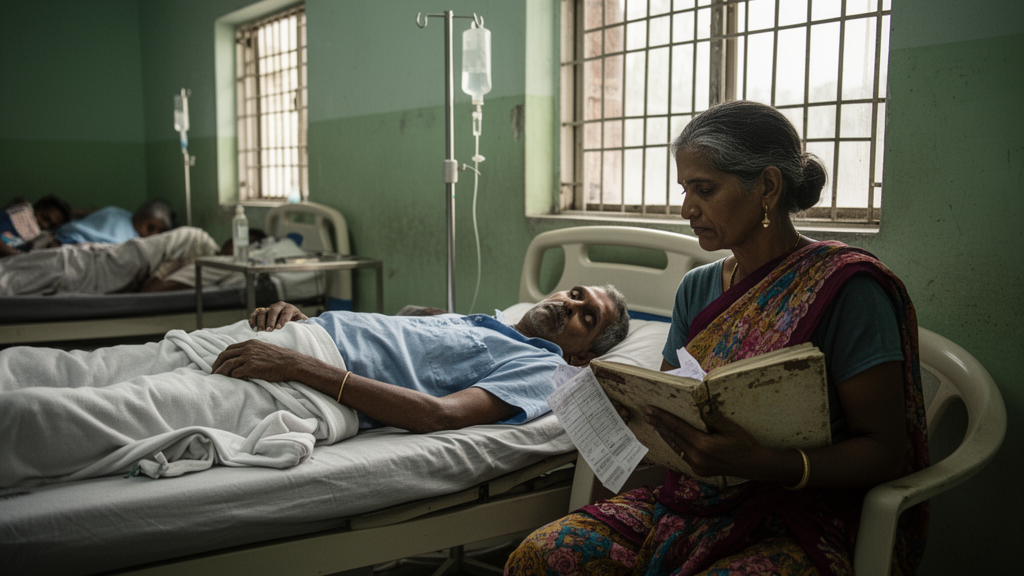
Patients with advanced cancer in India continue to face substantial financial hardship and reduced quality of life, according to a cross-sectional observational study published in Cost Effectiveness and Resource Allocation.
The study population had a mean age of 59.1 years, and 55.3 percent of participants were female. Lung and haematological malignancies were the most common diagnoses, together accounting for 39.6 percent of cases.
The cost findings were striking. Median direct medical costs reached 145,200 Indian National Rupees, with a range spanning from 17,800 to 1,384,000 rupees. Median direct non-medical costs were 43,000 rupees, ranging from 2,000 to 522,000 rupees, while median indirect costs stood at 8,500 rupees, ranging from 1,000 to 210,000 rupees. On average, out-of-pocket expenditure accounted for 47.2 percent of total costs, a figure the authors note sits within a broader context in which out-of-pocket spending on cancer treatment in India has been described as exceeding half of total expenditure.
Scores for diagnosis-related subjective burden were high, whereas treatment-related subjective burden scores were low.
Using the COST-FACIT grading system, 21.9 percent of patients experienced grade III, or severe, financial toxicity, and 17.7 percent each fell into grade II, moderate, and grade I, mild categories. The remaining 42.7 percent were in grade 0, indicating an absence of measurable financial toxicity. This distribution shows that while a majority of patients in the cohort were spared the most severe forms of financial distress, more than one in three still carried some degree of it.
Mean scores for physical, social, cognitive and emotional functioning scales were significantly lower than reference scores, indicating poorer functioning or overall health status in the study cohort. Global quality of life scores were also lower than the reference values, and scores on the financial difficulties scale were higher, reflecting greater monetary strain among these patients.
Symptom burden added a further layer of difficulty. Mean scores on the symptom scales were higher than reference values, indicating a greater burden of symptoms for the study cohort compared with the reference population. Taken together, the functioning, global quality of life and symptom results paint a consistent picture of advanced cancer patients experiencing diminished wellbeing across multiple domains.
The authors conclude that although government insurance schemes provided significant benefit for treatment, quality of life remained poor and financial toxicity was high among patients with advanced cancer. They emphasise that this pattern points to the need for more patient-friendly insurance schemes tailored to cancer care in India.
Even so, its detailed cost breakdowns and validated questionnaires offer a concrete picture of how advanced cancer treatment strains household finances and wellbeing in India, and of the gap that remains even for patients covered by government insurance.
Subject of Research: Financial burden, financial toxicity and quality of life among advanced cancer patients in India and the role of government insurance schemes
Article Title: A comprehensive health economic evaluation of advanced cancer care in india: financial burden, quality of life, and the role of government insurance schemes
Article References: Meenu, M., Kumar, M., & Dhiman, P. (2026). A comprehensive health economic evaluation of advanced cancer care in india: financial burden, quality of life, and the role of government insurance schemes. Cost Effectiveness and Resource Allocation. https://doi.org/10.1186/s12962-026-00823-z
Image Credits: AI Generated
DOI: 10.1186/s12962-026-00823-z
Keywords: financial toxicity, cancer care, India, quality of life, out-of-pocket expenditure, health economics, government insurance, advanced cancer, EORTC, COST-FACIT, tertiary care, comprehensive
News Source: Nathaniel Bowman. (October 30, 2026). Financial Toxicity and Poor Quality of Life Persist in Advanced Cancer Care in India. Scienmag.



