


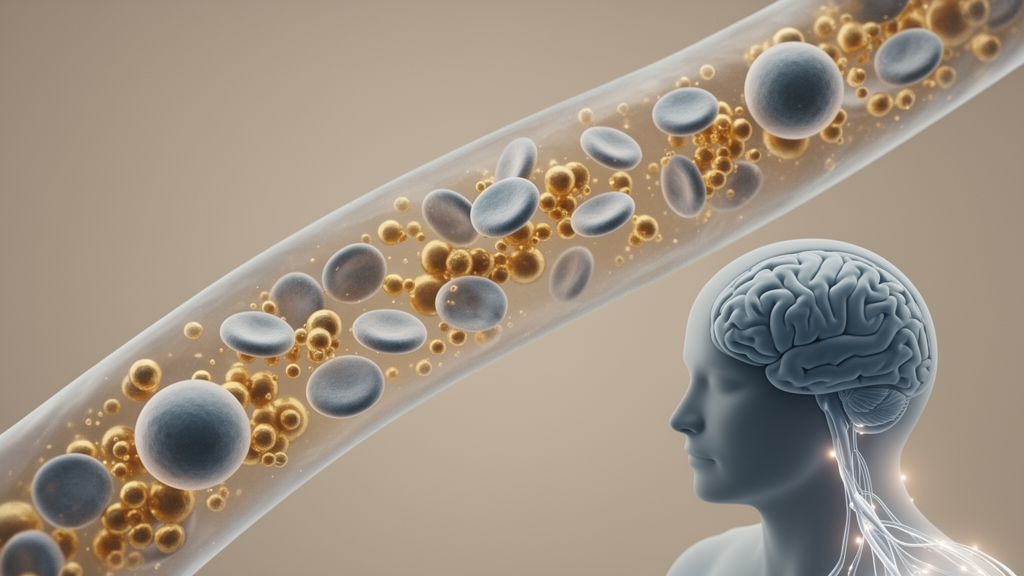
A simple calculation made from two routine blood test components — the platelet-to-albumin ratio, or PAR — shows a consistent statistical association with depression across two very different study populations, according to a cross-sectional study published in Frontiers in Psychiatry. Researchers analyzed a United States population-based survey of 34,068 adults and a Chinese clinical cohort of 735 people, and found that higher PAR values were linked to higher odds of depression in both groups after adjustment for multiple confounders and correction for multiple comparisons. Conventional platelet measures, by contrast, did not hold up consistently across the two settings.
The study was motivated by a long-standing puzzle in biological psychiatry. The authors argued that single parameters may fail to capture the multifaceted biological alterations underlying major depressive disorder, and that composite markers integrating several processes might perform better. PAR combines platelet count with serum albumin concentration, the latter being a negative acute-phase protein that declines during systemic inflammatory activation and also reflects nutritional status. Lower albumin levels have previously been associated with depression and with depression severity in earlier research cited by the team.
The two cohorts differed deliberately in design. The population-based arm drew on the National Health and Nutrition Examination Survey (NHANES) cycles from 2005 to 2020, excluding people under 20 years old, pregnant women, and participants with missing laboratory or covariate data, leaving 34,068 adults. In this cohort, depression was defined as screening positive on the Patient Health Questionnaire-9 (PHQ-9), a self-report instrument, with a cutoff score of 10 or higher; 2,994 participants met this definition. The clinical arm comprised 735 participants recruited between 2019 and 2025 at the Affiliated Hospital of West Anhui Health Vocational College in Anhui, China: 308 patients with major depressive disorder diagnosed by psychiatrists according to DSM-5 criteria, all with 24-item Hamilton Depression Rating Scale (HAMD-24) scores of at least 20, and 427 healthy controls. Exclusion criteria for the clinical cohort included acute infection, fever, or allergic conditions within the previous two weeks, conditions that could transiently alter inflammatory markers.
The statistical approach was layered to test robustness. The researchers ran three logistic regression models of increasing adjustment: an unadjusted model, a second model controlling for age, sex, education level, and marital status, and a fully adjusted third model that additionally controlled for smoking status, alcohol consumption, and body mass index. Because three exposure variables were tested in each model, a Bonferroni correction was applied within each cohort and model. The NHANES analyses also incorporated the survey’s complex sampling design, with recalculated mobile examination center weights, strata, and primary sampling units to produce nationally representative estimates.
The headline result concerned PAR. In the fully adjusted model, each unit increase in PAR was associated with higher odds of depression in the NHANES cohort, with an odds ratio of 1.047 (95% confidence interval 1.013 to 1.081; P = 0.006; Bonferroni-adjusted P = 0.018). In the Chinese clinical cohort the association was considerably larger, with an odds ratio of 1.446 per unit increase (95% confidence interval 1.267 to 1.659; P < 0.001; Bonferroni-adjusted P < 0.001). PAR remained significant across all three adjustment levels in both cohorts, and baseline data showed the same directional pattern: participants with depression had significantly lower albumin and significantly higher PAR in both cohorts (all P < 0.001).
The conventional platelet indices told a weaker story. Platelet count showed a modest association with depression in the NHANES cohort in crude and partially adjusted models, but this attenuated after full adjustment (odds ratio 1.001 per unit, 95% confidence interval 1.000 to 1.002; Bonferroni-adjusted P = 0.279). In the clinical cohort, PLT was significant only in the unadjusted model. MPV was not significantly associated with depression in either cohort in any model. The authors interpreted this contrast as evidence that the composite ratio carries information that individual platelet parameters do not, plausibly because it simultaneously reflects platelet-related inflammatory activity and the nutritional and inflammatory state captured by albumin.
The relationship with symptom severity was less consistent, and the authors were explicit about this. In NHANES, PAR was positively associated with continuous PHQ-9 scores in the fully adjusted model (β = 0.070, 95% confidence interval 0.031 to 0.109; Bonferroni-adjusted P = 0.001). In the clinical cohort, however, the regression coefficient for PAR against HAMD-24 scores was negative and statistically nonsignificant (β = −0.335, 95% confidence interval −0.793 to 0.124; Bonferroni-adjusted P = 0.456). The team cautioned that this nonsignificant negative coefficient should not be read as evidence of an inverse association. They suggested several possible explanations: the different assessment instruments, the restricted severity range in a clinical sample where every patient already scored at least 20 on the HAMD-24, the much smaller clinical sample, and potential differences in treatment exposure and disease duration.
Shape analyses added further nuance. Restricted cubic spline regression suggested an approximately linear dose–response relationship between PAR and depression in the NHANES cohort, whereas in the clinical cohort the association was nonlinear, with an inflection point at a PAR of 4.57. Subgroup analyses, described as exploratory, found no significant differences in the PAR–depression association across subgroups in NHANES, but a more pronounced association among smokers, alcohol drinkers, and individuals living without a partner in the clinical cohort. The authors noted that these subgroup findings require confirmation in larger populations.
The mechanistic interpretation offered by the researchers is deliberately two-sided. One possibility is that chronic inflammatory activation or nutritional impairment raises platelet activity and lowers albumin, elevating PAR and contributing to depressive symptoms through immune-mediated pathways. The alternative is that depression itself alters inflammatory and metabolic states through chronic stress, hypothalamic–pituitary–adrenal axis activity, dietary changes, and reduced physical activity, which in turn affect platelet and albumin levels. On either reading, the observed association could be bidirectional rather than a simple causal pathway, and the authors state that longitudinal studies are needed to establish temporal sequence.
The limitations are substantial and mostly acknowledged by the study team. The cross-sectional design rules out any causal conclusion; elevated PAR could be a consequence, a correlate, or in part a cause of depressive illness, and the data cannot distinguish among these. The two cohorts differ in geography, population source, and depression assessment — self-report screening in a general US sample versus psychiatrist-confirmed diagnosis in a Chinese clinical sample — which limits direct comparability, particularly for the severity analyses. The clinical cohort came from a single medical center, so selection bias cannot be excluded. Information on inflammatory biomarkers such as C-reactive protein and interleukin-6, medication exposure, nutritional status, and chronic disease burden was not consistently available, leaving room for residual confounding, and smoking and alcohol definitions differed between cohorts. Within those constraints, the consistent PAR signal across two independent settings — and its survival of multiple-comparison correction where PLT and MPV did not consistently survive — marks the platelet-to-albumin ratio as a candidate biomarker worth testing prospectively, not as a diagnostic tool for depression today.
Subject of Research: Association between the platelet-to-albumin ratio and major depressive disorder in cross-sectional cohorts
Article Title: Association between platelet-to-albumin ratio and major depressive disorder: findings from a Chinese clinical cohort supported by population-based evidence
Article References: Wang, K., Sun, X., Li, K., Fu, Y., Zhang, Y., Zhang, X., & Yao, Y. (2026). Association between platelet-to-albumin ratio and major depressive disorder: findings from a Chinese clinical cohort supported by population-based evidence. Frontiers in Psychiatry, 17, Article 1995336. https://doi.org/10.3389/fpsyt.2026.1995336
Image Credits: AI Generated
DOI: 10.3389/fpsyt.2026.1995336
Keywords: major depressive disorder, platelet-to-albumin ratio, platelet count, mean platelet volume, serum albumin, NHANES, PHQ-9, HAMD-24, inflammation, nutritional status, cross-sectional study, biomarkers
News Source: Glenn Wilkins. (October 30, 2026). Research report: Association between platelet-to-albumin ratio and major depressive disorder: findings from a Chinese clinical cohort supported by population-based evidence. Scienmag.



