Credit: University of California San Diego
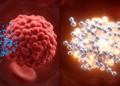
A team of bioengineers and bioinformaticians at the University of California San Diego have discovered how the environment surrounding a tumor can trigger metastatic behavior in cancer cells. Specifically, when tumor cells are confined in a dense environment, the researchers found that they turn on a specific set of genes and begin to form structures that resemble blood vessels.
In the past, physicians observed these blood vessel-like structures in the clinic–a phenomenon called vascular mimicry, which is associated with some of the most aggressive types of cancers. But they didn't understand what caused this transformation.
The study adds to researchers' knowledge of how the metastatic process may be initiated. "We are good at targeting tumor growth, but we do not know enough about metastasis," said Stephanie Fraley, a professor of bioengineering at the University of California San Diego and the leader of the study.
Metastatic spread of tumor cells from one location in the body to another is the cause of 90 percent of cancer-related deaths. The set of genes that the researchers discovered, called a gene module, was able to predict patient life expectancy and whether tumors will metastasize across nine types of cancer, including breast, lung, pancreatic, and kidney cancers.
This gene module could be used to help determine whether patients are suffering from an aggressive type of cancer and inform the decisions patients and their physicians make when choosing specific therapies.
Researchers detail their findings in the Nov. 21 issue of Nature Communications.
The researchers were able to make their observations by placing the malignant cells in a custom 3D collagen matrix that they built. They found that the cells turned into structures that mimic blood vessels when surrounded by the matrix made of short fibers and small pores (as opposed to long fibers and large pores) and that this phenomenon was independent of other physical features of the matrix such as stiffness. This finding came as a surprise.
"We thought that putting cells into this more constrained environment would prevent their spread," said Daniel Ortiz Velez, the study's first author and a Ph.D. student in Fraley's lab. "But the opposite happened."
The cells do not exhibit this behavior in traditional petri dishes, the researchers said.
"It's critical to have the cells surrounded by a 3D environment that mimics what happens in the human body," Fraley said.
Drilling further, researchers found that the cells' behavior is caused by a specific gene module, which they named collagen-induced network phenotype, or CINP. Putting these cells into a constrained environment essentially rewrites their gene expression. "It's almost like the matrix is encoding the gene module," Fraley said.
In addition, researchers looked for this gene module in a range of human cancer gene expression and histology databases, which contain records of the microscopic structure of tissues. The presence of the module was a strong predictor of whether the cancer was likely to metastasize aggressively, after controlling for other factors, such as the patient's age.
This makes sense, because the channels built by the malignant cells allow blood to flow to tumors without coagulating and helps bring in nutrients. Researchers have speculated that this also makes it easier for cancer cells to spread through the patient's blood. Other studies have shown that when cancer cells are connected, it improves their chances of spreading to distant sites in the body.
Next steps include testing the method in animal studies and additional human datasets. Researchers also will be looking for molecular targets to prevent the transformation of the cells.
Researchers are in talks to license their method.
###
The study was funded by Fraley's NSF CAREER Award, Burroughs Wellcome Fund Career Award at the Scientific Interface, and UC San Diego Frontiers of Innovation Scholars Program grant as well as co-author Professor Hannah Carter's NIH Director's Early Independence Award.
3D collagen architecture induces a conserved migratory and transcriptional response linked to vasculogenic mimicry
Authors: Daniel Ortiz Velez, T. Goshia, C.L. Chute, A. Han, Stephanie Fraley, Department of Bioengineering, UC San Diego; B. Tsui, Bioinformatics and Systems Biology Program, UC San Diego, Hannah Carter, Department of Medicine, Moores Cancer Center, Uc San Diego
doi:10.1038/s41467-017-01556-7
Media Contact
IOANA PATRINGENARU
[email protected]
858-822-0899
@UCSanDiego
http://www.ucsd.edu
Original Source
http://jacobsschool.ucsd.edu/news/news_releases/release.sfe?id=2377