• HOME
  • NEWS
  • EXPLORE
    • CAREER
      • Companies
      • Jobs
    • EVENTS
    • iGEM
      • News
      • Team
    • PHOTOS
    • VIDEO
    • WIKI
  • BLOG
  • COMMUNITY
    • FACEBOOK
    • INSTAGRAM
    • TWITTER
Saturday, February 7, 2026
BIOENGINEER.ORG
No Result
View All Result
  • Login
  • HOME
  • NEWS
  • EXPLORE
    • CAREER
      • Companies
      • Jobs
        • Lecturer
        • PhD Studentship
        • Postdoc
        • Research Assistant
    • EVENTS
    • iGEM
      • News
      • Team
    • PHOTOS
    • VIDEO
    • WIKI
  • BLOG
  • COMMUNITY
    • FACEBOOK
    • INSTAGRAM
    • TWITTER
  • HOME
  • NEWS
  • EXPLORE
    • CAREER
      • Companies
      • Jobs
        • Lecturer
        • PhD Studentship
        • Postdoc
        • Research Assistant
    • EVENTS
    • iGEM
      • News
      • Team
    • PHOTOS
    • VIDEO
    • WIKI
  • BLOG
  • COMMUNITY
    • FACEBOOK
    • INSTAGRAM
    • TWITTER
No Result
View All Result
Bioengineer.org
No Result
View All Result
Home NEWS Science News

Cure Brain Cancer supports brain cancer immunotherapy trials

Bioengineer by Bioengineer
November 21, 2017
in Science News
Reading Time: 2 mins read
0
Share on FacebookShare on TwitterShare on LinkedinShare on RedditShare on Telegram
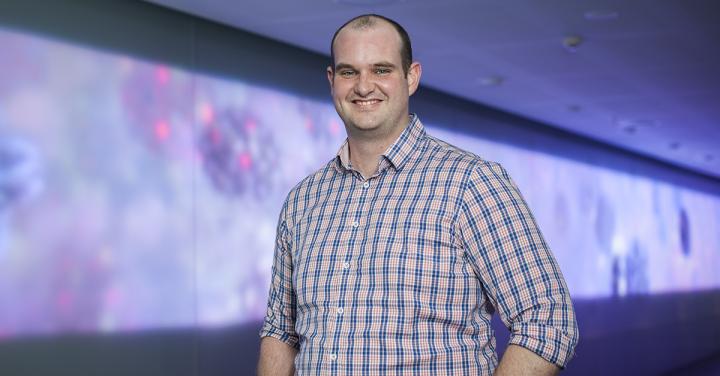
IMAGE

Credit: Walter and Eliza Hall Institute, Australia

Our research into new treatments for brain cancer has been boosted by fellowship funding from Cure Brain Cancer Foundation.

A three-year fellowship will support Dr Ryan Cross to translate his research into harnessing immune cells to fight brain cancer, a field known as 'cancer immunotherapy'.

Brain cancer: a deadly disease

More than 1600 new cases of brain cancer are diagnosed in Australia each year. Brain cancer is the leading cause of cancer-related deaths in adults under 40. Cancer can originate in many different cell types in the brain, giving rise to various forms of brain cancer.

Dr Cross said brain cancer also caused more deaths in Australian children than any other disease.

"In the past 30 years patient survival hasn't improved for either adults or children with aggressive brain cancer, despite dramatic improvements in treatments for many other cancers," Dr Cross said.

Improving brain cancer treatments

Dr Ryan Cross has received a Cure Brain Cancer Foundation Early Career Fellowship of $345,000 over three years to fund his research.

Dr Cross, who works with Institute laboratory head Dr Misty Jenkins, said his research focused on two of the deadliest types of brain cancer, diffuse intrinsic pontine glioma (DIPG) – the most aggressive form of brain cancer in children – and adult glioblastoma.

"This work will use patient samples to discover how best to program cancer-fighting immune T cells in the lab to kill brain cancer. This fellowship will enable me to test and refine this approach, developing a 'pipeline' that could allow personalised treatments for children and adults with brain cancer," Dr Cross said.

"An exciting aspect of this work is that everything we do is aiming to initiate clinical trials, which will test whether the cancer-fighting immune T cells we generate are an effective treatment for brain cancer when given to patients."

Collaborative research

Dr Cross said his research was made possible by partnerships with industry, as well as with other scientific and clinical organisations within the Victorian Comprehensive Cancer Centre.

"This work was initiated using seed funding that I received from The Jack Brockhoff Foundation, and now Cure Brain Cancer Foundation have provided me with vital support to continue my research to try and help children with brain cancer."

"I would also like to acknowledge the valuable input we have had from Dr Robert de Rose, a research consumer with personal experience of caring for someone with brain cancer," Dr Cross said.

###

Media Contact

Vanessa Solomon
[email protected]
61-475-751-811
@WEHI_research

Home

Original Source

https://www.wehi.edu.au/news/cure-brain-cancer-supports-brain-cancer-immunotherapy-trials

Share14Tweet8Share2ShareShareShare2

Related Posts

Oxygen-Enhanced Dual-Section Microneedle Patch Improves Drug Delivery and Boosts Photodynamic and Anti-Inflammatory Treatment for Psoriasis

February 7, 2026

Scientists Identify SARS-CoV-2 PLpro and RIPK1 Inhibitors Showing Potent Synergistic Antiviral Effects in Mouse COVID-19 Model

February 7, 2026

Neg-Entropy: The Key Therapeutic Target for Chronic Diseases

February 7, 2026

Multidisciplinary Evidence-Based Guidelines for Therapeutic Drug Monitoring of Biologics in Inflammatory Bowel Disease

February 7, 2026
Please login to join discussion

POPULAR NEWS

  • Robotic Ureteral Reconstruction: A Novel Approach

    Robotic Ureteral Reconstruction: A Novel Approach

    82 shares
    Share 33 Tweet 21
  • Digital Privacy: Health Data Control in Incarceration

    63 shares
    Share 25 Tweet 16
  • Study Reveals Lipid Accumulation in ME/CFS Cells

    57 shares
    Share 23 Tweet 14
  • Breakthrough in RNA Research Accelerates Medical Innovations Timeline

    53 shares
    Share 21 Tweet 13

About

We bring you the latest biotechnology news from best research centers and universities around the world. Check our website.

Follow us

Recent News

Oxygen-Enhanced Dual-Section Microneedle Patch Improves Drug Delivery and Boosts Photodynamic and Anti-Inflammatory Treatment for Psoriasis

Scientists Identify SARS-CoV-2 PLpro and RIPK1 Inhibitors Showing Potent Synergistic Antiviral Effects in Mouse COVID-19 Model

Neg-Entropy: The Key Therapeutic Target for Chronic Diseases

Subscribe to Blog via Email

Enter your email address to subscribe to this blog and receive notifications of new posts by email.

Join 73 other subscribers
  • Contact Us

Bioengineer.org © Copyright 2023 All Rights Reserved.

Welcome Back!

Login to your account below

Forgotten Password?

Retrieve your password

Please enter your username or email address to reset your password.

Log In
No Result
View All Result
  • Homepages
    • Home Page 1
    • Home Page 2
  • News
  • National
  • Business
  • Health
  • Lifestyle
  • Science

Bioengineer.org © Copyright 2023 All Rights Reserved.