


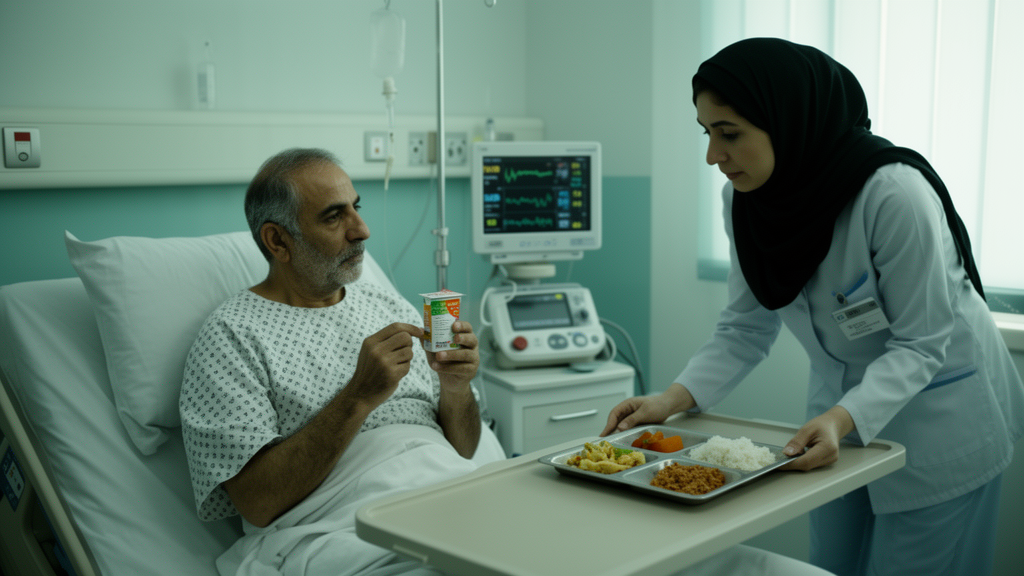
More than half of patients with colorectal cancer arrive at the operating table already malnourished, according to a cross-sectional study conducted at Ghaem Hospital in Mashhad, Iran. Among 105 hospitalized patients with confirmed colorectal cancer assessed before surgery between October 2023 and January 2025, 54.3% showed moderate-to-severe malnutrition on the Patient-Generated Subjective Global Assessment (PG-SGA), including 21.9% classified as severely malnourished. A further 40% met the study’s threshold for critical nutritional risk, defined as a PG-SGA score of 9 or higher.
The patients, whose mean age was 57.5 years with a standard deviation of 13.3, showed striking functional and body-composition deficits: low muscle strength was detected in 78.1% of participants, while reduced muscle mass was found in 26.7%. PG-SGA scores correlated negatively with body mass index, Karnofsky performance status, mid-upper arm circumference, total body water and the fat-free mass index, all at a significance level of p < 0.01.
Dietary findings pointed to a substantial gap between what patients needed and what they consumed. Inadequate energy intake was reported in 48.6% of the cohort, and inadequate protein intake in 83.8%. Common nutrition impact symptoms included abdominal pain, indigestion, bloating, constipation and anorexia, symptoms that can suppress eating at a time when nutritional reserves matter most for surgical recovery.
The authors note that malnutrition affects 20–70% of cancer patients overall, with the highest rates in gastrointestinal malignancies, and that preoperative malnutrition in colorectal cancer is associated with increased postoperative complications, longer hospital stays, impaired treatment tolerance, higher healthcare costs and reduced survival. Tumor-related inflammation, metabolic stress and surgical trauma can further worsen nutritional status, which the researchers cite as a reason early identification matters. As a cross-sectional study, however, it captures a single point in time and cannot establish that malnutrition caused these outcomes in this cohort.
Older age (over 65 years), low economic status, cancer unawareness, tumor pathology, anemia, lower serum albumin and insufficient energy and protein intake were each associated with higher PG-SGA scores at p < 0.05. In the multivariable analysis, the fat-free mass index, serum albumin and non-adenocarcinoma pathology were independently associated with critical nutritional risk, though the authors flag the non-adenocarcinoma finding, based on only five patients, as an imprecise estimate.
The authors conclude that a substantial proportion of patients awaiting colorectal cancer surgery had moderate-to-severe malnutrition or critical nutritional risk, and they argue for timely nutrition screening to identify at-risk patients, followed by comprehensive assessment to guide individualized interventions and optimize preoperative care. Because the study was single-center and cross-sectional, the findings describe one Iranian surgical population rather than a broader trend, and the associations reported do not demonstrate causal effects. The article is published as open access and, per the publisher’s note, is being shared early as a peer-reviewed, accepted version that is citable and carries a permanent DOI, subject to further edits before the final version of record.
Subject of Research: Preoperative nutritional status of colorectal cancer patients assessed with PG-SGA and body composition measures
Article Title: Comprehensive assessment of nutritional status in colorectal cancer patients before surgery: a cross-sectional study
Article References: Abdolahi, Z., Abdollahi, A., Emadzadeh, M., Nodeh, M. M., Alizadeh, N., Chaji, M., Shahabi, F., & Movahed, S. (2026). Comprehensive assessment of nutritional status in colorectal cancer patients before surgery: a cross-sectional study. BMC Nutrition. https://doi.org/10.1186/s40795-026-01507-w
Image Credits: AI Generated
DOI: 10.1186/s40795-026-01507-w
Keywords: colorectal cancer, malnutrition, PG-SGA, preoperative nutrition, nutritional assessment, body composition, handgrip strength, serum albumin, cross-sectional study, Iran, surgery, Comprehensive
News Source: Ophelia Keating. (October 30, 2026). Many Colorectal Cancer Patients Are Malnourished Before Surgery, Iranian Study Finds. Scienmag.



