


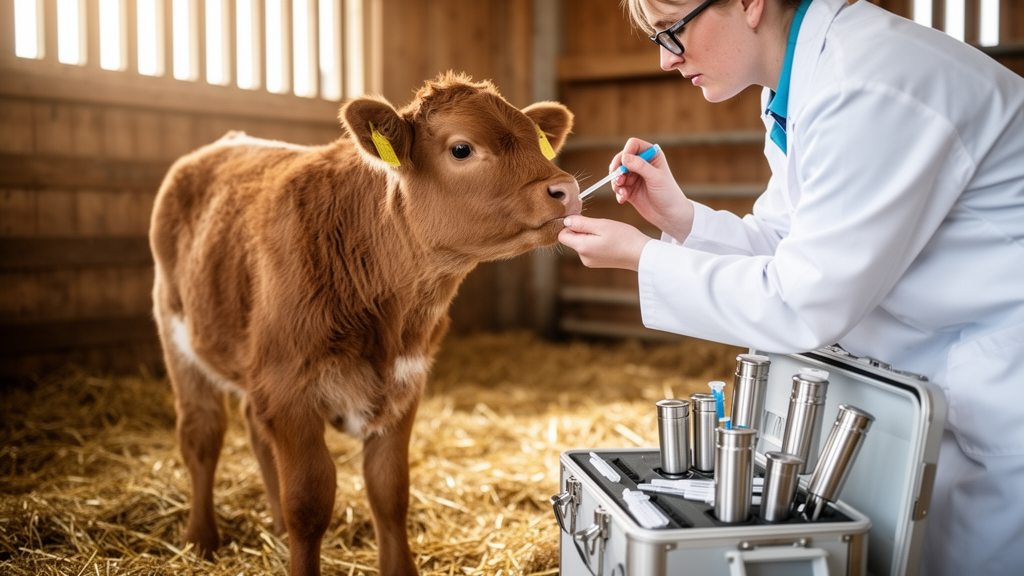
Icelandic calves carry a measurable burden of respiratory and enteric bacteria and viruses, according to a cross-sectional study that sampled animals from birth to three months of age across twenty cattle herds in two regions of the country. The work, published in Acta Veterinaria Scandinavica, provides the most detailed picture to date of which pathogens circulate in Icelandic calves, a population that had previously been poorly characterized because of limited diagnostic resources in the country.
The research team, led by Nicole B. Goecke together with Þorbjörg Eva Ellingsen, Lars E. Larsen and Nina D. Otten, enrolled 197 calves from twenty herds, twelve located in the Northeastern part of Iceland and eight in the Western part. The calves underwent clinical examination, and nasal swab and fecal samples were collected. Herd owners completed a questionnaire covering calf health, biosecurity, and management practices. Samples were pooled according to regions, seasons, and age groups and analyzed for the presence of selected viruses and bacteria using quantitative real-time PCR.
Among the nasal swab pools, the most frequently identified pathogens were Trueperella pyogenes at 75 percent, Mycoplasma species at 45 percent, Histophilus somni at 36 percent, bovine coronavirus at 28 percent, Pasteurella multocida at 17 percent, and Mannheimia haemolytica at 6 percent. Bovine respiratory syncytial virus, bovine parainfluenza virus type 3, influenza D virus, and Mycoplasma bovis were not detected in any of the pools. Among the feces pools, bovine coronavirus at 24 percent and rotavirus A at 23 percent were the sole detected pathogens, while Escherichia coli F5 was not found.
A striking geographic pattern emerged. A greater diversity of pathogens was detected in the Northeastern region than in the Western region, since bovine coronavirus, Pasteurella multocida, and Mannheimia haemolytica were not identified in the latter. The authors note that this difference cannot be explained solely by the apparent weather differences between the two regions, and it cannot be ruled out that some of these pathogens might have been detected in Western herds had spring sampling also been conducted there, since some pathogens may exhibit seasonal patterns. Sampling in the Northeastern region took place in both April and September 2023, while Western herds were sampled only in September.
The study design reflected practical constraints. Herds were selected by convenience sampling due to limitations in available time and financial resources, and calves were sampled in three age groups: zero to ten days, fourteen to twenty-eight days, and ninety to one hundred ten days. Because Icelandic herds are relatively small, averaging 54.4 cows per herd, herds were selected based on herd size to ensure a sufficient number of calves per age group. In total, 66 calves aged zero to ten days, 71 calves aged fourteen to twenty-eight days, and 60 calves aged ninety to one hundred ten days were examined. Nasal swab samples were collected from 196 calves and feces samples from 193.
Clinical findings contrasted sharply with the pathogen detections. Diarrhea was the most common clinical sign: 8 percent of calves exhibited watery, heavy mucus, or bloody feces, while 15 percent had loose and not-formed feces. Feces samples from diarrheic calves were also tested individually, and half of those samples tested positive for rotavirus A, with 75 percent of these derived from the youngest calves. Bovine coronavirus was detected in 25 percent of the individual diarrheic samples. Respiratory signs were rare: only 1.5 percent of calves scored two or higher in two or more clinical categories, coughing was observed in 5 percent, and 12 percent had a rectal temperature exceeding 39.4 degrees Celsius.
Age shaped pathogen occurrence in several ways. The occurrence of Trueperella pyogenes, Pasteurella multocida, and Histophilus somni increased with age, while it decreased for Mycoplasma species, and Mannheimia haemolytica was detected only in the oldest age group. The highest occurrence of bovine coronavirus in nasal samples was observed in the middle age group. For enteric pathogens, the highest occurrence of rotavirus A was found in calves aged zero to ten days, with a decreasing incidence with age that was statistically significant, and bovine coronavirus occurrence was significantly higher across all age groups in the Northeastern region.
Seasonal variation was limited. The twelve Northeastern herds were sampled in both spring and fall, and the same respiratory pathogens were present in both seasons with slightly different prevalences, though none of the differences were statistically significant. A hierarchical generalized linear mixed model that accounted for repeated testing within herds found no detectable seasonal shift in pathogen circulation: odds ratios ranged from 0.69 to 1.96, and all 95 percent confidence intervals included 1. The authors suggest that indoor housing, which applied to all sampled calves, could partially explain the small difference between seasons, since Icelandic calves are typically kept indoors year-round in contrast to outdoor hutches used in many other countries.
The questionnaire results added context on management and disease history. In the Northeastern region, 83.3 percent of herds had experienced a diarrhea outbreak, compared with 25 percent in the Western region. Regarding antimicrobial treatment of diarrhea, 33.3 percent of farmers in the Northeast and 62.5 percent in the West claimed to never or rarely use such treatment. Half of the Northeastern farmers fed colostrum to newborn calves within two hours, compared with 25 percent in the West, and no farmer used a colostrum bank or checked colostrum quality regularly. Only five of the twenty herds had a vaccination strategy for cows, all against mastitis. Among the six herds that purchased calves from external herds, only two practiced isolation before integration, and herds that acquired calves showed a higher average number of both respiratory and enteric pathogens in the pools.
The authors conclude that the study provides novel insight into the bacterial and viral pathogens circulating in Icelandic calves, with some pathogens described for the first time in the country, including what they report as the first detection of rotavirus A in Iceland. Although pathogen diversity was higher in the Northeastern region, few clinical signs were observed, and the researchers caution that no association between bovine coronavirus and disease could be assessed because nasal swab samples were tested in pools, and the low number of clinically affected animals and small sample size mean that uncertainty around such estimates would be considerable. They note that knowledge of the pathogens present within a herd or calf population may support more targeted treatment approaches and informed vaccination decisions, and that the findings may support future disease surveillance and preventive strategies in a cattle population that is genetically distinct from other Western European breeds and protected by strict regulations on livestock importation.
Subject of Research: A cross-sectional survey of respiratory and enteric bacteria and viruses in Icelandic calves from birth to three months of age
Article Title: Occurrence of respiratory and enteric bacteria and viruses in calves in Iceland
Article References: Goecke, N. B., Ellingsen, Þ. E., Larsen, L. E., & Otten, N. D. (2026). Occurrence of respiratory and enteric bacteria and viruses in calves in Iceland. Acta Veterinaria Scandinavica, 68(1), Article 40. https://doi.org/10.1186/s13028-026-00876-3
Image Credits: AI Generated
DOI: 10.1186/s13028-026-00876-3
Keywords: Iceland, calves, bovine coronavirus, rotavirus A, Trueperella pyogenes, Mannheimia haemolytica, Pasteurella multocida, Histophilus somni, Mycoplasma, qPCR, cattle health, veterinary epidemiology
News Source: Kristina Jarvis. (October 30, 2026). First detailed survey maps bacteria and viruses in Icelandic calves. Scienmag.



