


Curcumin, the yellow polyphenol from turmeric rhizomes, has long been attractive to formulators for its reported antibacterial and anti-inflammatory activity, but it is notoriously difficult to deliver. The compound dissolves in water only to the extent of about 7.80 micrograms per millilitre and shows a bioavailability of roughly 0.051 micrograms per litre, values that severely limit how much active ingredient can actually reach tissue. A team reporting in Discover Pharmaceutical Sciences has now built a topical emulgel around a less conventional fix: a hydrophobic natural deep eutectic solvent made from camphor and menthol in a 1:1 ratio, abbreviated CM-NADES, which dissolves curcumin well and doubles as a skin penetration enhancer.
Deep eutectic solvents are mixtures of a hydrogen bond acceptor and a hydrogen bond donor that become liquid at room temperature when combined in specific molar ratios, with weak intermolecular attractions giving them low melting points relative to the parent solids. In this work, camphor and menthol were stirred together at 500 rpm for ten minutes with gentle heating at 35 to 40 degrees Celsius to yield a clear liquid that remained clear after 24 hours. The researchers, from institutions in India, positioned this solvent as an oil-free replacement for the oil phase of a conventional oil-in-water emulsion, eliminating the oxidation and rancidity problems that plague oil-based topical products and removing the need for added antioxidants.
The formulation itself combined curcumin dissolved in CM-NADES with Tween-80 as emulsifier, carbopol-940 as gelling agent, glycerin as humectant, benzalkonium chloride as preservative and distilled water. Screening of Tween-80 concentrations between 1 and 8 percent showed that emulsions containing 1 to 3 percent broke down within an hour to a day, 4 percent lasted two days, and 5 and 8 percent remained stable beyond three days, so 5 percent was carried forward. Carbopol-940 was then varied from 0.5 to 1.1 percent: 0.5 and 0.6 percent left the mixture fluid even after neutralisation with triethanolamine, 0.8 and 0.9 percent produced only semi-fluid gels, and raising Tween-80 to 8 percent actually reduced curcumin release. One percent carbopol yielded a stable semi-solid emulgel, designated Cur-EMG-T-7, while 1.1 percent gave a gel too stiff for further work.
The optimised emulgel met the standard physicochemical checks. Its pH of 5.25 plus or minus 0.19 sits within the natural acidic range of human skin, a deliberate choice since curcumin is stable under acidic conditions but degrades rapidly in alkaline environments, shifting from yellow to red as phenolic groups deprotonate. Viscosity across the formulation series ranged from about 32,560 to 51,537 centipoise, tracking carbopol and Tween-80 concentrations, and the gels showed no phase separation after centrifugation at 5000 rpm for ten minutes. Curcumin content fell between 99 and 100 percent in every formulation, and spreadability of Cur-EMG-T-7 measured 3.48 plus or minus 0.038 centimetres, decreasing as carbopol concentration rose.
Release behaviour was characterised in a vertical Franz diffusion cell fitted with a 0.45-micrometre cellulose nitrate membrane, using pH 5.5 buffer with 0.5 percent sodium lauryl sulfate as medium. Over 24 hours, Cur-EMG-T-7 released 22.42 plus or minus 1.78 percent of its curcumin load. Kinetic modelling gave the best fit to first-order kinetics with an R-squared of 0.9949, closely followed by the Higuchi diffusion model at 0.9928 and Hixson-Crowell at 0.9940, pointing to a combination of diffusion and matrix erosion. The Korsmeyer-Peppas exponent above 1 indicated Super Case II transport associated with polymer swelling and relaxation. Solubility testing showed 22 milligrams of curcumin dissolving in one gram of CM-NADES, and receptor-compound colour change confirmed curcumin could leave the solvent and cross the membrane within eight to nine minutes.
Ex vivo permeation through pig ear skin reinforced the topical rather than systemic character of the product. Only 3.70 plus or minus 0.14 percent of curcumin permeated the skin over 24 hours, with a flux of 0.00666 milligrams per square centimetre per hour, a lag time of 2.93 hours and a permeability coefficient of 0.00426 centimetres per hour. Tape stripping after the same 24-hour exposure told a complementary story: 64.79 plus or minus 3.25 percent of the curcumin was recovered from the viable epidermal and dermal layers and 27.29 plus or minus 2.21 percent from the stratum corneum. In other words, most of the dose lodged in the skin itself rather than passing through it, which the authors argue is exactly where a wound treatment needs its active ingredient.
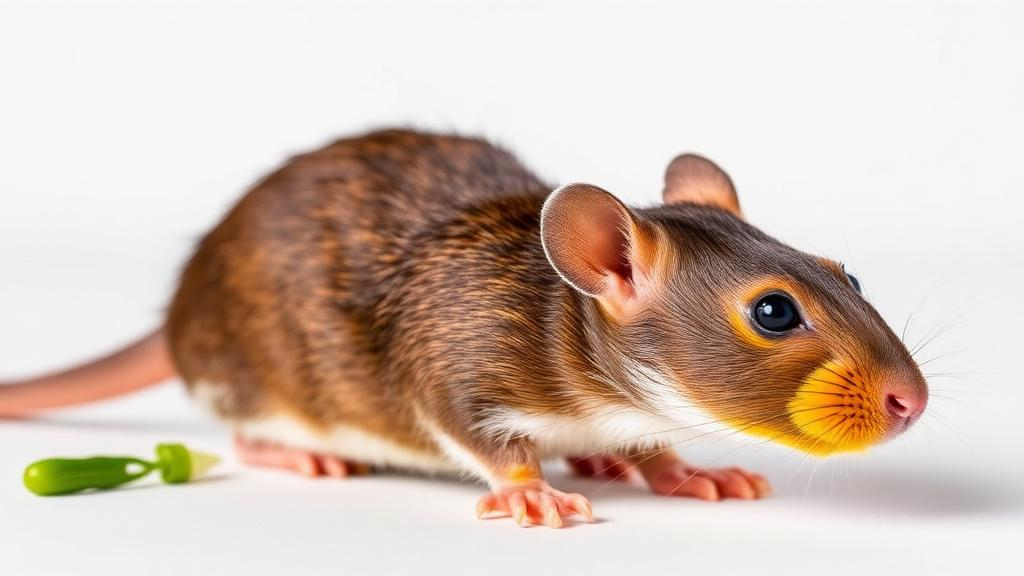
The in vivo test used an excision wound model in male Wistar rats weighing 150 to 200 grams, approved by the Institutional Animal Care and Ethics Committee of Sankaralingam Bhuvaneswari College of Pharmacy and conducted under CPCSEA guidelines with ARRIVE 2.0 reporting. Sixteen rats were divided into four groups of four; a 25 plus or minus 3 millimetre, 2 plus or minus 1 millimetre deep excision wound was created on the shaved dorsum under ketamine anaesthesia, and Cur-EMG-T-7 or a marketed povidone-iodine ointment was applied once daily. Wound contraction was traced on days 4, 8, 12, 16 and 20 and analysed by one-way ANOVA with Tukey’s post hoc test.
Both treatments outperformed the untreated control from day 4 onward, reaching high statistical significance from day 8 with p values below 0.001, and neither differed significantly from the other at any point. By day 12, Cur-EMG-T-7 had achieved 64.67 plus or minus 3.10 percent wound contraction against 68.32 plus or minus 2.98 percent for the marketed product; by day 16 the figures were 88.25 plus or minus 3.17 and 90.11 plus or minus 2.19 percent. On day 20 both treated groups reached complete closure while untreated wounds had contracted only 55.46 plus or minus 5.14 percent. Histopathology of healed tissue showed more cellular granulation tissue, improved collagen deposition, reduced oedema and inflammation, and complete re-epithelialisation of the wound surface in the Cur-EMG-T-7 group by day 20, compared with weaker granulation and prominent chronic inflammatory lesions in untreated controls.
The authors connect these outcomes to two mechanisms supported by their own data and cited literature: local retention of curcumin in viable epidermal layers, which prior work links to better topical therapeutic outcomes, and the mildly acidic formulation environment, since acidic wound beds are reported to improve tissue oxygenation, epithelialisation and angiogenesis. Camphor and menthol, both regarded as penetration enhancers, may further aid delivery, although the paper notes that camphor is readily absorbed through skin and has rarely caused systemic poisoning at large applied amounts, a safety consideration for any camphor-containing topical product.
Stability testing over six months at 40 plus or minus 2 degrees Celsius and 75 plus or minus 5 percent relative humidity, following ICH Q1A(R2), showed the formulation held together well: pH drifted from 5.25 to 4.95, viscosity fell modestly, spreadability increased, curcumin content slipped slightly from 99.19 to 98.3 percent, and in vitro release kinetics stayed essentially unchanged, with first-order R-squared values of 0.9949 initially and 0.9941 at six months. The important caveats remain that the wound healing results come from a small rat study with four animals per treatment group, permeation and retention data come from pig ear skin rather than human tissue, and no human testing has been reported. Within those limits, the study presents Cur-EMG-T-7 as a plausible oil-free topical alternative whose performance matched a marketed povidone-iodine ointment in the rat excision model.
Subject of Research: Development and wound healing evaluation of a curcumin emulgel formulated with a camphor–menthol natural deep eutectic solvent
Article Title: Wound healing efficacy of a curcumin emulgel enriched with camphor-menthol-based deep eutectic solvent (CM-NADES)
Article References: T, R. S., R, M. C., Shunmugaperumal, T., & Pawde, D. M. (2026). Wound healing efficacy of a curcumin emulgel enriched with camphor-menthol-based deep eutectic solvent (CM-NADES). Discover Pharmaceutical Sciences, 2(1), Article 8. https://doi.org/10.1007/s44395-026-00040-w
Image Credits: AI Generated
DOI: 10.1007/s44395-026-00040-w
Keywords: curcumin, emulgel, deep eutectic solvent, camphor, menthol, wound healing, topical drug delivery, tape stripping, Wistar rats, carbopol-940, skin permeation, stability studies
News Source: Ophelia Keating. (October 29, 2026). Camphor–Menthol Solvent Boosts Curcumin Emulgel That Healed Rat Wounds. Scienmag.



