

• HOME
  • NEWS
  • EXPLORE
    • CAREER
      • Companies
      • Jobs
    • EVENTS
    • iGEM
      • News
      • Team
    • PHOTOS
    • VIDEO
    • WIKI
  • BLOG
  • COMMUNITY
    • FACEBOOK
    • INSTAGRAM
    • TWITTER
Friday, October 30, 2026
BIOENGINEER.ORG
No Result
View All Result
  • Login
  • HOME
  • NEWS
  • EXPLORE
    • CAREER
      • Companies
      • Jobs
        • Lecturer
        • PhD Studentship
        • Postdoc
        • Research Assistant
    • EVENTS
    • iGEM
      • News
      • Team
    • PHOTOS
    • VIDEO
    • WIKI
  • BLOG
  • COMMUNITY
    • FACEBOOK
    • INSTAGRAM
    • TWITTER
No Result
View All Result
Bioengineer.org
No Result
View All Result
Home NEWS Science News Health

Deep Learning Reads Chest X-rays to Gauge Pulmonary Artery Growth in Children with Heart Defects

by
October 29, 2026
in Health
Reading Time: 2 mins read
0
Deep Learning Reads Chest X-rays to Gauge Pulmonary Artery Growth in Children with Heart Defects

Deep Learning Reads Chest X-rays to Gauge Pulmonary Artery Growth in Children with Heart Defects

Share on FacebookShare on TwitterShare on LinkedinShare on RedditShare on Telegram

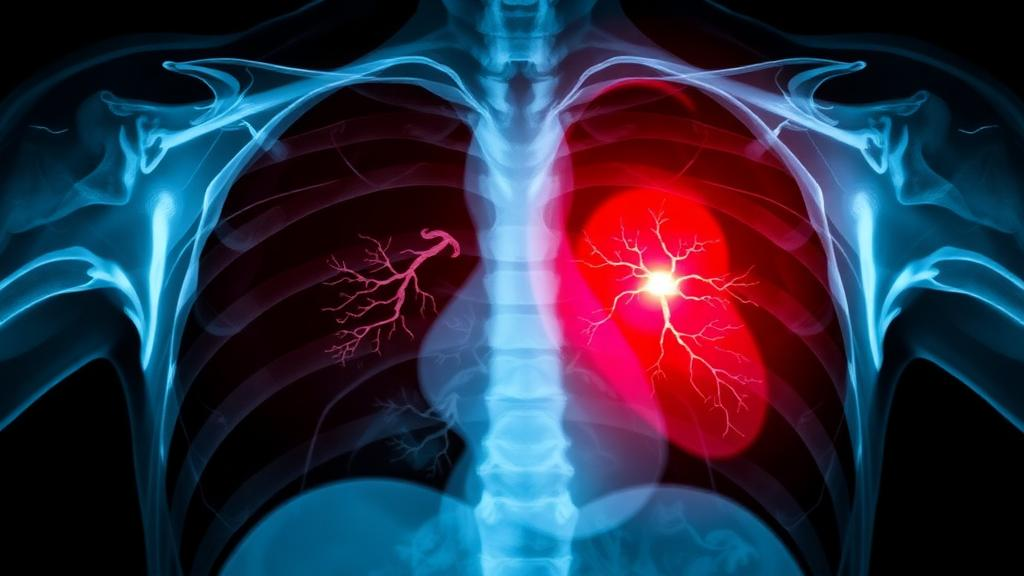
Pulmonary artery development is a key indicator in assessing and managing children with congenital heart disease, and a new retrospective study reports that a multitask deep learning model can estimate it directly from chest radiographs. The work, published in BMC Medical Imaging as an external validation study, developed the model on a large internal dataset and then tested it on cases from a separate medical center.

The researchers included children who had undergone cardiac CT examinations at their hospital and another local medical center between December 2007 and March 2023. The imaging study involved an internal dataset of 1326 cases and an external dataset of 126 cases, for a total of 1452 patients with both CT scans and chest radiographs available.

The multitask deep learning architecture was designed to do two things at once: predict the McGoon ratio, a quantitative measure of pulmonary artery development normally derived from CT, and classify disease severity. To understand what the model was looking at, the team applied gradient-weighted class activation mapping, or Grad-CAM, to visualize how the network arrived at its predictions of pulmonary artery development.

Performance was benchmarked against radiologists and against manually measured CT values. In the internal cohort, the correlation between the McGoon ratio predicted by the algorithm and the ratio measured manually on CT was 0.797, while in the external group it was 0.468, both statistically significant. The Bland-Altman mean errors were -0.05 plus or minus 0.51 internally and -0.06 plus or minus 0.37 externally, indicating small average bias but appreciable variability, particularly in the external set.

For the clinically relevant task of identifying patients whose McGoon ratio falls below 2.0, the model achieved an area under the curve of 0.926 in the internal cohort.

Importantly, the study’s authors position the model as a screening and triage aid for preliminary quantitative assessment, not a replacement for established cardiovascular imaging such as cardiac CT. They also note that further validation is required before any clinical application, and the external results reported here underscore that need.

The study is retrospective and single-region in design, drawing on cases from one hospital and one other local medical center, so performance in broader and more diverse populations remains to be established. As an externally validated but pre-clinical tool, the model represents a step toward quantitative, AI-assisted reading of pediatric chest radiographs rather than a deployed clinical system.

Subject of Research: A multitask deep learning model that predicts pulmonary artery development in children with congenital heart disease from chest radiographs

Article Title: Multitask learning for the prediction of the pulmonary artery development in children patients with congenital heart disease on chest radiographs: an external validation study

Article References: Yao, X., He, X., Nie, C., OuYang, R., Guo, C., Hu, L., Liu, J., Wang, Q., Wang, Q., & Zhong, Y. (2026). Multitask learning for the prediction of the pulmonary artery development in children patients with congenital heart disease on chest radiographs: an external validation study. BMC Medical Imaging. https://doi.org/10.1186/s12880-026-02986-w

Image Credits: AI Generated

DOI: 10.1186/s12880-026-02986-w

Keywords: deep learning, chest radiographs, pulmonary artery, congenital heart disease, McGoon ratio, external validation, pediatric imaging, screening, multitask learning, cardiac CT, Multitask, learning

News Source: Blake Davidson. (October 29, 2026). Deep Learning Reads Chest X-rays to Gauge Pulmonary Artery Growth in Children with Heart Defects. Scienmag.


Tags: cardiac CTchest radiographscongenital heart diseasedeep learningexternal validationlearningMcGoon ratiomultitaskmultitask learningPediatric imagingpulmonary arteryscreening
Share12Tweet7Share2ShareShareShare1

Related Posts

ZNF207 shields glutamine transporter ASCT2 from degradation to fuel liver cancer growth

ZNF207 shields glutamine transporter ASCT2 from degradation to fuel liver cancer growth

October 30, 2026
Most Ethiopian HIV patients on dolutegravir therapy show good knowledge, survey finds

Most Ethiopian HIV patients on dolutegravir therapy show good knowledge, survey finds

October 30, 2026

Serum and urine protein biomarkers may sharpen prostate cancer detection beyond PSA

October 30, 2026

One gene locus flags atrial fibrillation risk after major surgery, UK Biobank study finds

October 30, 2026

POPULAR NEWS

  • Microbial Sources and Stress Shape the Hidden Endophytes of an Invasive Plant

    Microbial Sources and Stress Shape the Hidden Endophytes of an Invasive Plant

    29 shares
    Share 12 Tweet 7
  • Firebreaks Leave Lasting Scars in Grasslands While Wildfire Heals Fast

    29 shares
    Share 12 Tweet 7
  • ZNF207 shields glutamine transporter ASCT2 from degradation to fuel liver cancer growth

    29 shares
    Share 12 Tweet 7
  • Systematic review maps sustainability tensions in offshore wind development

    29 shares
    Share 12 Tweet 7

About

We bring you the latest biotechnology news from best research centers and universities around the world. Check our website.

Follow us

Recent News

Microbial Sources and Stress Shape the Hidden Endophytes of an Invasive Plant

Firebreaks Leave Lasting Scars in Grasslands While Wildfire Heals Fast

ZNF207 shields glutamine transporter ASCT2 from degradation to fuel liver cancer growth

Subscribe to Blog via Email

Enter your email address to subscribe to this blog and receive notifications of new posts by email.

Join 86 other subscribers
  • Contact Us

Bioengineer.org © Copyright 2023 All Rights Reserved.

Welcome Back!

Login to your account below

Forgotten Password?

Retrieve your password

Please enter your username or email address to reset your password.

Log In
No Result
View All Result
  • Homepages
    • Home Page 1
    • Home Page 2
  • News
  • National
  • Business
  • Health
  • Lifestyle
  • Science

Bioengineer.org © Copyright 2023 All Rights Reserved.
